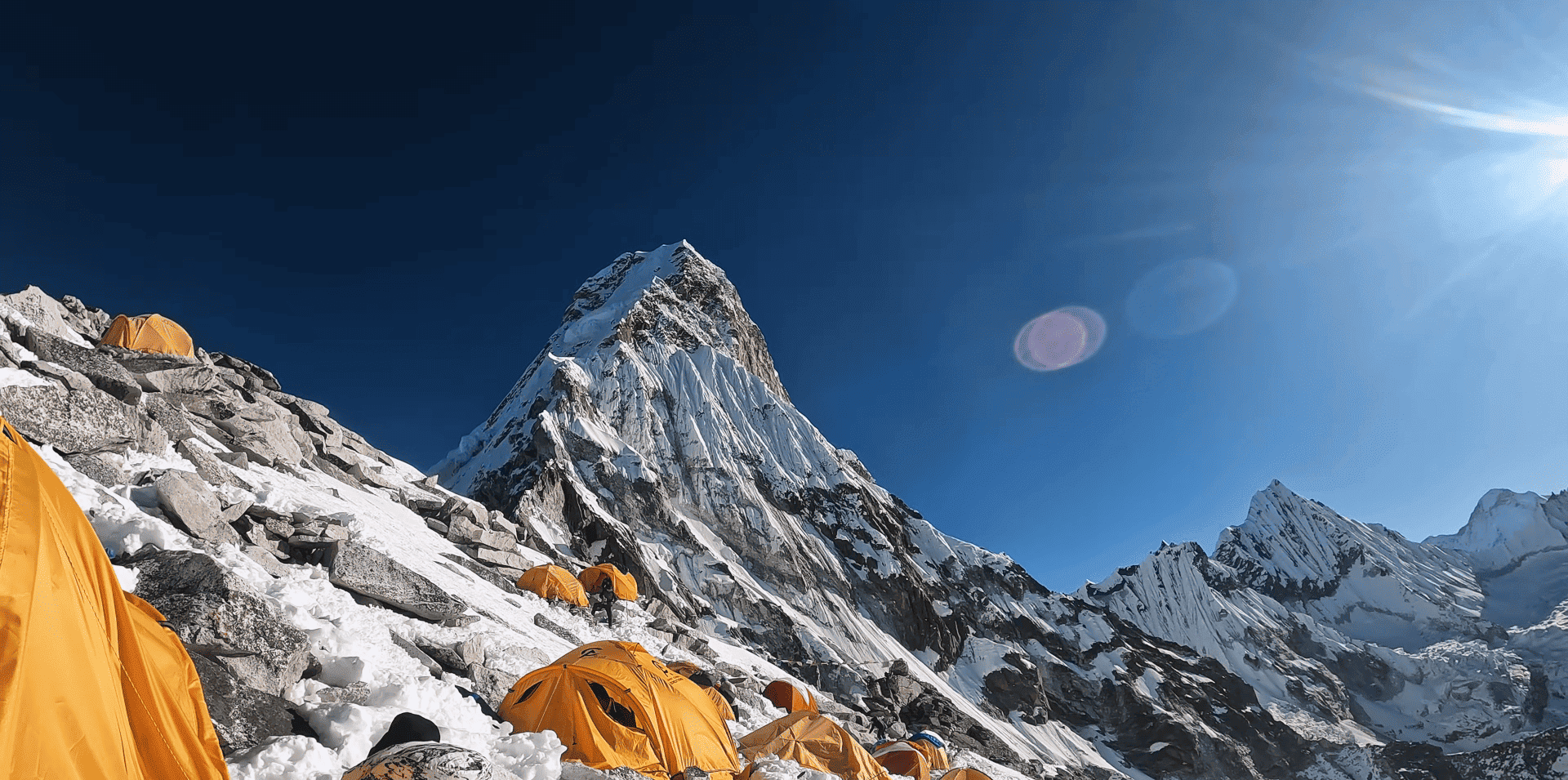

Few places on Earth carry the same magic as Everest Base Camp. It’s more than a trail or a trek — it’s a walk into the heart of the Himalayas, where mountain life, culture, and pure natural beauty come together. Sitting at 5,364 meters (17,598 feet), Everest Base Camp (often called EBC) marks the starting point for climbers heading toward the summit of Mount Everest. For trekkers, it’s a dream journey — one that tests endurance, rewards effort, and stays with you for a lifetime.
This guide walks you through everything: from preparation and itinerary to the feel of each day on the trail. No fluff — just what you actually need to know before you go.
Where It All Begins
The Everest Base Camp trek takes place in Khumbu, a region in northeastern Nepal, within Sagarmatha National Park — a UNESCO World Heritage Site.
The journey usually starts with a short but thrilling flight from Kathmandu to Lukla, landing at the famous Tenzing-Hillary Airport. Perched on a steep hillside at about 2,860 meters, this small airstrip is often called one of the most adventurous airports in the world. From there, your two-week walking journey begins.
As you climb higher, you’ll pass through Sherpa villages, suspension bridges lined with prayer flags, ancient monasteries, and forests filled with rhododendrons (in spring). Every step takes you closer to the towering peaks of the Himalayas.
Best Time to Trek
There are two main trekking seasons for EBC:
1. Spring (March–May) – The weather is mild, rhododendrons bloom, and the visibility is usually good. Climbers preparing for Everest expeditions fill the base camp during these months.
2. Autumn (September–November) – Clear skies, crisp air, and excellent views make this the most popular time. The monsoon has just ended, leaving behind dust-free trails and bright, blue skies.
Winter (December–February) brings extreme cold and heavy snow at higher elevations. The monsoon season (June–August) makes trails muddy and clouds hide the mountains.
A Day on the Trail
Life on the trek follows a simple rhythm — wake up early, walk for several hours, stop for lunch, and reach the next village by afternoon. Evenings are quiet. You’ll eat dinner in a warm dining room, chat with other trekkers, and go to bed early.
At lower altitudes, the trail passes through green valleys and villages surrounded by terraced fields. Higher up, it turns rocky and barren. The air thins, the temperature drops, and every step starts to feel heavier. But the views get better every day — Ama Dablam, Lhotse, Nuptse, and finally, Everest itself.
Classic 14-Day Itinerary
A typical EBC trek takes around 12–14 days, including acclimatization stops.
Here’s what the route usually looks like:
Day 1 – Fly Kathmandu to Lukla, Trek to Phakding (2,610 m)
A short flight (about 30 minutes) lands you at Lukla. After breakfast, you start walking toward Phakding. It’s an easy day with gentle descents.
Day 2 – Phakding to Namche Bazaar (3,440 m)
You cross several suspension bridges and follow the Dudh Koshi River. The final climb to Namche is steep and tiring but rewarding — Namche is the largest Sherpa town, full of bakeries, shops, and cozy lodges.
Day 3 – Acclimatization Day in Namche
You’ll spend an extra night here to adjust to the altitude. Take short hikes to Everest View Hotel or Khumjung village. You’ll also visit the local museum to learn about Sherpa culture.
Day 4 – Namche to Tengboche (3,860 m)
The trail climbs gently and offers stunning views of Ama Dablam and Everest. Tengboche is known for its beautiful monastery, where monks chant prayers every evening.
Day 5 – Tengboche to Dingboche (4,410 m)
You descend through forests, cross the Imja Khola river, and climb up to Pangboche and Dingboche. The air is thinner now. Nights are cold.
Day 6 – Acclimatization in Dingboche
Another rest day to adapt. A short hike to Nagarjun Hill gives panoramic views of Makalu and Island Peak.
Day 7 – Dingboche to Lobuche (4,910 m)
The landscape turns stark and rocky. You’ll pass the Everest Memorial, built in honor of climbers who lost their lives on Everest.
Day 8 – Lobuche to Gorak Shep (5,140 m), Visit Everest Base Camp (5,364 m)
This is the big day. After a few hours of trekking, you reach Gorak Shep — the last settlement before EBC. You drop your bags and continue to Everest Base Camp. The glacier landscape feels unreal. You’ll see colorful tents if expeditions are active.
Day 9 – Hike to Kala Patthar (5,644 m), Descend to Pheriche (4,240 m)
An early morning climb to Kala Patthar gives the best close-up view of Everest. Many say this is the most emotional moment of the trek. After that, you descend to thicker air.
Day 10–12 – Return Trek (Pheriche → Namche → Lukla)
You retrace your steps back, walking easier now that you’re going downhill.
Day 13–14 – Fly Lukla to Kathmandu
Weather permitting, you’ll fly back to Kathmandu. Most trekkers keep an extra day for delays since Lukla flights depend heavily on weather.
Trek Difficulty
The EBC trek is moderate to challenging. You don’t need climbing skills, but endurance matters. The hardest parts are the altitude and long walking days.
If you can comfortably walk 10–15 km a day for several days and handle steep climbs, you’ll do fine. Just go slow, listen to your body, and take acclimatization seriously.
Dealing with Altitude
Altitude sickness can affect anyone, no matter how fit. Common symptoms include headache, nausea, and fatigue.
Tips to prevent it:
- Gain height slowly — rest every 600–800 meters of elevation.
- Stay hydrated.
- Avoid alcohol and smoking.
- Sleep lower if symptoms get worse.
Carry Diamox or consult your doctor for preventive medication. Many trekkers carry a pulse oximeter to monitor oxygen levels.
Tea Houses and Food
You’ll stay in tea houses — simple mountain lodges run by local families. Rooms usually have twin beds, shared bathrooms, and a dining hall with a wood stove.
Menus are surprisingly varied: dal bhat, pasta, fried rice, soups, momos, porridge, and tea. Higher up, food choices shrink and prices rise because everything is carried by porters or yaks.
Electricity and Wi-Fi are available in some places but often cost extra. Bring a power bank.
Permits and Regulations
You’ll need:
- Sagarmatha National Park Permit
- Local Rural Municipality Permit
The TIMS card has been replaced by local entry permits in some EBC regions, so check current rules before you go.
Cost Breakdown
Costs vary depending on style and comfort:
- Budget Trek (Tea House, Group): USD 1,200–1,500
- Mid-Range (Private Guide + Comfort Lodges): USD 1,800–2,500
- Luxury (Helicopter return, upgraded hotels): USD 3,000+
This includes flights, permits, accommodation, food, guide, and porter services.
Packing List
Keep it practical and light. Essentials include:
- Trekking boots and socks
- Down jacket and warm layers
- Base layers and fleece
- Gloves, beanie, scarf
- Sleeping bag (rated -10°C or below)
- Trekking poles
- Sunglasses, sunscreen, lip balm
- Water bottles and purification tablets
- Headlamp and spare batteries
- First aid kit + altitude medication
- Passport, permits, insurance papers
Safety and Tips
- Always have travel insurance that covers high-altitude trekking.
- Weather delays at Lukla are common. Keep one buffer day.
- Porters can carry up to 15–20 kg of your luggage — pack smart.
- Respect local customs: walk clockwise around stupas, ask before photos, and remove shoes in monasteries.
- Carry cash — there are few ATMs beyond Namche.
Responsible Trekking
The Khumbu region relies heavily on tourism. Your choices matter.
- Use refillable bottles to reduce plastic waste.
- Dispose of trash properly.
- Support local tea houses and guides.
- Treat porters fairly — they are the heart of the trek.
- Respect nature and spiritual sites.
Final Thought
The Everest Base Camp trek is more than just reaching a destination. It’s about slowing down, breathing mountain air, and feeling small beneath giants of ice and stone. It’s not easy — but that’s exactly why it’s worth it.
Every step teaches patience, gratitude, and respect for nature. When you finally stand at the foot of Everest, surrounded by prayer flags fluttering in the wind, you’ll understand why people call this trek life-changing — not because of hype, but because of how it makes you feel.

Himalaya King
Content Writer
Adventure Awaits — Let’s Begin Your Journey