
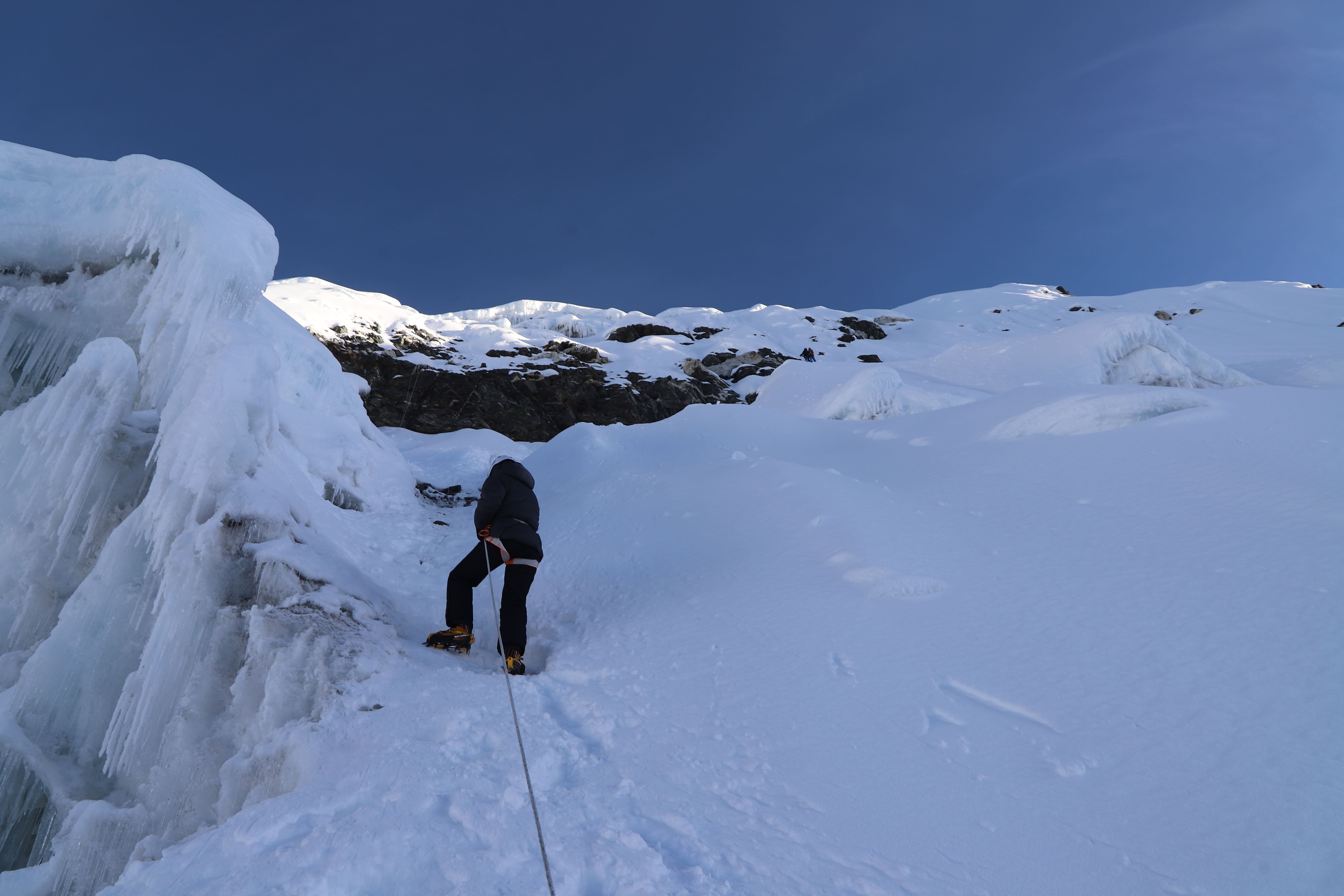
Nestled in the heart of the Khumbu region of Nepal, Island Peak (6,189 meters), also known as Imja Tse, is one of the most popular trekking peaks in Nepal. It stands as a beacon for trekkers and mountaineers seeking a unique blend of adventure, culture, and breathtaking Himalayan scenery. Island Peak is a beautiful peak in the Sagarmatha National Park in the Northern Himalayan Mountain Ranges at 6189 meters ( 20,305 feet. It lies close to Lobuche and Chukkung, offering amazing views of Amadablam, Lhotse, and Mt. Everest. It is an ideal peak for adventurers who want to explore and experience Himalayan Climbing without requiring advanced mountaineering skills. Climbing Island Peak also offers an excellent chance for mountaineers to gain experience and prepare for more difficult climbs. The summit of Island Peak rewards climbers with 360 degrees view of the surrounding snow-capped peaks, including the mighty Everest, which adds to the allure of this adventure. Reaching the summit is an unforgettable moment for many, and the view from the top is awe-inspiring. The journey begins with a scenic trek through traditional Sherpa villages, dense pine forests, and the rugged terrain of the Khumbu Valley, gradually leading trekkers to the base of the peak. Along the way, every step offers a majestic landscape- from the emerald valleys and glacier rivers to the towering peaks of EVEREST, Lhotse, Nuptse, and Ama Dablam. The path is not only a physical journey but also culture exploration, as trekkers pass through villages rich in Buddhist heritage, adorned with prayer flags and ancient monasteries that echo the spiritual heart of the Himalayas.
Island Peak is more than just a climb; it is a personal adventure. Every ascent teaches patience, endurance, and respect for the mountain environment. Reaching the summit rewards climbers with panoramic views that are truly indescribable- snow-covered peaks stretching as far as the eye can see, glaciers glinting under the sun, and the feeling of being on the top of the world. For many, this moment becomes a life-changing memory, a story of determination, perseverance, and awe-inspiring beauty.
Whether you are an aspiring mountaineer looking to take your first steps into high-altitude climbing or a trekker seeking ultimate Himalayan adventure, Island Peak promises an experience that blends adrenaline, natural beauty, and cultural richness. In this blog, we will guide you through everything you need to know about trekking to Island Peak – from the detailed route, best seasons, permit, to essential gears and preparation tips—so that your journey to this remarkable peak can be safe, memorable, and unforgettable.
OVERVIEW
Peak heights: The peak is 6189 meters (20,305 feet above sea level.
It is considered a trekking peak, meaning it’s suitable for trekkers with some mountaineering experience.
Region: It lies in the Khumbu region of Nepal, near Mount Everest.
Trip Duration: This trek takes 16-18 days. The usual approach is via Lukla---Namche Bazaar—Tengboche—Dingboche—Chukkung—Island peak base camp.
Climbing involves glacier walking and using basic mountaineering gear like crampons, ropes, and ice axes.
It’s challenging but doable for fit trekkers who are acclimatized.
Difficulty level: medium to challenging
Best season :
The best season to climb Island peak on spring and autumn seasons.
• Spring season (March-May): Clear skies, blooming rhododendrons.
• Autumn season (Sep-Nov): Stable weather, best Mountain views.
HIGHLIGHTS OF ISLAND PEAK
Island Peak is not just a mountain. It’s a journey through some of the most spectacular landscapes of the Himalayas. From towering peaks and glacial rivers to traditional Sherpa villages, every moment along this trek offers something unique. Here are the top highlights that make Island Peak a must-do adventure:
1. Breathtaking Mountain Views
One of the biggest draws of Island Peak is the panoramic views of the surrounding Himalaya giants. From the basecamp and summit, climbers can see Mount Everest, Lhotse, Nuptse, Ama Dablam, Makalu, and Cho Oyu. The sunrise and sunset vistas are particularly magical, with the peaks glowing in shades of gold and pink. For photography enthusiasts, these moments provide some of the most iconic shots in the Everest region.
2. The thrill of high-Altitude mountaineering
Island Peak is classified as a trekking peak, which means it is accessible to trekkers with some basic mountaineering experience. The climb includes glacier walking, using crampons and ice axes, and ascending steep snow slopes. The sense of achievement at the summit, standing above 6,000 meters, is unmatched. This combination of trekking and climbing makes it ideal for adventure seekers looking for a first high-altitude peak.
3. Sherpa culture and villages
Along the trek, you pass through traditional Sherpa villages like Namche Bazaar, Tengboche, Dingboche, and Chukkung. These villages offer a glimpse into the rich culture, history, and spirituality of the Khumbu region. Visiting the Tengboche Monastery, one of the largest in the area, is a spiritual highlight. The warm hospitality of the Sherpa people, their unique architecture, and vibrant prayer flags add a cultural richness that complements the natural beauty.
4. Glaciers and Alpine scenery
The trek to Island Peak base camp takes you past glacial valleys, moraine trails, and pristine alpine landscapes. The Imja glaciers, at the foot of Island Peak, are a stunning spectacle of ice and snow, and crossing them safely adds to the adventure. The scenery changes dramatically with altitude from lush green forests in lower valleys to stark, dramatic ice and rock formations near the summit.
5. Adventure combined with Personal Achievement
Reaching the summit of Island Peak is more than just a physical accomplishment; it is a life-changing experience. Climbers often describe a sense of awe, empowerment, and connection to nature at the top. The trek and climb test endurance, mental strength, and adaptability, making it a journey of self- discovery as well as adventure.
6. Seasonal Beauty
Whether you go in spring when rhododendrons bloom, and the weather is clear, or autumn with crisp skies and fewer trekkers, the island peaks showcase the Himalaya in all their glory. Snowcapped peaks, flowering rivers, and colorful skies create a perfect backdrop for an unforgettable trekking experience.
ITINERARY (16 days) OF ISLAND PEAK
DAY-1: Arrival in Kathmandu (1400m/4600ft)
DAY-2: Fly to Lukla (2,860 m / 9,383 ft) and trek to Phakding (2,610 m / 8,563 ft)
DAY-3: Phakding to Namche Bazaar (3440 m / 11,286 ft)
DAY-4: Acclimatization in Namche Bazaar
DAY-5: Namche Bazaar to Tengboche (3870 m/12,697 ft)
DAY-6: Tengboche to Dingboche (4410 m/14,468 ft)
DAY-7: Acclimatization in Dingboche
DAY-8 Dingboche to Chukung (4730 m/15,518 ft)
DAY-9: Acclimatization and hikes to Chukung Ri (5550 m/1820 ft)
DAY-10: Chukung to Island Peak base camp (5090 m/16,700 ft)
DAY-11: Island peak summit (6,189 m/20,305 ft)
DAY-12: Base camp to Chukkung
DAY 13 TO 16: Back to Kathmandu
Required permits
-
- Khumbu Pasang Lhamu rural municipality permit.
- Island peak permit.
- Sagarmatha National Park permit from Nepal Mountaineering Association (NMA).
Accommodation and meal
During the trek from Lukla to Chukkung, accommodation is mainly in tea houses, also known as mountain lodges. These tea houses are simple and cozy, typically offering twin-sharing rooms with basic wooden beds, mattresses, pillows, and blankets. As altitude increases, facilities become more basic, yet they remain clean and welcoming.
In popular villages like Namche Bazaar, Tengboche, and Dingboche, tea houses are more developed, sometimes offering attached bathrooms, hot showers (for an extra charge), charging facilities, and WI-FI. In higher villages such as Chukkung, accommodation is simpler, but the hospitality remains warm and friendly.
At the Island Peak base camp, accommodation is in tents. Trekkers stay in well-organized camping setups arranged by trekking agencies, including sleeping tents, dining tents, and toilet tents. The camp offers a true expedition experience, surrounded by glaciers and towering peaks, and is one of the most memorable parts of the journey.
Meals
Meals during the Island Peak trek are nutritious, filling, and designed to meet the energy demands of high-altitude trekking. Tea house menus are surprisingly diverse, especially at lower altitudes. Common meals include dal bhat (rice, lentils, vegetables), noodles, pasta, fried rice, soups, dumplings, pancakes, eggs, porridge, and Tibetan bread. Dal Bhat is particularly popular among trekkers because it is fresh, high in carbohydrates and protein, and often comes with unlimited refills. As you ascend, food choices become more limited, but quality remains good.
Hot soups, garlic soup, and herbal teas are commonly recommended to help with acclimatization and digestion. At base camp, meals are prepared by a professional cook, usually including soups, rice, pasta, potatoes, vegetables, and warm drinks to keep climbers energized and hydrated.
Drinking Water
Safe drinking water is essential. Bottled water is available in villages, but it becomes expensive at higher altitudes. Most trekkers use water purification tablets, filters, or boiled water provided by tea houses. Staying well-hydrated is critical for preventing altitude-related problems.
Dietary considerations
Vegetarian meals are widely available and often recommended at higher elevations for easier digestion. Trekkers with special dietary requirements should inform their trekking company in advance.
Overall, the accommodation and meals on the island peak trek offer a comfortable and nourishing experience, allowing trekkers to focus on the adventure while enjoying the warmth and hospitality of the Himalayan region.
Why choose our company for Island Peak?
Choosing the right trekking company is one of the most important decisions for a successful and safe island expedition. We are ready to welcome you with warm hospitality. Our company is committed to providing not just a trek, but we are fully prepared to offer you genuine Himalayan Hospitality, ensuring your peak climbing journey is comfortable, safe, and truly memorable.
1. Expedition and Certified local guides
Our island peak trips are led by highly experienced, licensed, and trained guides with extensive knowledge of the Everest region. Many of our guides are local Sherpas who have grown up in the Himalayas and have successfully summited Island Peak multiple times. Our guides are certified by IFMGA, and their deep understanding of the terrain, weather conditions, and altitude management ensures your safety and confidence throughout the journey.
2. Safety comes first
Your safety is our top priority. We follow proper acclimatization schedules, carry essential first-aid kits, and closely monitor trekkers for altitude-related symptoms. Our guides are trained in high-altitude first aid and emergency response, and we are well-prepared to handle unexpected situations. We never rush itineraries, ensuring a safe and enjoyable climb.
3. Well- planned itinerary and quality service
Our island peak itinerary is carefully designed to balance adventure, acclimatization, and comfort. We select reliable tea houses, provide quality camping equipment at base camp, and ensure hygienic, nutritious meals during the climb. Every detail from airport transfers to permits and logistics is handled professionally, so you can focus on enjoying the trek.
4. Personalized and responsible trekking
We understand that every trekker is different. Our team offers personalized support, flexible itineraries when possible, and small group sizes for better attention and comfort. We also practice responsible tourism, respecting local culture, supporting local culture, supporting local communities, and minimizing environmental impact.
5. Trusted local company
As a Nepal-based trekking company, we take pride in sharing our mountains, culture, and traditions with visitors from around the world. When you choose (Himalayan King Trekking AND Expedition), you are directly supporting local communities while experiencing the Himalayas in an authentic and meaningful way.
Island Peak is more than just a trekking peak; it is a true Himalayan adventure that combines breathtaking landscapes, rich Sherpa culture, and the thrill of high-altitude mountaineering. From the scenic trails of the Khumbu valley to the challenging ascent of the summit at 6189 meters, every step of the journey offers a sense of achievement and discovery. Every step of the climb is guided with care, safety, and practical support to ensure a rewarding experience. The panoramic views of Everest, Lhotse, Nuptse, Ama Dablam, and surrounding peaks make the effort truly worthwhile.
With proper acclimatization, guidance, and preparation, the climb is challenging yet achievable, offering a safe and memorable experience for adventure seekers. Along the way, the warmth and hospitality of the Sherpa people, traditional villages, and ancient monasteries add a deep cultural dimension to the journey.
Choosing the right trekking company plays a vital role in the success of your expedition. With experienced guides, well-planned itineraries, strong safety standards, and personalized service, your island peak adventure can become a truly life- changing experience. Island Peak is suitable for trekkers who are physically fit and ready to take on a new challenge in mountaineering. With experienced guides, well-organized logistics, and a focus on safety help ensure that your climb is not only successful but also meaningful.

Himalaya King
Himalaya King
Adventure Awaits — Let’s Begin Your Journey


