
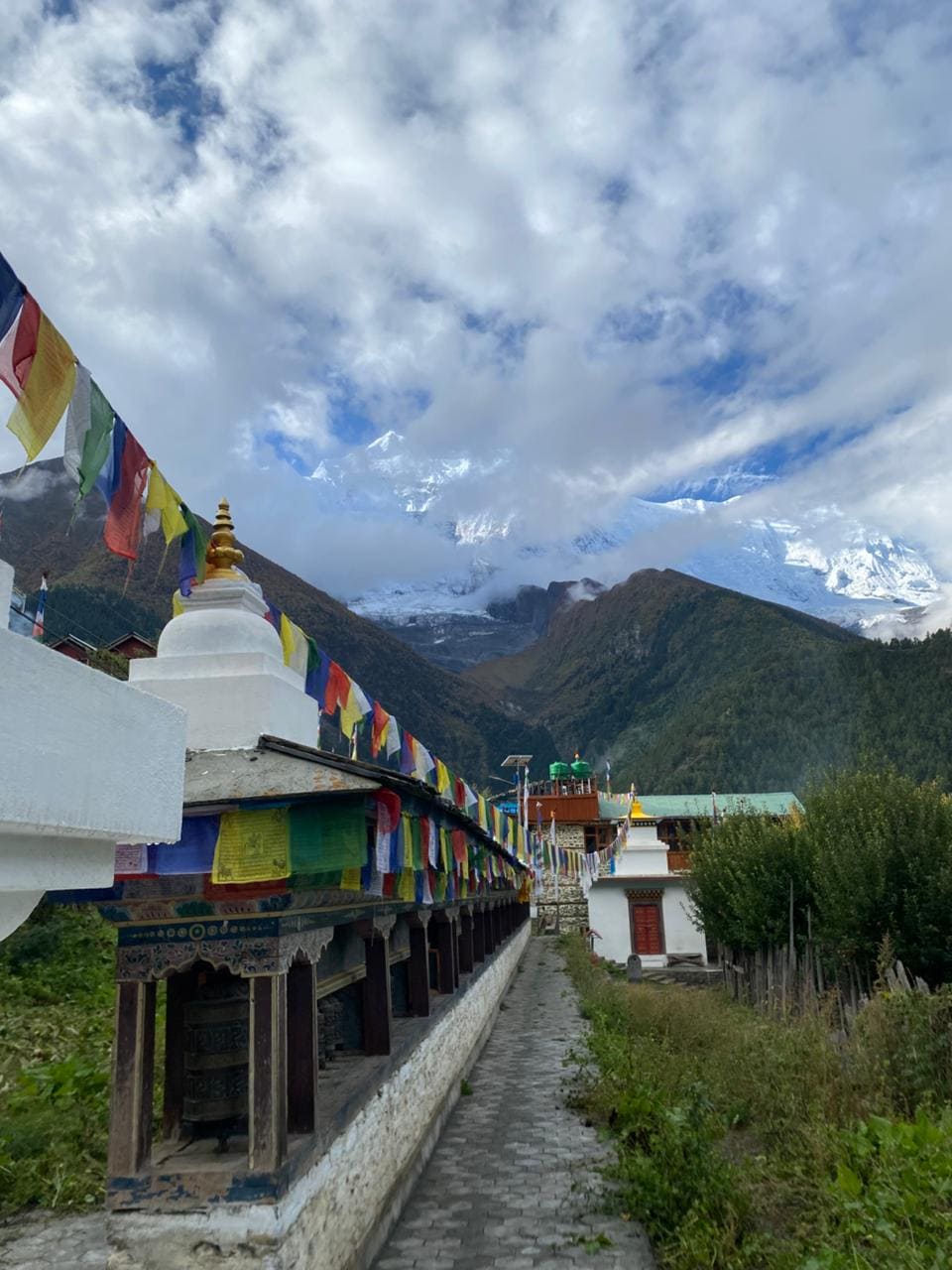
Pisang Peak (6,091m) is one of Nepal’s most popular trekking peaks, which is located in the heart of the Annapurna region above the picturesque village of Pisang. Rising dramatically between Annapurna II and Annapurna IV, this peak offers climbers a perfect combination of high-altitude adventure, technical climbing experience, and breathtaking Himalayan scenery.
Pisang peak is Known as an ideal first technical peak, Pisang Peak is suitable for trekkers who want to step into mountaineering without extreme difficulty. The climb follows the classic Annapurna Circuit trail, making it easily accessible while still providing a true alpine environment with snow, ice, and glacier travel near the summit. Basic mountaineering skills such as rope handling, crampon use, and ice-axe techniques are required, but the route remains achievable with proper guidance and preparation.
Pisang Peak is not only about reaching the summit. It is about the journey through traditional Gurung and Manangi villages, ancient monasteries, and dramatic landscapes that change from lush forests to high-altitude terrain. From the summit, climbers are rewarded with panoramic views of Annapurna II, III, IV, Gangapurna, Tilicho Peak, and the vast Annapurna massif.
This peak is best climbed during the spring (March–May) and autumn (September–November) seasons, when weather conditions are stable and visibility is excellent. With a well-planned itinerary, proper acclimatization, and experienced guides, Pisang Peak offers a safe, rewarding, and unforgettable Himalayan climbing experience for both beginners and seasoned adventurers.
Overview
Peak Height : This peak height is 6091 m
Region: Pisang peak lies in Annapurna Conservation Area.
Trip Duration : 20 days
Difficulty Level: challenging
Best Season : Spring season and Autumn season
Spring (March-May) is one of the best seasons for mera peak climbing.
Why spring is ideal?
• Stable weather and mild temperatures
• Clear mountain views
• Blooming rhododendron forests on lower trails
• Good snow conditions for summit climbing
This season is popular among climbers because of reliable summit success and comfortable trekking condition.
Autumn (September –November) season is the most popular and recommended season for mera peak.
Why autumn is best?
• Crystal-clear skies and excellent visibility
• Dry trails after the monsoon
• Stable snow conditions at higher altitude
• Comfortable daytime temperatures
Autumn offers breathtaking views of Makalu, Everest, and other Himalayan giants.
Highlight :
• Summit Pisang Peak (6,091m) – a classic Himalayan trekking peak in the Annapurna region
• Ideal first technical peak for beginners stepping into mountaineering
• Scenic Annapurna Circuit approach with comfortable teahouse trekking
• Breathtaking summit views of Annapurna II, III, IV, Gangapurna, Tilicho Peak, and Chulu ranges
• Rich cultural experience in traditional Gurung and Manangi villages
• Basic mountaineering training on the route (crampons, ice axe, rope techniques)
• Short and cost-effective expedition compared to other 6,000m peaks
• High summit success rate with proper acclimatization and experienced guides
• Best climbed in spring and autumn with stable weather and clear visibility
• Perfect blend of trekking, culture, and alpine adventure.
Itinerary :
DAY-1: Arrival in Kathmandu (1350m)
DAY-2: Kathmandu – drive to Besisahar – Jagat (1300m)
DAY-3: Jagat – Dharapani (1860m)
DAY-4: Dharapani – Chame (2,670 m)
DAY-5: Chame – Pisang village ( 3200m)
DAY-6: Acclimatization Day at Pisang
DAY-7: Pisang village –Pisang Peak base camp (4,380m)
DAY-8: Base camp – Highcamp (5400 m)
DAY-9: Summit day – Pisang Peak (6091m)- return to base camp
DAY-10: Base camp – Pisang village
DAY-11: Pisang – Manang (3,540m)
DAY-12: Acclimatization day in Manang
DAY-13: Manang – Yakkharka ( 4050 m)
DAY-14: Yakkharka- Thorang phedi(4,450m)
DAY-15: Thorang Phedi – Thorangla Pass (5416m)- Muktinath (3800 m)
DAY-16:Muktinath- Jomsom
DAY-17: Jomsom to Fly or drive to Phokhara
DAY-18:Pokhara – drive or fly to Kathmandu
Required Permit:
- Trekker's Information Management System (TIMS) card, which helps track trekkers and ensure their safety.
- Annapurna conservation Area permit ( ACAP)
- Climbing permit of Pisang peak from NMA
Why to choose pisang peak?
Pisang Peak is an excellent choice for climbers seeking a true Himalayan summit without extreme technical difficulty. Standing at 6,091 meters, it offers the perfect balance between adventure, safety, and accessibility, making it one of Nepal’s most rewarding trekking peaks.
Ideal for first-time climbers, Pisang Peak allows trekkers to step into mountaineering while learning essential skills such as using crampons, ice axes, and fixed ropes. The climb is moderately technical and achievable with proper acclimatization and professional guidance.
One of the biggest advantages of Pisang Peak is its location along the Annapurna Circuit, one of the world’s most famous trekking routes. This means climbers enjoy comfortable teahouse trekking, rich local culture, and diverse landscapes before transitioning into a high-altitude climbing environment.
Pisang Peak also offers exceptional mountain views. From the summit, climbers are rewarded with panoramic vistas of Annapurna II, III, IV, Gangapurna, Tilicho Peak, and Chulu ranges scenery that rivals more difficult peaks.
With shorter duration and lower cost compared to other 6,000-meter peaks, Pisang Peak is time-efficient and budget-friendly without compromising the Himalayan experience. Combined with stable weather during spring and autumn, it provides a high success rate and a safe climbing environment.
For those seeking a meaningful Himalayan adventure that blends culture, trekking, and mountaineering, Pisang Peak stands out as a smart and satisfying choice.
Why Pisang Peak Is Beginner-Friendly
• Moderate technical difficulty: Pisang Peak (6,091m) is considered one of Nepal’s best introductory trekking peaks. You don’t need advanced mountaineering skills.
• Skills are taught during the climb: Essential techniques like using crampons, an ice axe, fixed ropes, and a harness are usually taught by guides before summit day.
• Gradual acclimatization: The route follows the Annapurna Circuit, allowing your body to adjust to altitude naturally.
• High success rate: With good weather and a proper itinerary, beginners often reach the summit safely.
What You Need as a Beginner?
• Good physical fitness: Ability to trek 5–7 hours a day with a backpack.
• Prior trekking experience: High-altitude treks (4,000–5,000m) are helpful but not mandatory.
• Mental preparedness: Summit day is long and challenging, requiring patience and focus.
• Professional support: Certified guides, fixed ropes, and safety equipment are essential.
Less technical difficulty and accessibility:
Pisang Peak is widely regarded as one of the least technical 6,000-meter peaks in Nepal, making it an excellent choice for beginners and first-time climbers. The route does not involve complex ice walls or steep vertical sections, and the climbing can be completed using basic mountaineering techniques such as crampon walking, ice-axe use, and fixed rope support under professional guidance.
Another key advantage of Pisang Peak is its easy accessibility. The approach follows the famous Annapurna Circuit trail, which offers well-established paths, comfortable teahouse accommodation, and reliable food options up to Pisang Village. This reduces logistical challenges compared to remote peaks that require long camping expeditions or helicopter access.
The gradual ascent along the circuit allows for proper acclimatization, lowering altitude risks and increasing summit success rates. With road access to Besisahar and good transportation links, Pisang Peak is also time-efficient and cost-effective.
Because of its moderate technical demands and straightforward access, Pisang Peak is ideal for climbers seeking a safe, achievable, and rewarding Himalayan summit without advanced climbing experience.
Accommodation and meals:
During the trek, accommodation is mainly in Local teahouses, offering basic but comfortable lodging. At higher camps, tented camping is used. Meals include a mix of local Nepali dishes and international options, providing the energy needed for high- altitude trekking.
Why to choose our company?
Himalayan king Trekking and Expedition is a trusted Nepal- based company dedicated to delivering safe, professional, and unforgettable Himalayan adventures. With deep local knowledge and a passion for the mountains, we turn your dream of climbing Mera Peak into a well-guided and rewarding experience. Choosing the right company is key to a safe, successful, and memorable Mera Peak climbing experience. Here’s why climber trust us for their Himalayan Adventure.
1. Experienced and Certified Guides: Our climbs are led by licensed, highly experienced Sherpa guides with proven high-altitude climbing expertise. They are trained in mountain safety, first aid, and rescue procedures, ensuring your journey is safe and well managed.
2. Safety comes first. We follow strict safety standards, including:
• Proper acclimatization schedules
• High-quality climbing and safety equipment
• Regular health monitoring during the climb
• Emergency evacuation support when required
• Your safety is our top priority at every stage.
3. Well-planned Itinerary: Our Mera Peak itinerary is carefully designed to balance adventure and acclimatization. We avoid rushed schedules to maximize summit success and ensure a comfortable climbing experience.
4. Quality Equipment and Logistics: We provide reliable climbing gear, well-organized logistics, comfortable tea house accommodation, and nutritious meals to keep you energized throughout the journey.
5. High Summit Success Rate: Thanks to expert guides, proper acclimatization, and small group sizes, we maintain a strong summit success rate while prioritizing safety over speed.
6. Responsible and sustainable tourism: We practice eco-friendly and responsible tourism, respecting local culture, supporting local communities, and minimizing environmental impact in Himalayas.
7. Personalized Service: From trip planning to post-climb support, we offer personalized attention to meet your needs, whether you’re a beginner or an experienced climber.
8. Local Expertise: As a Nepal-based company, we have deep knowledge of the mountains, weather patterns, and local conditionsgiving you an authentic and well supported Himalayan Adventure with Himalayan experience.
Physical and Mental prepration for Pisang Peak
Climbing Pisang Peak is not extremely technical, but it demands good fitness, stamina, and endurance because of altitude, cold, and long climbing days.
• Cardiovascular Endurance
• Best activities (start 8–10 weeks before):
• Brisk walking or hiking (with a backpack)
• Jogging or cycling
• Stair climbing
• Strength Training
Strong legs and core help on steep trails, snow, and rocky sections.
• Focus areas:
• Legs: Squats, lunges, step-ups
• Core: Planks, sit-ups, mountain climbers
• Upper body: Push-ups (helpful for rope work and balance)
• Train 2–3 times per week
• Hiking Practice
Practice hikes are extremely important.
Try to:
• Hike with a loaded backpack (5–8 kg)
• Walk on uneven terrain
• Do long uphill walks
• If possible, do short treks or hill hikes before the expedition.
• Flexibility & Balance
Cold weather and fatigue increase injury risk.
Include:
• Stretching
• Light yoga
• Balance exercises
This improves movement on snow and rocky ridges.
Mental strength is just as important as physical fitness, especially at high altitude.
Prepare for Altitude Challenges
At high altitude you may feel:
• Slow movement
• Breathlessness
• Fatigue
• Mild headaches
Mental tips:
• Accept slow pace as normal
• Focus on steady breathing
• Think step by step, not summit only
• Develop Patience
• Weather delays, rest days, or slow teammates are common.
• Stay flexible
• Trust your guide’s decisions
Remember: Safety > Summit
Cold & Comfort Management
Cold mornings, simple meals, and basic toilets can be mentally tiring.
Prepare yourself to:
• Wear layers patiently
• Stay calm in discomfort
• Maintain a positive mindset
• Build Confidence & Focus
• Summit night starts very early and can feel long.
Helpful habits:
• Visualize yourself reaching the summit safely
• Stay calm during rope sections
• Follow instructions carefully
• Health & Lifestyle Preparation
• Get enough sleep before the trip
• Eat balanced meals (carbs + protein)
• Stay hydrated
• Avoid alcohol before and during the climb
• Inform your guide about any health issues early
Pisang Peak is an ideal Himalayan objective for climbers seeking a rewarding introduction to Nepal’s 6,000-meter peaks. Combining manageable technical sections with breathtaking alpine scenery, it offers the perfect balance between challenge and accessibility. With proper physical conditioning, basic mountaineering skills, and a strong mental approach, the summit is achievable for both motivated beginners and experienced trekkers looking to step into peak climbing. Success on Pisang Peak depends largely on thoughtful preparation, gradual acclimatization, the right equipment, and choosing the best season to climb. Understanding the risks of altitude, weather changes, and glacier travel is essential, but with experienced guides and careful planning, these challenges become manageable and safe. Beyond the summit itself, the journey through the Annapurna region adds immense value to the climb. Cultural encounters, diverse landscapes, and panoramic views of Annapurna II, III, IV, Gangapurna, and Tilicho Peak make the experience truly unforgettable. Pisang Peak is not just about reaching the top; it’s about personal growth, confidence building, and embracing the Himalayan spirit.
In conclusion, Pisang Peak stands as a complete Himalayan adventure and is less technical yet deeply rewarding. With the right knowledge, preparation, and mindset, it becomes a powerful stepping stone toward higher and more technical mountains in the future.
|
Planning a Trip? Get a free consultation from our travel experts with over a decade of experience. |

Himalaya King
Himalaya King
Adventure Awaits — Let’s Begin Your Journey


