
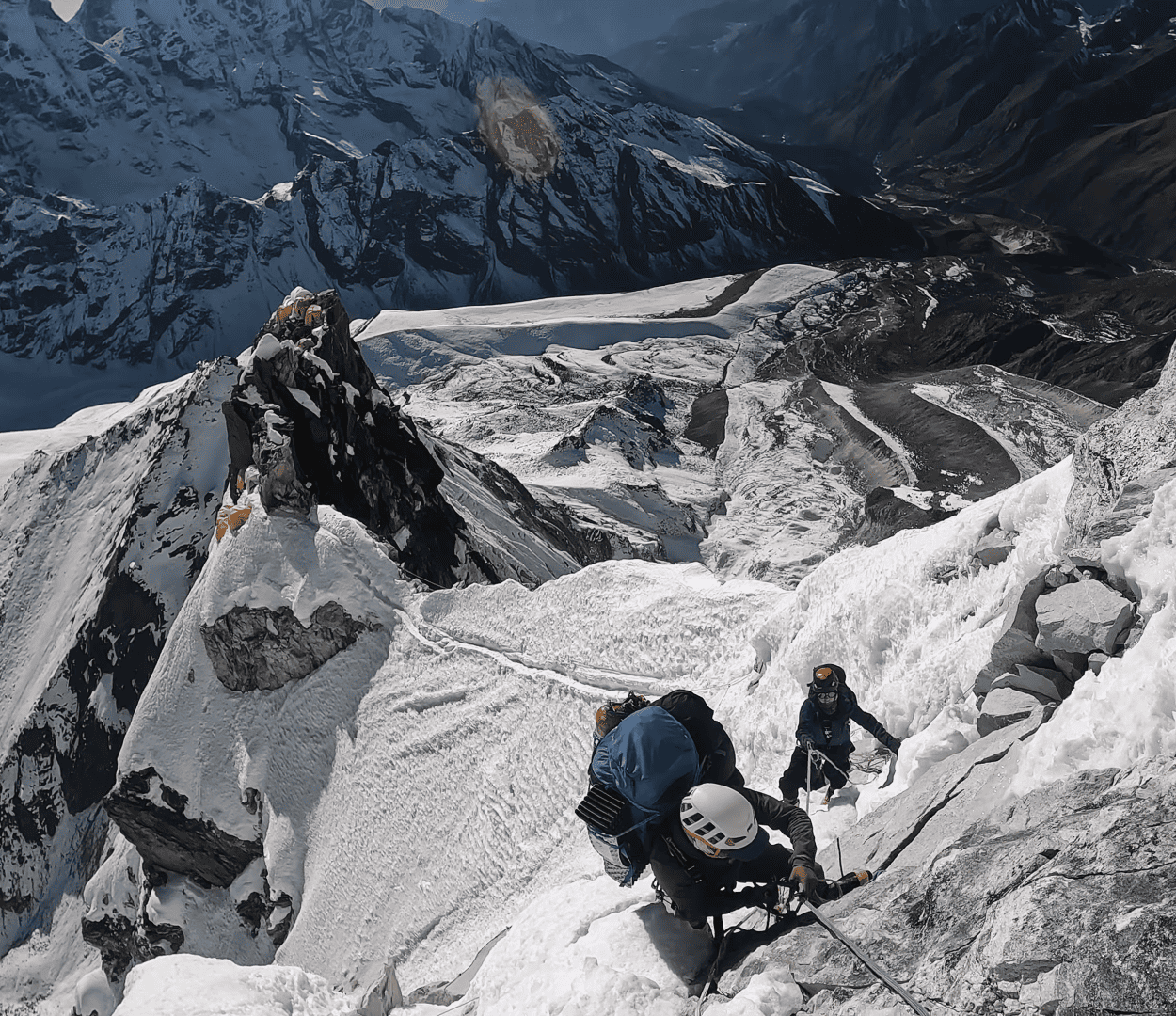
In Nepal, targeting peaks from 6,000 to 8,000 meters is a little risky, and it requires a multi-month preparation for a mountaineering expedition. Every expedition begins with clear preparation. Preparation in Nepal helps you to get real hands-on experience. Some peaks demand advanced ice climbing skills, while others require endurance for long glacier crossings. Mountaineering is more than climbing a mountain. It is a test of preparation, endurance, and commitment. When climbers set their sights on a peak, success depends not only on courage but on careful planning and disciplined training. Choosing the right mountain should match the climber’s experience level. Beginners may start with smaller peaks with low technical challenges because it helps them to prepare for a high-altitude mountaineering expedition. Experienced mountaineers aim for technically demanding summits. Preparation plays an important role in high-altitude success and safety. Without preparation, we cannot ascend a mountain safely. Mountaineering demands commitment long before the climb begins. Training often starts in advance at base camp before the expedition. Climbers adjust their daily routines to include exercise, skill practice, and planning sessions. Preparation helps to build our confidence while climbing mountains or peaks. This commitment continues during the expedition itself, where discipline in pacing, hydration, and teamwork becomes essential. Preparing yourself by committing to training routines is important. Teamwork is necessary for your high-altitude success.
Preparation means you goal to ensure your safety and success
A well-prepared mountaineer focuses on four critical pillars: physical conditioning, technical skills, mental stability, and logistical readiness. Together, these elements form the foundation of a safe and successful expedition.
Physical Conditioning
Climbing at high altitude requires physical fitness. Preparation for physical fitness is necessary to check how your body reacts at high altitude. Physical preparation helps to adjust you to high altitude and helps to keep you safe from altitude sickness. Mountaineers (Sherpas) train their bodies to endure long hours of hiking while carrying their own backpacks. Strength training builds the muscles needed for steep terrain, while endurance training improves cardiovascular capacity.
Typical training may include:
Long-distance hiking with a loaded backpack
Before peak climbing, doing a little hiking or trekking helps you acclimate to high altitude. Trekking in Nepal, such as the Everest Base Camp trek, the Annapurna Circuit trek, the Manaslu trek, and others, is perfect for everyone, and one important aspect of preparation is building physical fitness. Long-distance hiking with a loaded backpack helps practice in real climbing conditions and strengthens the ability to keep going. Trekking is not only effective but also suitable for people of different fitness levels.
Cardiovascular training
Cardiovascular training plays a major role in improving stamina. Activities such as running, cycling, or walking help increase lung capacity and overall endurance. Strength training is necessary for your legs, core, and upper body, which are heavily used during climbs. Simple exercises can make a big difference.
Stair climbing to simulate uphill movement.
Stair climbing is important for trekking or expedition because it is another practical way to prepare, as it closely copies uphill movement encountered in the mountains. Regular practice of stair climbing helps build muscle strength and improve your balance. A well-conditioned body helps climbers conserve energy and reduces the risk of injury. When climbers have a well-conditioned body, it allows them to conserve energy, move efficiently, and reduce the risk of injury. Along with physical fitness, learning basic technical skills is equally important for handling real mountain challenges.
Technical Skills
Basic mountaineering skills are necessary for small peaks, too. With no basic mountaineering training, climbing small peaks becomes hard and even impossible. Mountains often present complex and unpredictable terrain. Along with physical fitness, learning basic technical skills is very important for a safe climbing experience. Climbers must be skilled in using equipment such as crampons, ropes, and carabiners. The company provides skilled, experienced climbers who can train you well. Technical preparation ensures that mountaineers can move safely across snow, ice, rock, and glaciers. Experienced climbers' guides managed all critical situations, such as navigation, weather forecasts, and other rope work, which helped us adjust easily.
Important skills include:
Basic skills
Rope management and knot tying are important basic skills for climbing safely. Using tools like an Ice axe and crampons correctly helps you move safely on snow and ice. Climbers must learn how to travel on a glacier and understand basic crevasse rescue techniques, which play a major role in safety during climbing peaks at high altitude. These basic skills save time and lives at high altitude.
Navigation using maps, a compass, or GPS
Navigation is another key skill in peak climbing. When climbers use Navigation correctly, it leads to a successful summit. Knowing how to use maps, a compass, or GPS helps you stay on the right path, especially in remote areas where trails are not clear.
Learning these skills through training courses or guided practice can make the difference between a manageable challenge and a dangerous situation.
Mental Stability
Mental preparation is important as well as physical preparation. The mental challenge of mountaineering is often greater than the physical one. Harsh weather, fatigue, and high altitude can test a climber’s patience and emotional control. Maintaining focus and calm decision-making is essential for a high-altitude mountaineering expedition.
In many cases, the mental challenges are even harder than the physical effort. Cold weather, tiredness, and high altitude can test a climber's patience and emotions. Staying focused, calm, and making clear decisions is very important in the mountains. A strong mindset helps climbers to stay safe and handle difficult situations better.
Mental preparation includes building inner strength during difficult training sessions and learning how to control fear and uncertainty during uncertain situations. It is also important to keep a positive but realistic attitude. Helping teammates during stressful moments makes the journey more successful. A strong and stable mind allows climbers to adjust to unexpected challenges and continue climbing with confidence.
Logistical Readiness
Even the strongest climber cannot succeed without proper planning. Logistics involve organizing the equipment, permits, food, and transportation required for the expedition. Proper planning is very important before starting a mountaineering expedition. Even strong and experienced climbers need good logistical preparation to ensure a safe and smooth journey. One of the first steps is obtaining the necessary climbing permits and local approvals. Without proper permits, the expedition cannot continue. Preparing the right gear and clothing is also essential. Climbers must carry equipment suitable for cold weather, high-altitude sickness, and changing conditions. Good quality gear helps protect against extreme temperatures and reduces risk.
Planning food supplies and fuel is another important part. At high altitude, the body needs enough energy, so carrying nutritious and easy-to-cook food is necessary. Fuel is also needed for cooking and melting snow for water. Transportation should be arranged in advance. This includes travel to the starting point of the trek, as well as porters or yaks to carry heavy loads if needed. Good logistical planning helps avoid problems during the climb and allows climbers to focus on reaching their goal safely. Careful logistical preparation ensures that climbers can focus on the climb rather than solving preventable problems in the field.
|
Planning a Trip? Get a free consultation from our travel experts with over a decade of experience. |

Himalaya King
Himalaya King
Adventure Awaits — Let’s Begin Your Journey


