
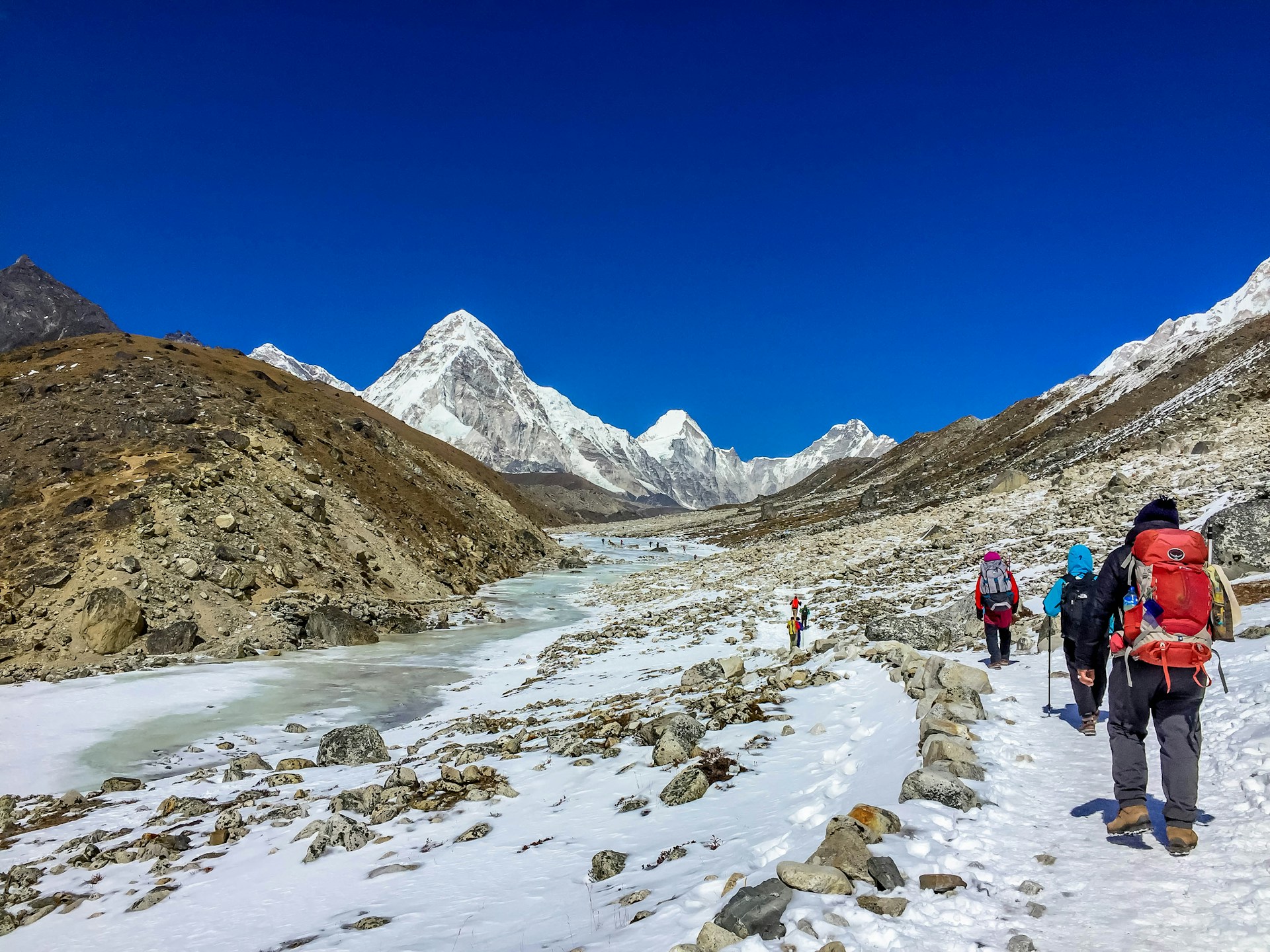
For decades, travelling into the Himalayas, the ultimate rite of global travellers and trekkers, followed a legendary predictable move. Land on Kathmandu, wander into the shops in Thamel to buy essentials, photocopied paper map, pack your worn rucksack and catch the thrilling flight to Lukla. It was the Free Independent Trekker era, answerable only to the rhythm of one's own boots and the open horizon of the Himalayas. With its own authenticity, original taste, as well as limitations, the iconic era of unguided exploration has officially ended.
The last year of classic Trekking panic, which is now triggering a massive rush in solo purists squeezing into one final unrestricted pilgrimage, has swelled into a rigid reality. Nepal's comprehensive ‘No Guide No Trek’ policy has closed the window, heavily enforced with major checkpoints in the Himalayas.
The traditional ways are now gone, old permits are replaced by digital e-TIMS registrations and QR codes scanned at the biometric trail gates. Simply, accessing or navigating the standard routes into the Annapurnna Base Camp Trek or up to Everest Base Camp without a government-licensed guide is no longer legally possible, as checkpoint authorities will not allow further.
So, all such strict policies are meant to keep the physical essence of the Himalayas beautifully undisturbed in its original form. The jagged, snow-capped ridges of Ama Dablam still pierce the skyline, and the morning still leaves you breathless in the Khumbu Region. The mountains haven't changed, but the way of travelling around has. The age of solitary wandering inside the wilderness has now gracefully transformed into the era of collaborative journey.
So, here we are exploring why 2026 is the last year for the classic trek in the Everest.
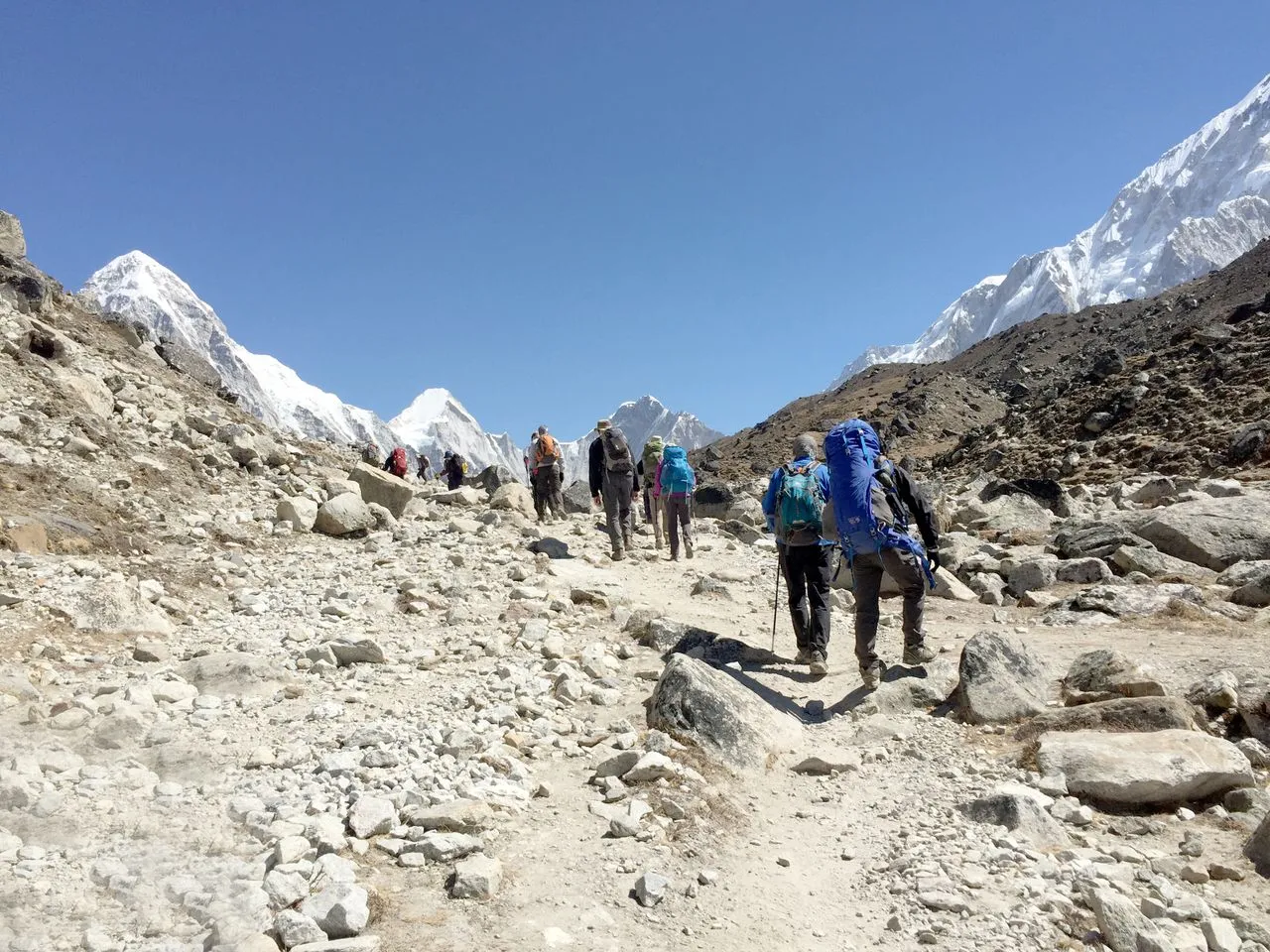
img: Trekkers in Everest Trail with licensed guide and porters
Anatomy of the Rule: No Guide, No Trek in 2026
With the recent joint mandate from the Government of Nepal, the Department of Immigration and the Nepal Tourism Board have updated the new rule for mandatory guides for adventure activities in Trekking Regions.
The policy has been introduced to address the disproportionate number of solo trekkers' disappearances as well as mismanaged Acute Mountain Sickness cases between 2015 to 2025. As well as to ensure the safety of trekkers and safe navigation, along with the cultural insights, the rules are aimed.
Another side of the new policy is also attached to the local economy. The mandatory guide directly funnels for the remote Sherpa and mountain communities, helping the growth of the region.
2026 EBC Permit Confusion
The Elimination of Old TIMS
For decades, the Trekkers Information Management System(TIMS) card was the only record keeping paperwork for Trekking Activities in Nepal. But now, the TIMS is totally dead in the Everest Region and does not work for the entry permit. The local government of the Everest Region completely dissolved the federal TIMS inside the Everest Trail, replacing it with the localized control.
Mandatory Permits for the Everest Region.
With the dissolution of TIMS, there are two permit paperworks which are mandatory to get access inside the region. Replacing the Trekkers Information Management System, a new Khumbu Pasang Lhamu Rural Municipality Permit was introduced. The below table heplps to understand the permit struture more simply,
|
Permit
|
Issuing Authority
|
Purpose
|
Cost (Foreign Nationals)
|
|
Sagarmatha National Park Entry Permit
|
Department of National Parks & Wildlife Conservation (DNPWC) | Funds environmental conservation and trail maintenance inside the UNESCO World Heritage zone. |
NPR 3,000 + 13% VAT (Totaling ~NPR 3,390 / ~$28 USD)
|
|
Khumbu Pasang Lhamu Rural Municipality Permit
|
Local Khumbu Government | Retained directly by the local municipality to build local infrastructure, clinics, and waste management systems. |
NPR 3,000 (~$23 USD) Note: This recently increased from the legacy NPR 2,000 rate.
|
The Digital Shift: QR Code Tracking on Everest Trail
The old days of carrying fragile paper permits which used to dissolve with the rainstorm is now over. In 2026, the entire permit framework operates via a digital, encrypted tracking infrastructure with effective resolution.
While registering the permit, the registration of trekkers profile, emergency medical insurance, and license guide details are kept in the database. Later, trekkers get issued a secure digital pass containing an integrated QR code, with all the digital information.
And inside the region. The licensed guides use dedicated mobile portals to scan into the regional checkpoints in different locations. This digital ecosystem also provides real-time location monitoring across the Khumbu. If any unpredictable factors like an avalanche, flash flood or severe weather event occurs in a specific altitude zone, the authorities insistently know exactly how many trekkers are in the affected zone. Also, who is with them as a guide and where they last checked in, which vastly helps emergency search and rescue or helicopter evacuation as needed.
Step-by-Step Classic 12-Day EBC Itinerary for 2026
The below is the 12 day itinerary for Everest Base Camp Trek. this helps to understand the day-today- trekking journey as well why every day highlights the joureny.
The Mountain Flight
Kathmandu to Lukla (2,860m) to Phakding.
Fly into Tenzing-Hillary Airport. Meet your mandatory, TAAN-certified guide and begin a gentle 3-to-4-hour descent and walk to Phakding.
The Namche Climb
Phakding to Namche Bazaar (3,440m).
Cross the high Hillary Suspension Bridge. Cross the Monjo Checkpoint where your guide scans your digital permits. Push up the steep hill to the Sherpa capital.
Mandatory Acclimatization:Rest Day in Namche Bazaar
Crucial Safety Step: Hike high to the Everest View Hotel (3,880m) for your first glimpse of the peak, then sleep low to force red blood cell production.
The Spiritual Hub
Namche to Tengboche (3,860m).
Trek through rhododendron forests. Climb up to the famous Tengboche Monastery for evening or morning prayers against a backdrop of Ama Dablam.
Into the Alpine Zone
Tengboche to Dingboche (4,410m).
Pass the tree line. The air thins noticeably here. The landscape shifts from lush valleys to raw, windswept stone and alpine shrubs.
Second Acclimatization
Rest Day in Dingboche.
Hike up Nangkartshang Peak (5,100m) to help your body adapt to the impending crossing into the extreme altitude zone.
The Memorial Chortens
Dingboche to Lobuche (4,940m).
Trek alongside the Khumbu Glacier. Pass the powerful emotional site of Thukla Pass, home to stone monuments dedicated to fallen climbers.
The Main Event
Lobuche to Gorak Shep to Everest Base Camp (5,364m).
Push to the final outpost of Gorak Shep. Drop your heavy gear, and make the rocky, emotional 3-hour push to the edge of the Khumbu Icefall. Return to Gorak Shep to sleep.
The Sunrise Summit
Gorak Shep to Kala Patthar (5,545m) to Pheriche.
Pre-dawn climb up Kala Patthar for the absolute best, unobstructed view of Mount Everest. Turn around and begin a rapid, oxygen-rich descent to Pheriche.
The Descent Home
Pheriche to Namche, then back to Lukla.
A 2-day reverse push back through the valley. Celebrate with your guiding team in Lukla before your flight back to Kathmandu.
Note: The above outline is just to provide an idea about the average trekkking journey for EBC. The itinerary days hugely depends upon the customization as well the type of package.
For a more detailed itinerary and day-to-day breakdown, of 14 day exclusive itinerary, you can visit Everest Base Camp Trek with Himalaya King Trekking and Expedition.
Financial Structure for Budgeting the EBC Trek 2026
With the recently updated regulatory framework, a legally guided trek through a registered agency generally costs between 1300 USD and 1800 USD. The cost also depends upon the customisation and the type of trekking activity. The basic packages cost up to 1800 USD, while luxury packages can cost a couple of thousand dollars.
Booking an all-inclusive package for the EBC Trek covers logistics, domestic flights and staff wages into a single flat rate. It also helps to mitigate the risk of sudden, unexpected price spikes while on the trail or during the journey.
The Breakdown of Cost
|
Expense Category
|
Estimated Cost (USD)
|
Key Details & Seasonal Variables
|
|
Round-Trip Flights (Kathmandu/Ramechhap to Lukla)
|
$350 – $450
|
Price varies by season and departure point. Peak-season flights (March–May and October–November) routinely operate from Manthali Airport in Ramechhap to avoid Kathmandu air traffic, requiring an extra ground transfer. |
|
Guide Daily Rates (Licensed & Professional)
|
$25 – $40 per day
|
By law, this mandatory base rate covers the guide's field insurance, food, and high-altitude lodging allocations alongside their wage. |
|
Daily Teahouse Allocation (Food & Lodging)
|
$35 – $50 per day
|
Covers your basic room and three meals. While lower trailhead rooms are cheap, costs for hot showers, device charging, battery banks, and satellite Wi-Fi climb sharply with altitude. |
The Insurance Mandate for EBC Trek
The most confusing part for travellers during the paperwork can be with the insurance. Some trekkers take the standard travel insurance, which is not sufficient for the Khumbu Region, despite the fact that this insurance covers up to the altitude of 2500m, where during the Everest Journey, 3000m altitude is just average.
So, to save trekkers and travellers from sudden out-of-the-pocket costs during an emergency, Helicopter insurance covering the altitude up to 6000m is a mandatory and strictly checked requirement for securing the trekking permits.
Conclusion: Embracing the Guided Experience
The new tightening regulations can be seen with frustration. It is also now seen as the last year of authentic travelling or classic trekking in the Everest. But shifting the perspective can reveal a distinct positive. While the age of wild, unscripted solo trekking in the Khumbu Region is over, the rule also eliminates a massive layer of logistical burdens. Trekkers no longer need to fight for scarce room allocations in high-altitude locations like Gorak Shep or Lobuche, even during the peak season.
And more importantly, as well as necessarily, having a dedicated professional during the journey ensures immediate medical handling and communication at high altitude. Also, beyond safety, a local guide provides deep, authentic cultural insights into the Himalayan community and its history.
So, it's not about the end of an era, it's about the beginning of a new age with more precise adventure, with ensured safety and better experience.
|
Planning a Trip? Get a free consultation from our travel experts with over a decade of experience. |

Himalaya King
Travel Update
Adventure Awaits — Let’s Begin Your Journey


