
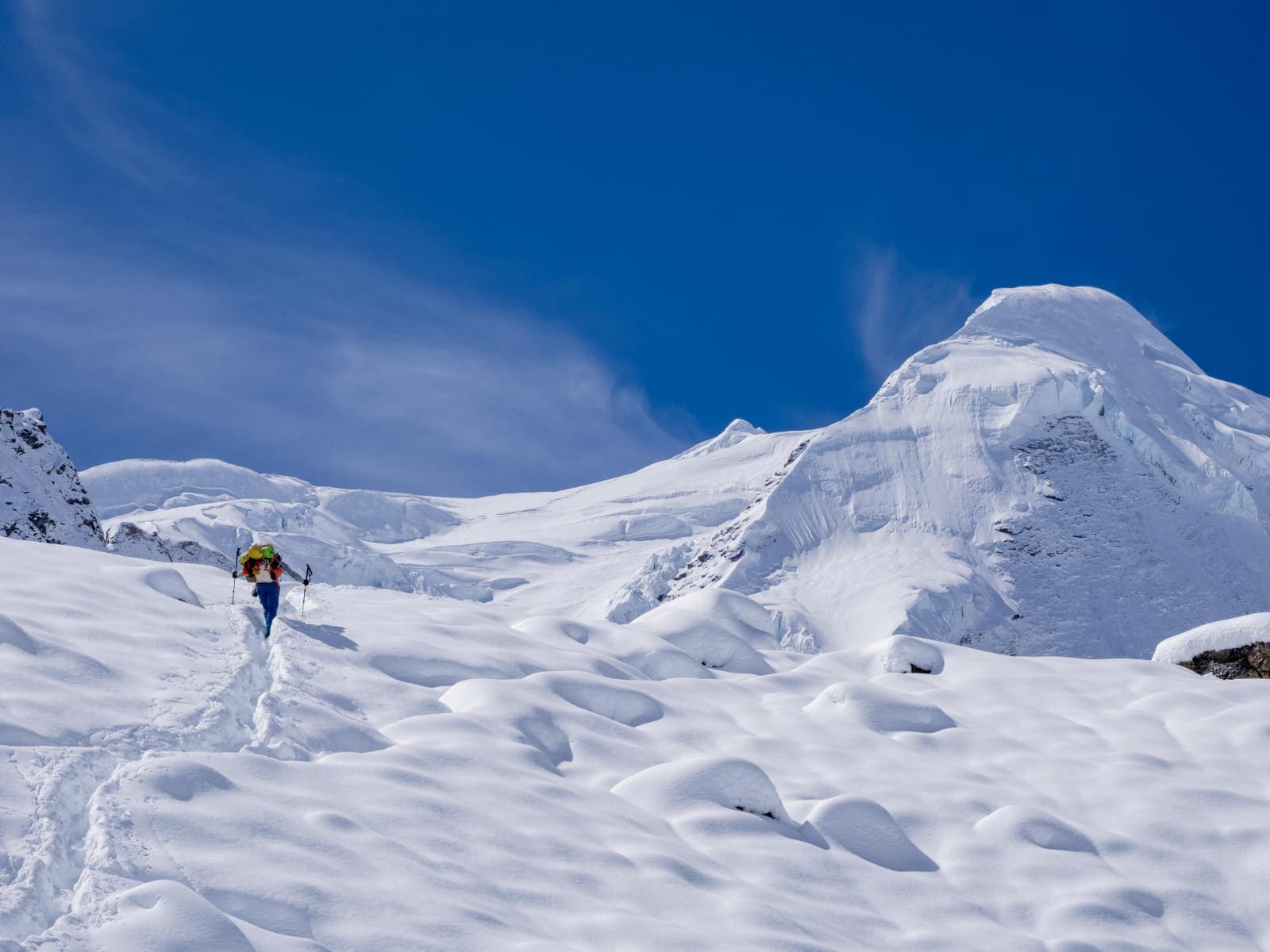
Standing at the top of Mount Baruntse between the big Himalayan Giants, Mount Makalu and Mount Lhotse. Baruntse is the most iconic peak that Sir Edmund Hillary's team found and climbed on May 30, 1954 AD. Baruntse offers the best panoramic views of Mount Makalu and Mount Lhotse. Doing the Baruntse expedition in 2026 offers a perfect blend of challenge, beauty, and adventure. Mount Baruntse is perfect and the best step for those climbers who aim to climb above 8,000 meters. If you are planning the Baruntse expedition in 2026, then unlike the heavily crowded routes of Everest, Baruntse provides a more peaceful and authentic Himalayan experience while still delivering a high-altitude challenge. Baruntse lies in a remote section of eastern Nepal, where three glacier valleys, the Imja, Hunku, and Barun, meet. This unique geography creates a dramatic landscape and untouched wilderness. Hunku Valley is one of the most isolated trekking regions in Nepal. Along the journey, climbers pass through dense forests, alpine meadows, and high mountain passes before reaching the icy world of Baruntse Basecamp.
The Baruntse expedition is physically demanding and requires technical skills; it is still considered achievable with proper training and guidance. This expedition combines trekking, glacier travel, and rope climbing into one complete Himalayan journey. The Baruntse expedition allows you to feel truly connected to nature, away from heavy crowds.
OVERVIEW
Location: Khumbu and Makalu Barun National Park
Peak height: 7,129 meters
Duration: 38 days
Accommodation: Tea House and tented camp
Category: Challenging
Best season: Spring and Autumn seasons
Why is the spring season considered the best season?
In the spring, Rhododendron blooms everywhere along the trail. The weather remains calm and clear with warm temperatures. Easy access for trekking and expeditions. This season is perfect for climbing, and climbers choose this season for climbing peaks due to its low risk of avalanches and heavy snow.
Why is the autumn season considered the best season?
Autumn is the second-best and most popular season for expeditions. The autumn season offers clear panoramic views of the mountains. In autumn, the weather remains calm and stable. Low risk of heavy snowfall or avalanches during expeditions. The autumn season offers a successful peak-climbing experience with fewer difficulties compared to the summer season.
Not recommended season: Winter and Summer seasons
Winter and summer seasons are not recommended due to the high risk of heavy snowfall and unstable weather, which can lead to accidents during the climb. In winter, the temperature remains low, making the expedition more difficult and reducing the chance of success.
Required Permit for Baruntse Expedition
Baruntse Climbing Permit
Makalu Barun National Park Entry Permit
TIMS Card
Expedition liaison officer and environmental fees
Highlights for Baruntse Expedition 2026
1) The Baruntse expedition is an exciting mountaineering adventure.
2) The Baruntse expedition offers panoramic views of the world's highest peaks, like Mount Everest, Mount Lhotse, and Mount Makalu.
3) This offers remote trekking through Hinku Valley, glacier travel, and technical alpine climbing with real Himalayan adventure.
4) This expedition is less crowded to uncover the beauty of the cultural and natural.
5) Blooming Rhododendrons along the trail in the spring season.
Short Itinerary of Baruntse Expedition
DAY-1: Arrival in Kathmandu
DAY-2: Preparation and briefing
DAY-3: Fly to Lukla and trek to Paiya
DAY-4: Trek to Panggom
DAY-5: Trek to Ramailo Danda
DAY-6: Trek to ChatraKhola
DAY-7: Trek to Kothe
DAY-8: Trek to Thangnak
DAY-9: Trek to Khare
DAY-10: Acclimatization Day in Khare
DAY-11: Cross Mera La and trek to Kongma Dingma
DAY-12: Trek to Seto Pokhari
DAY-13: Trek to Baruntse Basecamp
Day-14-15: Acclimatization, Puja ceremony, and preparation at base camp
DAY-16-30: Climbing period (climbing rotation camp 1, 2, 3, and summit push)
DAY-31: Descent to Seto Pokhari
DAY-32: Trek to Amphu Lapcha base camp
DAY-33: Cross Amphu Lapcha and Trek to Chukkung
DAY-34: Trek to Pangboche
DAY-35: Trek to Namche Bazaar
DAY-36: Trek to Lukla
DAY-37: Fly back to Kathmandu
DAY-38: Final Departure
Why choose the Baruntse expedition in 2026?
Choosing the Baruntse expedition in 2026 will make your journey unforgettable with lots of experience. Baruntse is the ideal preparation for an 8,000-meter peak for climbers who are planning to climb in 2026. Baruntse is often chosen by climbers who love less crowded areas. Baruntse is less crowded compared to the Everest routes. It offers a complete, true mountaineering experience by navigating glaciers and snow-covered slopes. Baruntse offers a stunning landscape and experience of remote valleys. It offers a perfect combination of trekking and technical climbing.
Technical Challenges of the Baruntse Expedition
The Baruntse expedition is often considered a stepping-stone peak. Baruntse expedition demands both physical endurance and mountaineering skill. The journey to Baruntse base camp is through the rugged terrain of the Hinku valley. Climbers cross heavily crevassed glaciers where hidden snow bridges can collapse without warning. Proper training and knowledge, along with patience, are important for moving safely. Above Base Camp, climbers encounter sections of unstable icefall. Navigating this zone requires precise timing, often starting before dawn to reduce exposure to falling ice. A steep ice route, sometimes exceeding 50 degrees, requires knowledge of how to use crampons, ice axes, and fixed ropes. Where rock and ice are combined, it demands careful foot placement and strong upper body coordination. In camps II and III are typically placed in exposed locations with strong winds and limited protection. A climber must set the equipment properly; even minor mistakes can lead to dangerous situations in such extreme conditions. During the final push to the summit, demand the most technically. The narrow snow ridge leading to the top is often knife-edged, with steep drops on both sides. Climbers must maintain balance while clipped into fixed lines, often battling strong winds and extreme cold. At over 7,000 meters, the thin air significantly reduces physical performance. Every movement becomes slower and more exhausting. Decision-making ability can also decline, increasing the risk of mistakes during technical sections. Proper acclimatization and pacing are crucial for success. In Baruntse, the weather changes suddenly and unexpectedly. Sudden snowstorms, high winds, and whiteout conditions can halt progress or force climbers to retreat. Monitoring forecasts and maintaining flexibility in the climbing schedule are vital for safety.
The Baruntse expedition of 2026, represents more than a climb because it is a journey of endurance, learning, and personal growth in one of the most remote corners of the Himalayas. Standing at 7,129 meters, Baruntse challenges climbers with a combination of technical terrain, high altitude, and unpredictable weather, making every step toward the summit meaningful. The quiet beauty of the Hunku Valley, combined with the intensity of the climb, creates a unique balance between challenge and reward. Each phase from the approach to the summit push. It teaches valuable lessons about patience, resilience, and respect for the mountain. The experience builds confidence and prepares climbers for more demanding peaks in the future.
|
Planning a Trip? Get a free consultation from our travel experts with over a decade of experience. |

Himalaya King
Himalaya King
Adventure Awaits — Let’s Begin Your Journey


