
You searched. You scrolled. You opened ten tabs and closed nine of them in frustration. Useful, specific, honest information about the North Annapurna Base Camp trek, the one with Panchakunda Lake, the one that approaches from the north via Humkhola, is almost impossible to find online.
That is not because the trek is bad. It is because the trek is new, deliberately low-key, and almost entirely outside the commercial trekking circuit that dominates Nepal's online content. The trail was officially opened and named in 2019. Most travel websites have never written about it. The few that have copied each other's thin information without ever having walked the route.
What Is the North ABC Trek? Understanding Nepal's Hidden Base Camp
The North Annapurna Base Camp trek, almost universally called North ABC, takes you to the northern face of Annapurna I (8,091 m) the same mountain, but approached from the opposite side from the famous southern sanctuary route that draws tens of thousands of trekkers every year.
Historically, this northern approach was used mainly by local herders and expedition teams preparing for Annapurna climbs from the north face. The story of the North ABC dates back 70 years, when French mountaineer Maurice Herzog, along with his team, approached Annapurna from the north side. On June 3, 1950, the successful first ascent became a monumental achievement in mountaineering history. The trail is officially named the Annapurna First Maurice Herzog Trail in his honor.
The route was officially explored and opened in 2019 by the Annapurna Rural Municipality (ARM) group, with support from different trekking associations of Nepal, including TAAN, ACAP, local people, and the Ministry of Tourism.
The critical distinction from the south: you are approaching the world's most dangerous 8,000-meter peak from its northern face the face that faced Herzog and his team in 1950. The views are completely different from the South Annapurna Base Camp, and the route passes through landscapes and villages that south-side trekkers never see.
Panchakunda Lake: The Trek's Sacred Crown Jewel
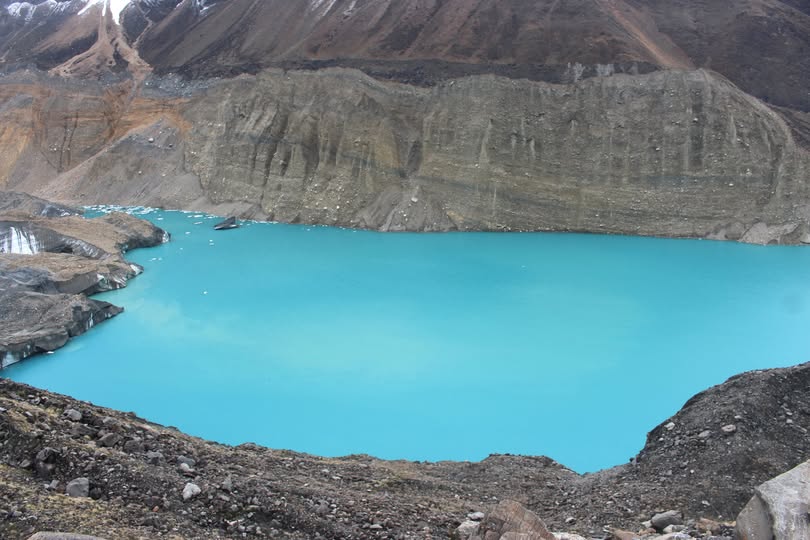
The Panchakunda Tal is one of the major attractions of the North ABC, which translates to "Five Holy Lakes" in Nepali. In olden times, the lake was locally known as "Dikicho," whereas the current name, "Panchakunda," was used after discovering the appearance of the five ponds by activist Tej Bahadur Gurung.
The trail ascends gradually through alpine meadows and high-altitude pasturelands, passing Busket Mela, a sacred site for locals and pilgrims, before reaching Panchakunda, named after the five holy lakes in the region.
Locals believe Panchakunda is a sacred site, adding a spiritual touch to the journey. The five glacial-fed lakes sit at approximately 4,000–4,050 m, directly below the North ABC. The highest camp of the trek is positioned here, making it the only trekking trail in Nepal with a sacred lake at the highest overnight point.
The lake is just below the base camp, making it the only trekking trail in the country that has a beautiful lake at the top point.
How North ABC Differs from South ABC
Most people who search for the "Annapurna Base Camp trek" find information about the south side — the famous route through Ghandruk, Chhomrong, Bamboo, and the sanctuary. That is a fundamentally different trek.
| Feature | North ABC | South ABC |
|---|---|---|
| Approach direction | Northern face of Annapurna I | Southern sanctuary |
| Starting point | Humkhola (via Beni) | Nayapul or Phedi (via Pokhara) |
| Duration | 5–10 days (flexible) | 11–14 days |
| Altitude of base camp | 4,190 m | 4,130 m |
| Teahouse infrastructure | Very limited — camping preferred | Fully established teahouse network |
| Trekker numbers | Very few — genuine wilderness | 30,000–50,000+ per year |
| Permits | ACAP + TIMS | ACAP + TIMS |
| Mountain views | North face Annapurna I, Dhaulagiri, Nilgiri, Tilicho | Annapurna South, Hiunchuli, Machhapuchhre |
| Sacred landmark | Panchakunda (Five Holy Lakes) | Annapurna Sanctuary |
| Accommodation style | Camping / basic tent hotels | Full teahouse system |
The North ABC is not a variation of the South ABC. It is a completely separate route, completely separate experience, and reaches a completely separate base camp on the same mountain's opposite face.
The North ABC Trail: Route, Waypoints, and Terrain in Detail
The Access Point: Getting to Humkhola
The trek begins not in Pokhara or Kathmandu but at Humkhola a small trailhead village in the Myagdi District of Gandaki Province, accessible only by jeep along a rough, unpaved track. This access logistics is the first thing that surprises most planners, because it does not resemble the smooth tourist infrastructure of the South ABC.
The Annapurna North Base Camp Trek route begins with a drive from Kathmandu to Beni, followed by an off-road journey to Humkhola.
The standard transport sequence from Kathmandu:
- Kathmandu → Pokhara: Tourist bus (7–8 hours) or flight (25 minutes). Bus cost: approximately NPR 800–1,200. Flight: approximately USD 80–120.
- Pokhara → Beni: Local bus (approximately 2–2.5 hours, NPR 250–350) or private jeep
- Beni → Humkhola: Jeep on rough unpaved track (approximately 2–2.5 hours). Jeep fare approximately NPR 8,000 per vehicle for locals. Booking in advance is advised. Return: Same path down — once you reach Humkhola or earlier, contact the jeep for pickup. Mobile network may be weak, so plan coordination.
The 5-day North Annapurna Base Camp package starts from Pokhara via a 6–7 hour drive to Humkhola (~115 km) through the Annapurna Conservation Area (ACAP), following stone-paved trails through rhododendron forests, Narchyang Waterfall, and Caves past Busket Mela, Sandikharka, and Gupha Phat.
Humkhola elevation: approximately 2,883–2,890 m. This is significantly higher than the South ABC starting points (Nayapul is at 1,070 m), which means you gain altitude faster and the acclimatization profile is more compressed. Plan accordingly.
Stage by Stage: The North ABC Route
Stage 1: Humkhola (2,883 m) to Sandikharka / Gufaphant (3,250–3,335 m)
From Humkhola, begin trekking: Humkhola → Sandikharka or Bhusket Mela, depending on your pace. On the way, you will pass waterfalls like Phutphute Jharana (Phutphute Waterfall) and foothills.
This is a bit demanding part you will encounter on the first day, on the way from Hum Khola to Guphaphant, where you will need to ascend frequently. Stone-paved trails cut through subtropical forest before rhododendron and oak take over as you gain altitude. The Phutphute Waterfall is a natural stopping point — photograph it and rest here before continuing.
Approximate walking time: 4–5 hours. Elevation gain: approximately 370–450 m.
Stage 2: Sandikharka / Gufaphant (3,250–3,335 m) to Panchakunda Lake (4,000–4,050 m)
The trail ascends gradually through alpine meadows and high-altitude pasturelands. You pass Busket Mela, a sacred site for locals and pilgrims, before reaching Panchakunda, named after the five holy lakes in the region. This remote and spiritual location offers awe-inspiring views of the Annapurna massif and a unique Himalayan atmosphere.
On the second day, you only gain height gradually, but the route is not that vertical or scary to pass. The trail opens from forest into alpine meadow terrain. Yak pastures begin appearing. The Busket Mela area is a sacred site for the local Magar community — treat it with respect and do not disturb any ritual objects or prayer stones.
Panchakunda Lake at 4,000–4,050 m is your overnight camp. The five glacial-fed lakes reflect the Annapurna massif in still morning light. This is one of the most photographically stunning overnight sites in the Annapurna region — entirely unknown to the South ABC trekking world.
Approximate walking time: 5–6 hours. Elevation gain: approximately 700–750 m.
Stage 3: Panchakunda Lake (4,050 m) to North ABC (4,190 m) and return to Humkhola
Early morning hike from Panchakunda Lake to the Annapurna North Base Camp, taking about 45 minutes at a slow walking pace.
The summit push from Panchakunda to North ABC is remarkably short — less than an hour for most trekkers. The trail is rugged and remote, winding through glacial moraines and rocky ridges. Upon reaching North ABC, enjoy an unforgettable panorama of the Annapurna Sanctuary from the less-traveled northern approach.
The view of Annapurna I's north face from the base camp is direct and dramatic, showcasing the mountain's true scale. You are standing beneath the same face that Herzog's team climbed in 1950 — the face that changed Himalayan mountaineering history. On a clear morning before clouds build (typically before 10 AM), the view is extraordinary.
After the base camp visit, descend all the way to Humkholaa, a long day of 6–7 hours, including the base camp walk. Arrange your jeep pickup from Humkhola to Beni in advance.
Complete Itinerary Options: 3, 5, 7, and 10 Days
The North ABC offers unusual flexibility because the trailhead is accessible by jeep, the route is short, and the core experience (Panchakunda + North ABC) requires only 2–3 days of actual trekking.
3-Day Express Itinerary (Minimum Viable Trek From Beni)
| Day | Stage | Altitude | Notes |
|---|---|---|---|
| Day 1 | Beni → Humkhola (jeep) → Gufaphant | 3,335 m | 2.5 hr jeep + 4 hr trek |
| Day 2 | Gufaphant → Panchakunda Lake | 4,050 m | 5–6 hrs, overnight at lake |
| Day 3 | Panchakunda → North ABC → Humkhola → Beni | Return | 45-min to summit, 6–7 hr descent + jeep |
Honest assessment of 3-day: Very fast altitude gain from Beni (830 m) to Panchakunda (4,050 m) in just 2 trekking days is aggressive. Altitude sickness risk is elevated. Suitable only for trekkers with prior high-altitude experience. Not recommended for beginners.
5-Day Standard Itinerary (Recommended for Most Trekkers)
| Day | Stage | Altitude | Notes |
|---|---|---|---|
| Day 1 | Kathmandu/Pokhara → Beni → Humkhola | 2,883 m | Transport day, arrive Humkhola by afternoon |
| Day 2 | Humkhola → Sandikharka (acclimatization at lower camp) | 3,250 m | Short day, 3–4 hrs, rest afternoon |
| Day 3 | Sandikharka → Busket Mela → Panchakunda Lake | 4,050 m | 5–6 hrs, overnight at lake |
| Day 4 | Summit: Panchakunda → North ABC → return to Humkhola | Return | Early start 5–6 AM, long day |
| Day 5 | Humkhola → Beni → Pokhara (jeep + bus) | Return | Transport day |
7-Day Cultural and Immersive Itinerary
| Day | Stage | Altitude | Notes |
|---|---|---|---|
| Day 1 | Pokhara → Tatopani hot springs → Beni overnight | 830 m | Scenic drive, acclimatize low |
| Day 2 | Beni → Humkhola jeep → Narchyang Village | 2,200 m | Magar homestay if pre-booked |
| Day 3 | Narchyang → Sandikharka → Gufa Phat (cave exploration) | 3,335 m | Cave visit en route |
| Day 4 | Gufa Phat → Busket Mela (sacred site) → Panchakunda Lake | 4,050 m | Spiritual significance, lake camp |
| Day 5 | Summit: North ABC → back to Busket Mela | 4,190 m | Early summit, rest lower camp |
| Day 6 | Busket Mela → Narchyang → Humkhola | 2,200 m | Cultural village visit on descent |
| Day 7 | Humkhola jeep → Tatopani hot springs → Pokhara | Return | End with a natural hot spring soak |
10-Day Extended Itinerary (Deepest Experience)
The 10-day version adds days at Narchyang village for cultural immersion, a visit to the Narchyang caves and waterfall system, a full rest and photography day at Panchakunda Lake, and a side hike along the glacier moraine above North ABC for trekkers wanting more elevation. Suitable for those who want the fullest possible experience of the Myagdi district, the Magar communities, and the upper Miristi Khola valley.
Late May Specifically: The Honest Conditions Report
This section answers the question that started this guide — from the trekker who asked about the North ABC in late May and found nothing useful online.
Why Late May Is a Legitimate Window
May extends spring trekking but introduces warmer temperatures and increased cloud cover that can limit afternoon visibility. Late May begins showing pre-monsoon characteristics with occasional afternoon showers, though nothing approaching monsoon intensity.
While early and mid-May usually bring ideal trekking weather, conditions start to shift in late May because the pre-monsoon period begins at this time. Expect occasional rainfall, especially in the afternoons, with an increase in humidity in the forest trails. However, these light rainfalls cause no major hurdle in the trek.
For the North ABC specifically, late May has characteristics that differ from the South ABC:
The rain shadow advantage does not apply here. Unlike Upper Mustang, the North ABC route via Humkhola and the Miristi Khola valley is not in a Himalayan rain shadow. It faces monsoon exposure from the south, just like the standard Annapurna region.
But late May is not monsoon. The monsoon typically reaches the Annapurna region in mid-to-late June. Late May is pre-monsoon, a transitional period with:
- Morning skies: typically clear to partly cloudy
- Afternoon: increasing cloud build-up, light showers possible after 2–3 PM
- Night: clear conditions return in most years
- Temperature at Humkhola (2,883 m): warm during day (15–22°C), cool at night (8–12°C)
- Temperature at Panchakunda (4,050 m): cool during day (5–12°C), cold at night (−2 to 4°C)
- Temperature at North ABC (4,190 m): daytime 3–8°C; early morning at summit: −5 to 2°C
Snow Conditions at Panchakunda and North ABC in Late May
This is the specific question most guides ignore. In late May:
- Below 3,500 m: Trails are fully snow-free. Green, lush forest with wildflowers — rhododendrons are mostly finished at lower elevations but Himalayan wildflowers (primrose, edelweiss, gentian) appear above 3,000 m.
- Between 3,500 m and 4,000 m (Busket Mela to Panchakunda): Patches of residual snow are possible in shaded gullies and north-facing slopes but trails are generally clear.
- At Panchakunda (4,050 m): The lake area itself is typically clear by late May, with snow patches on surrounding slopes. The reflections in the lake at late May are among the best of the year — enough snowpack on the peaks above to create dramatic reflections without the trail itself being snow-covered.
- North ABC (4,190 m): Glacier sections above the base camp still carry significant late-spring snowpack. The approach from Panchakunda to North ABC itself is generally walkable without crampons in late May on a normal year.
Late May specific advice: Start your summit day (Panchakunda → North ABC) as early as possible — 5:00–6:00 AM at the latest. This puts you at base camp by 7:00–7:30 AM with full morning clarity before afternoon clouds build. The early start is even more important in late May than in October, when the post-monsoon clarity persists all morning.
The Late May Unique Advantage: Bloom and Solitude Combined
What late May gives you that no other season provides:
The North ABC trek itinerary tips for spring must include timing for rhododendron season. These vibrant blooms transform the landscape from 2,500–3,500 meters elevation. The contrast between crimson rhododendrons and snow-capped peaks creates unparalleled photographic opportunities.
By late May, lower-elevation rhododendrons are finishing, but mid-elevation blooms (2,800–3,500 m) — precisely the Humkhola to Busket Mela corridor — are still active. Fauna are active and moving freely in May due to the mild temperature. Some of the most common wildlife spotted include the Himalayan Thar (wild goat), the Langur monkey, and the musk deer. It is also one of the best times for birdwatching.
Crowds are virtually non-existent in late May even by North ABC standards. This is a trail with very few trekkers at any time — in late May, you may encounter no other foreign trekkers on the route at all.
Accommodation on the North ABC Trek: The Honest Reality
This is where most guides mislead trekkers with outdated or optimistic information.
Teahouses are available along the North Annapurna Base Camp route, but don't rely on them completely.
Limited accommodation: Only a few basic teahouses are available camping may be required. No telecommunication network: there is no mobile or internet connection in higher areas.
Recently, "tent hotels" have been established along the trail, offering a bed and meals, which is a significant upgrade from pure camping.
The current accommodation reality in 2026:
Humkhola: 1–2 basic teahouses / local guesthouses. Food is simple: dal bhat, noodles, eggs. Accommodation is basic but functional.
Sandikharka / Gufaphant (3,250–3,335 m): 1–2 small teahouses. Not guaranteed to be open outside peak season. Camping as backup is strongly advised.
Busket Mela (3,570 m): Sacred site. Very basic accommodation or camping only.
Panchakunda Lake (4,050 m): Camping is the standard. Only a limited 4 homestays are available in Narchyang Village, need to inform earlier to book. At Panchakunda itself, tent camping is the norm. Some basic tent structures may be available but are not reliable.
North ABC (4,190 m): No accommodation. Day visit only.
Planning implication: The North ABC is a camping trek, not a teahouse trek. Unlike the South ABC where you walk from teahouse to teahouse and book accommodation on the day, the North ABC requires carrying or arranging your tent, a sleeping bag rated to at least −10°C, and cooking supplies (or a cook). Your trekking agency should provide camping equipment as part of the package.
For late May specifically, it is worth confirming with your agency which specific teahouses along the route are currently operating. The few that exist may have inconsistent seasonal schedules.
Permits for the North ABC Trek
The North ABC is straightforward in permit terms, significantly simpler than Upper Mustang.
You do not require any special or restricted area permit to reach North ABC. This does not fall under any restricted zone. It is a moderate trek of Annapurna Rural Municipality of Myagdi District in Gandaki Province, Nepal. This trek does not involve technical routes or high-risk zones.
Required Permits
1. Annapurna Conservation Area Permit (ACAP)
- Cost: NPR 3,000 (~USD 22–25) for foreign nationals; NPR 1,000 for SAARC nationals
- Obtained: NTB office in Kathmandu (Bhrikutimandap) or Pokhara (Lakeside)
- Processing: 15 minutes on-site with passport copy and photo
2. TIMS Card (Trekkers' Information Management System)
- Cost: approximately USD 8–15
- Obtained: NTB offices or through your trekking agency
- Note: If you are trekking alone, you are now required to hire a licensed guide to get your TIMS card. Solo trekkers cannot obtain a TIMS card independently under the 2026 guide-mandatory rule.
What is NOT required:
- Restricted Area Permit (RAP): not needed, North ABC is not a restricted zone
- NMA climbing permit: not needed, no technical climbing involved
- Special mountain permit: not needed
Training and Physical Requirements
The Annapurna North Base Camp Trek is considered a moderate to challenging trek due to its remote location, rugged trails, and high altitude reaching over 4,100 meters. The route involves long trekking days, steep ascents, and basic camping conditions without teahouse facilities. It requires a good level of fitness and prior trekking experience is helpful.
Despite being an easy trek, it is important to note that it is a camping trek. While the route may be relatively easy, the camping aspect means there is a lack of basic facilities along the way. Trekkers should be prepared for limited amenities and adapt to more basic living conditions during the journey.
The honest difficulty assessment: the North ABC is moderate in terms of technical terrain (no glacier crossing, no fixed ropes, no technical sections) but challenging in terms of:
- Speed of altitude gain (Humkhola to Panchakunda gains ~1,170 m in 2 days)
- Camping conditions in cold, remote environment
- Long descent days (Panchakunda to Humkhola is 6–7 hours of knees-and-quads downhill)
- Limited access to emergency services if altitude sickness develops
Training minimum for late May: Be able to hike 5–7 hours per day with a 10–15 kg pack over varied terrain. Prior altitude experience above 3,000 m is highly beneficial. If this is your first time above 3,500 m, use the 7-day itinerary to allow proper acclimatization.
Essential Gear for the North ABC Trek
Non-Negotiable Items
- Sleeping bag: rated to at least −10°C (−15°C for late May/early June safety margin)
- Trekking poles: essential for the long first-day ascent and the long summit-day descent
- Waterproof layer (jacket and trousers): afternoon rain in late May is possible
- Warm insulated jacket: nights at Panchakunda drop below 0°C even in late May
- Headlamp with spare batteries: essential for early morning summit start
Late May Specific Additions
- Sun protection: high-UV at 4,000+ m. SPF 50+ sunscreen, UV-rated sunglasses, lip balm
- Gaiters: useful for any snow patches above 3,500 m and for wet trail sections
- Lightweight rain cover for pack: afternoon showers in late May
- Insect repellent: lower forests have mosquitoes and other insects in late spring
What You Can Rent in Pokhara
Down jacket, sleeping bag, trekking poles, rain gear, and duffel bags are all available for rental in Pokhara's Lakeside area at reasonable daily rates. Confirm with your agency what camping equipment is included in the package.
Altitude Sickness: Risk Management on North ABC
At 4,190 m, the North ABC sits well above the 3,000 m threshold where Acute Mountain Sickness (AMS) becomes a meaningful risk for unacclimatized trekkers. The compact itinerary — which compresses significant altitude gain into a short timeframe — makes proper planning essential.
The golden rule: Never ascend more than 400–500 meters of sleeping elevation per day above 3,000 m.
On the standard 5-day itinerary, the move from Sandikharka (3,250 m) to Panchakunda (4,050 m) is an 800 m sleeping elevation gain in a single day — above the recommended limit. This is why the 7-day itinerary (with an extra acclimatization day at around 3,250 m before moving to the lake) is the recommended approach for trekkers without prior Himalayan experience.
Warning signs requiring descent: Severe headache unresponsive to ibuprofen and hydration, loss of coordination, breathlessness at rest, confusion. These are medical emergencies on a remote route with no helicopter access directly to high camp. Descent immediately to Humkhola and then Beni if serious symptoms develop.
Prevention: Stay hydrated (3–4 liters of water daily), ascend slowly, sleep at lower elevation if symptoms appear, consider Diamox (acetazolamide) if prescribed by a doctor before departure.
Safety Considerations Specific to Late May
Mobile network may be weak — plan coordination in advance. Above Humkhola, mobile connectivity becomes unreliable and disappears entirely above 3,500 m. Inform your agency or a contact person of your planned itinerary and exit date before losing signal.
Jeep coordination: Your jeep driver in Beni → Humkhola is your exit plan. Confirm your return pickup date and a contingency contact point at Humkhola before heading up. If plans change on the mountain, you need an alternative communication plan (ask your guide what local radio contact options exist).
River crossings: The Miristi Khola valley has water crossings on the approach trail. In late May, snowmelt increases water flow. Crossings are generally manageable but take care after afternoon rain. Your guide will assess conditions.
Wildlife: The Annapurna Conservation Area is home to snow leopards, Himalayan tahr, musk deer, and red pandas in the upper forests. Respect wildlife protocols — do not approach or feed animals.

Himalaya King
Himalaya King
Adventure Awaits — Let’s Begin Your Journey


