If you've been planning a trip to Upper Mustang and found a blog telling you the permit costs USD 500, stop. That information is outdated. As of late 2025, Nepal's government officially abolished the flat USD 500 fee and replaced it with a flexible USD 50 per person per day system one of the biggest policy changes in Nepal trekking history.
Why Upper Mustang Has Always Required a Special Permit
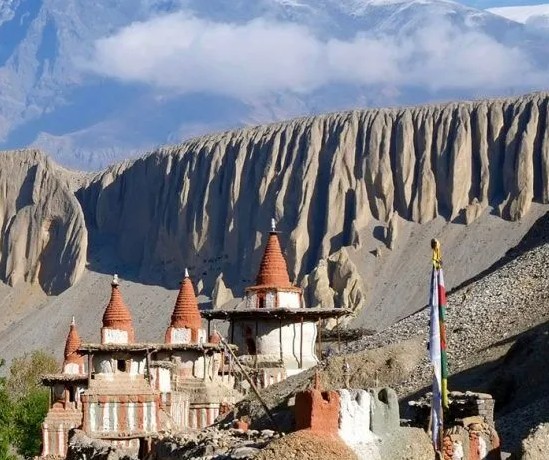
Upper Mustang is not like the rest of Nepal. It is a Trans-Himalayan region bordering the Tibet Autonomous Region of China via the Korala Pass, one of the few open land borders between Nepal and Chinese territory. This geographic sensitivity is the primary reason the Nepali government classified the area as a Restricted Zone when it first opened to foreign trekkers in 1992.
Before 1992, Upper Mustang was entirely closed to foreigners. The Kingdom of Lo, a semi-autonomous Tibetan Buddhist monarchy established in 1380 CE by Ame Pal, operated in near-complete isolation from the outside world for centuries. When Nepal finally permitted international access, it did so carefully, imposing a high permit fee specifically designed to limit visitor numbers, protect the fragile Tibetan cultural heritage, and fund conservation.
That original USD 500 per 10-day fee structure remained largely unchanged for over 30 years, even as roads were built into the region, helicopter access improved, and the justification for a blanket 10-day minimum became increasingly difficult to defend. Approximately 150,000 foreign tourists flew into Mustang each year, but only approximately 3–4 percent made it into Upper Mustang, a direct consequence of the permit barrier stopping most travelers at Kagbeni or Muktinath.
The 2025 reform was the result of more than a decade of pressure from local leaders, tourism operators, and parliamentarians. For nearly 15 years, Mustang's local leaders pushed to cut the steep permit fee, arguing it hindered tourism in a culturally rich area. The policy shift, when it finally came, was decisive.
What Changed: The Old System vs. The New System
Understanding the contrast between old and new is important because many websites, operators, and even some official materials still reflect outdated information.
The Old Permit System (Pre-December 2025)
Under the previous structure:
- Cost: USD 500 per person for the first 10 days mandatory, non-negotiable, paid regardless of how many days you actually spend in the restricted area
- Extensions: USD 50 per person per additional day beyond day 10
- Minimum group size: Two foreign trekkers plus a licensed guide solo foreign trekking was prohibited
- Result: A 3-day trip costs the same as a 10-day trip. Short jeep tours, motorbike adventures, and quick festival visits all bore the same USD 500 upfront charge
The New Permit System (Effective December 22, 2025)
Effective from December 22 (Paus 7), the Nepal Government officially gazetted a new fee structure for the Upper Mustang Special Trekking Permit. Visitors planning to trek or drive through this region are now charged a daily rate of USD 50 per person.
The key changes:
- Cost: USD 50 per person per day you pay only for the days you spend inside the restricted area
- No minimum duration: The mandatory 10-day block has been eliminated entirely
- The change is official: This landmark decision, announced at a Cabinet meeting by Communications Minister Jagadish Kharel, ends the long-standing 10-day minimum fee rule that had been in place for decades, enacted by amending Schedule 12 of Nepal's Immigration Regulations.
- Applies to all visit types: The daily rate applies to trekkers, jeep tour participants, motorbike riders, and helicopter visitors alike
What Did Not Change
The permit reform changed the fee structure. It did not change the restricted-area classification of Upper Mustang, the mandatory requirement for a licensed guide, or the permit application process through registered agencies. Upper Mustang remains one of Nepal's most regulated trekking destinations.
The Solo Trekking Rule: The March 2026 Update
This is the most misreported aspect of Mustang's 2026 permit changes. Here is the accurate picture:
As of March 22, 2026, you can trek solo in the Upper Mustang region with a licensed guide. The two-person minimum requirement for foreign trekkers has been officially removed.
Nepal's government updated its trekking permit policy, making it easier for individual foreign tourists to explore restricted areas. Previously, permits in these regions were only issued to groups of two or more, but as of March 23, 2026, solo travelers can now obtain them.
What this means in practice:
You no longer need to find a second trekker to share your permit. You can plan your own itinerary as a solo traveler, book with a registered agency, hire a licensed guide, and enter Upper Mustang independently.
What has not changed:
A licensed guide is still mandatory for all solo trekkers. Every solo trekker must hire a licensed guide through a registered trekking agency. Each guide can lead up to seven trekkers. You cannot self-guide in Upper Mustang regardless of your experience level.
The practical implication for solo travelers:
Your costs will be higher than those for group travel because you bear the full guide fee yourself rather than splitting it. But the previous "ghost permit" workaround, where solo trekkers paid for a second permit to satisfy the two-person rule, is no longer necessary.
All Permits Required for Upper Mustang 2026: The Complete List
Upper Mustang requires three separate permits. Missing any one of them is a legal violation. Here is each permit explained:
1. Restricted Area Permit (RAP) The Main Upper Mustang Permit
Issued by: Department of Immigration, Nepal (Kathmandu or Pokhara offices only) Cost 2026: USD 50 per person per day Applies from: Kagbeni village northward all areas of Lomanthang Rural Municipality (Ward No. 1–5) and Lo-Ghekar Damodarkunda Rural Municipality Valid for: Exactly the number of days specified in your approved itinerary Applications: Only through registered Nepali trekking agencies individual foreign nationals cannot apply directly
The RAP is the defining permit for Upper Mustang access. It is checked at the entry checkpoint at Kagbeni and at the exit checkpoint at Lo Manthang. Trekking in Upper Mustang without a proper Restricted Area Permit is illegal and results in heavy fines of up to USD 5,000 with immediate deportation, and potential bans from future trekking in Nepal.
Permit validity rules:
- The validity stops on the final day of the permit; trekkers are supposed to get out of Upper Mustang before midnight on the same date. There is no official grace period. Exceeding one's authorized duration may result in fines ranging between USD 50 and USD 100 per day per individual.
2. Annapurna Conservation Area Permit (ACAP)
Issued by: Nepal Tourism Board (NTB) office in Kathmandu (Bhrikutimandap) or ACAP counter in Pokhara (Lakeside/Damside)
Cost 2026: NPR 3,000 per person (approximately USD 22–25 for foreign nationals); NPR 1,000 for SAARC nationals; NPR 100 for Nepali citizens
Duration: Valid for the full duration of your trek no daily charge
Required because: Upper Mustang still belongs to the Annapurna Conservation Area. Thus, trekkers are also required to acquire an ACAP in addition to the RAP.
3. TIMS Card (Trekkers' Information Management System)
Issued by: Nepal Tourism Board offices in Kathmandu or Pokhara, or through your trekking agency.
Cost: Approximately USD 8–15 per person (group vs. individual pricing varies).
Required for: Trekkers traveling to Upper Mustang overland (on foot, jeep, or motorbike).
Waived for: Trekkers who fly both into and out of Jomsom no overland section means no TIMS requirement
2026 Permit Cost Calculator: What You Will Actually Pay
Cost Comparison: Old System vs. New System
| Stay in Restricted Area | Old Cost (USD 500 flat) | New Cost (USD 50/day) | Saving |
|---|---|---|---|
| 3 days | USD 500 | USD 150 | USD 350 |
| 4 days | USD 500 | USD 200 | USD 300 |
| 5 days | USD 500 | USD 250 | USD 250 |
| 7 days | USD 500 | USD 350 | USD 150 |
| 10 days | USD 500 | USD 500 | No change |
| 14 days | USD 700 | USD 700 | No change |
| 16 days | USD 800 | USD 800 | No change |
Total Permit Cost by Itinerary Type (2026)
| Itinerary Type | Days in RA | RAP Cost | ACAP | TIMS | Total Permits |
|---|---|---|---|---|---|
| Quick Tiji Festival jeep tour | 3–4 days | USD 150–200 | USD 25 | — (fly in/out) | USD 175–225 |
| Standard jeep tour | 5–6 days | USD 250–300 | USD 25 | USD 10 | USD 285–335 |
| Short trek to Lo Manthang | 7 days | USD 350 | USD 25 | USD 10 | USD 385 |
| Classic trek | 10 days | USD 500 | USD 25 | USD 10 | USD 535 |
| Extended cultural trek | 14 days | USD 700 | USD 25 | USD 10 | USD 735 |
How to Apply for the Upper Mustang Permit: Step-by-Step
The permit application process has specific rules that differ from most Nepal trekking permits. Follow this process exactly.
Step 1: Book with a Registered Nepali Trekking Agency
This is not optional. The RAP can only be issued to travelers through licensed Nepali trekking agencies, and this is done at the Department of Immigration in Kathmandu or Pokhara. Independent travelers are not accepted on a walk-in basis.
When selecting an agency, verify that they are:
- Registered with the Government of Nepal
- Members of TAAN (Trekking Agencies' Association of Nepal) or the Nepal Tourism Board's registered operator list
- Holding a Nepal Rastra Bank-approved USD bank account (required for the RAP online application portal)
Step 2: Submit Your Documents
Provide your trekking agency with:
- Passport copy (valid for at least 6 months from your trek start date)
- Nepal visa copy
- 2–4 recent passport-sized photographs (color, plain background)
- Detailed day-by-day itinerary including entry and exit dates, nightly stop locations, and exact number of days in the restricted area
- Insurance details (travel insurance covering helicopter evacuation is mandatory for all trekkers)
Step 3: Agency Submits the RAP Application
Only a registered Nepali trekking company with a USD bank account in Nepal can apply. The application form is online and authorized by the Nepali Department of Immigration. Passport details, photographs, and an itinerary are needed.
Permits can now be applied for online using your Nepali visa number. International applicants can pay fees in advance using an Application Submission ID.
Step 4: Permit Processing Time
Standard processing takes 2–3 working days in Kathmandu once all documents are correctly submitted. In peak trekking season (March–May and September–November), allow 3–5 working days. It is best to plan your arrival in Kathmandu at least 3 to 4 days in advance of your trek.
Pokhara's Department of Immigration office is generally faster and less busy than Kathmandu's for permit processing worth considering if you are flying directly into Pokhara before your trek.
Step 5: Collect Your Permits and Verify All Details
Once issued, your RAP will show your name, passport number, exact entry and exit dates, permitted locations, and approved itinerary. Verify every detail before leaving the agency. Errors on the permit cause problems at Kagbeni checkpoint and can prevent entry into the restricted area.
Collect your ACAP from the NTB office separately (approximately 10–15 minutes at the counter). Your TIMS card is typically issued at the same office or by your agency.
Step 6: Present Permits at Kagbeni
Kagbeni village is the gateway to Upper Mustang. All trekkers, jeep tour participants, and motorbike riders must present their RAP, ACAP, and TIMS at the checkpoint before proceeding north. Officials check permits at Kagbeni on entry and at Lo Manthang on exit. There is also a checkpoint at Lo Manthang itself.
Permit Rules That Have Not Changed
Licensed guide: Mandatory without exception. Every foreign trekker, solo or group, trekking or jeep touring must be accompanied by a licensed Nepali guide registered with a TAAN-approved trekking agency throughout their entire time in the restricted area. The strict requirements governing how you visit Upper Mustang are still enforced. You cannot trek here independently; the rules are non-negotiable and strictly enforced.
Agency-only permit applications. There is no walk-in permit window. There is no way to apply independently as a foreign national. The permit must be arranged through a registered agency.
Permits are valid for a single entry only. The RAP is non-transferable, non-refundable, and valid for a single entry. If your plans change after the permit is issued, you cannot transfer it to different dates or another trekker.
No permit issuance on the trail. Permits are issued only in Kathmandu and Pokhara — not in Jomsom, Kagbeni, or anywhere along the route. If you arrive at Kagbeni without a valid RAP, you will be turned back.
Children under 10 years: No permit fee required for children under 10, but they must be accompanied by a permitted adult guardian.
Permit extension: Extensions are possible but must be arranged through the Department of Immigration in Jomsom (local office) or Kathmandu, before your current permit expires. Extensions are charged at the same USD 50/day rate.
Where to Obtain Each Permit
Restricted Area Permit (RAP)
Obtained exclusively through your registered trekking agency, which submits the application to:
- Department of Immigration Kathmandu: Kalikasthan, Dillibazar, Kathmandu
- Department of Immigration Pokhara: Pokhara office (faster processing, smaller queue)
Processing: 2–5 working days depending on season. Payment in USD cash or bank transfer through your agency.
ACAP Permit
- Kathmandu: Nepal Tourism Board (NTB) office, Bhrikutimandap, open 10 AM–4 PM on working days
- Pokhara: ACAP counter, Damside/Lakeside area
- Processing: 10–15 minutes on-site. Bring passport copy, one photo, and fee in cash.
TIMS Card
- Kathmandu: NTB headquarters, Bhrikutimandap, or through your trekking agency
- Pokhara: TAAN Pokhara office, or through your agency
- Processing: Same day, 10–15 minutes. Can be arranged by your agency simultaneously with other permits.
Agency-arranged option: Most reputable trekking agencies handle all three permits as part of their package, submitting documents and collecting permits on your behalf. This is the most efficient approach — particularly for the RAP, which requires agency authorization regardless.
Upper Mustang Permit for Different Nationalities
Foreign nationals (non-SAARC countries): USD 50 per person per day for RAP + USD 25 ACAP + USD 10 TIMS
SAARC nationals (India, Pakistan, Bangladesh, Sri Lanka, Bhutan, Maldives, Afghanistan): Same permit fees of USD 50 per day per individual are given to citizens of SAARC countries under the new rule. Rules for groups and guiding still exist.
Upper Mustang permit cost for indian nationals: Treated as SAARC nationals for fee purposes. Open border entry into Nepal, but Upper Mustang's restricted area status applies equally; RAP and licensed guide are mandatory.
Nepali citizens: A much-reduced local fee applies (approximately NPR 1,000/day for RAP equivalent). Nepali citizens from the Mustang district itself can move freely within the area. Citizens from other districts require permission from the local administration at minimal administrative cost.
Children under 10 years: No RAP fee regardless of nationality. ACAP fee still applies.
What the Permit Fee Pays For
The permit revenue is not simply government income. It funds a specific set of conservation and community services:
Cultural preservation: Monasteries, cave dwellings, murals, and traditional architecture in Lo Manthang require ongoing conservation funding. The ancient Thubchen, Jampa, and Chhode monasteries, some with murals dating back 500+ years, depend in part on permit revenue for structural maintenance.
Environmental management: Upper Mustang's arid, fragile ecosystem requires active management. Trail maintenance, waste removal in high-traffic areas like Lo Manthang, and protection of the region's unique desert flora are funded through the permit system.
Community development: The fee change is expected to bring greater cultural exchange, with easier access, and more travelers can now explore Upper Mustang's rich heritage. The change benefits local communities that rely on trekking income. Local guides, guesthouse operators, and porters in the region benefit directly from increased visitor flow.
Border security management: The Korala Pass border with Tibet is one of Nepal's few functioning land crossings with China. The permit system maintains oversight of foreign national movement in this sensitive zone and funds the checkpoint infrastructure at Kagbeni and Lo Manthang.
Common Mistakes That Get Trekkers Turned Back at Kagbeni
The Kagbeni checkpoint is staffed and enforced. These are the most common problems that cause trekkers to be turned back:
Arriving without a RAP. No exceptions. If you planned to "sort it out in Jomsom," you cannot permits are not issued on the trail.
Outdated itinerary on the permit. If your travel plans changed after the permit was issued (different entry date, different number of days), your permit may not match your actual arrival. Always notify your agency immediately if plans change or amendments require re-processing.
Unaccompanied trekking (no guide present). Guides are checked at Kagbeni. If your guide is not physically with you at the checkpoint, you will not be permitted to pass. The guide must remain with you throughout the restricted area.
Permit in the wrong name or with a typo. Verify your name exactly matches your passport before your agency submits the application. Government permits cannot be corrected quickly once issued.
No ACAP permit. Some trekkers arrive with only the RAP and are surprised that the ACAP is a separate requirement. Both must be presented at checkpoints.
Expired Nepal visa. Your Nepal tourist visa must be valid throughout your Upper Mustang stay. A visa that expires while you are in the restricted area creates a serious complication. Ensure your visa validity extends well beyond your expected exit date.
Permit Cost in Context: Is Upper Mustang Worth It?
The permit reform makes the honest answer easier than before. For a 5-day jeep tour to witness Lo Manthang, the Tiji Festival, and the ancient monasteries, you are now paying USD 250 in RAP fees plus approximately USD 35 in ACAP and TIMS, for a total permit cost of approximately USD 285. Add guide fees (USD 25–35/day) and a jeep tour package (USD 1,200–2,000), and the full cost of a 5-day Upper Mustang experience runs approximately USD 1,500–2,500 per person.
For that investment, you access one of the last living Tibetan Buddhist kingdoms on Earth. The walled medieval city of Lo Manthang, home to approximately 1,300 people of Tibetan descent, preserves a culture, language, and architectural tradition that has survived 600 years of isolation. The cave dwellings of Chhoser were carved into red cliffs over 3,000 years ago. The annual Tiji Festival, a three-day masked dance ceremony unchanged for centuries. Landscapes so unlike the rest of Nepal that travelers consistently describe the experience as entering another country entirely.
Planning Your Upper Mustang Trip Around the New Permit System
The new USD 50/day system creates itinerary flexibility that previously did not exist. Here is how to plan intelligently:
For the Tiji Festival (May 13–16, 2026): A purpose-built Tiji Festival trip can now be structured as 8–10 days total, flying from Pokhara to Jomsom, jeep or trek to Lo Manthang (2–3 days of approach), 3 days for the festival, and 2–3 days to return. Days inside the restricted area: approximately 5–7. Permit cost: USD 250–350. This is viable as a sub-USD 2,500 total trip, which was not possible under the old USD 500 flat-fee system.
For photography and cultural travel: Short but deep visits, 5 days focused entirely on Lo Manthang, the monasteries, and Chhoser caves, are now priced proportionally to their duration. The old system penalized short visits; the new system rewards them.
For trekkers combining with Annapurna Circuit: Adding a 7-day Upper Mustang extension (from Kagbeni north) now costs USD 350 in RAP fees, a meaningful but proportionate addition to an already significant trek.
For first-time visitors: A 10-day standard trek costs the same under both systems. The new system does not make long treks cheaper — it makes short treks accessible.
Summary: Upper Mustang Permit 2026 at a Glance
| Permit | Cost | Where | Time |
|---|---|---|---|
| Restricted Area Permit (RAP) | USD 50/person/day | Dept. of Immigration via agency | 2–5 working days |
| ACAP | ~USD 25/person | NTB office Kathmandu or Pokhara | 15 minutes |
| TIMS Card | ~USD 10/person | NTB/TAAN or through agency | 15 minutes |
| Licensed guide | USD 25–35/day | Arranged by agency |
Three rules that always apply:
- Must book through a registered Nepali trekking agency
- Licensed guide is mandatory for all foreign trekkers
- Permits must be obtained in Kathmandu or Pokhara before reaching Kagbeni
You now pay only for the days you actually spend in Upper Mustang, at USD 50 per person per day making short visits, jeep tours, motorbike adventures, and festival trips significantly more affordable than under the old USD 500 flat system.
|
Planning a Trip? Get a free consultation from our travel experts with over a decade of experience. |
Himalaya King
Content Writer
Adventure Awaits — Let’s Begin Your Journey


