
Nepal is one of those rare countries that makes you feel small in the most magnificent way possible. Stand at the edge of Kathmandu's ancient Durbar Square and eight centuries of history press down on every stone around you. Walk into the Khumbu valley on a clear October morning and find yourself dwarfed by mountains so large they create their own weather. Sit in the candlelit silence of a Tibetan monastery in Lo Manthang and realise that some corners of the world have remained almost completely unchanged for six hundred years.
This is Nepal. It holds eight of the fourteen highest peaks on Earth, seven UNESCO World Heritage Sites, one of Asia's last living medieval kingdoms, and a wildlife sanctuary where Bengal tigers still prowl through sal forest alongside one-horned rhinoceroses. It is, by any measure, one of the most extraordinary countries on the planet.
Trek to Everest Base Camp
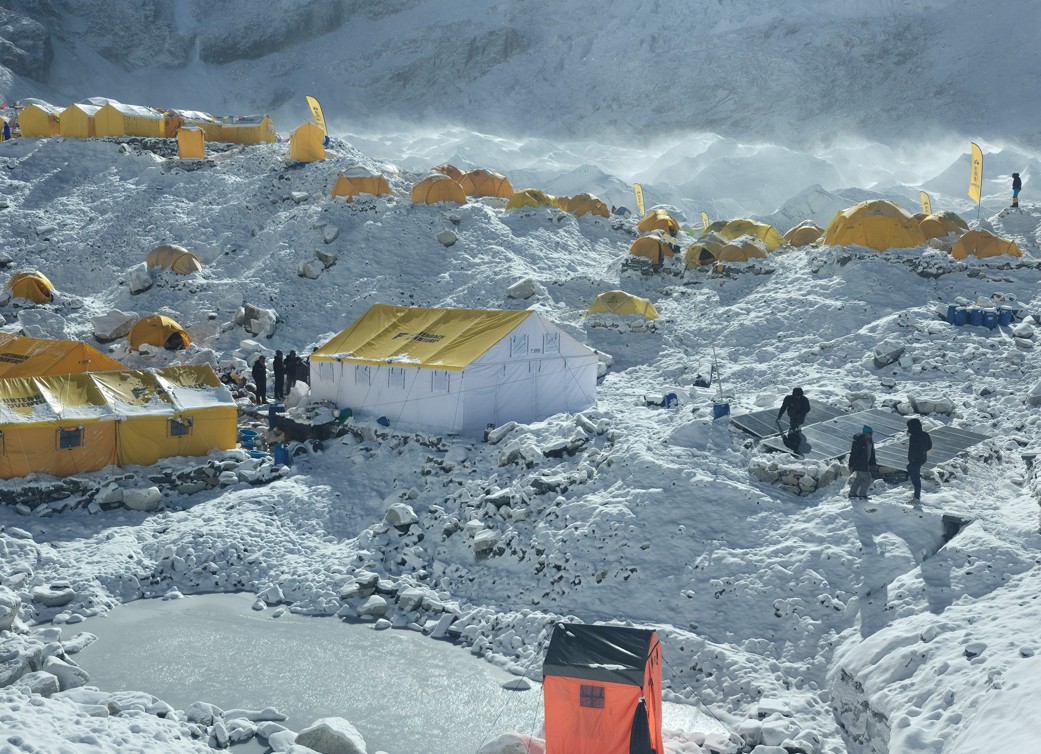
Nothing in Himalayan trekking compares to the approach to Everest Base Camp, not in scale, not in cultural richness, and not in the feeling of walking toward something that has occupied the imagination of adventurers for over a century. The 14-day classic route from Lukla passes through Namche Bazaar (the Sherpa capital, perched impossibly on a horseshoe hillside at 3,440 m), the moss-draped monastery at Tengboche, and the rock-and-ice desert of the upper Khumbu before arriving at the glacier camp from which all Everest summit bids begin.
You do not see the summit from Base Camp. That surprise catches many trekkers off guard. Everest hides behind Nuptse from this angle. But what you see instead is something more intimate: the living, grinding reality of the world's highest mountain, its glaciers cracking and shifting, its weather building fast off the Tibet plateau, expedition tents dotting the ice in primary colours. It is overwhelming in the best possible way.
The trail also passes through one of the most culturally rich trekking corridors in Asia. The Sherpa villages of Khumjung, Khunde, and Pangboche have been here for centuries, their ancient stone monasteries, mani walls, and prayer flag lines predating any trekking trail by hundreds of years. Budget three or four extra days beyond the standard itinerary if you can. The side trip to Gokyo Lakes and Kala Patthar for an unobstructed Everest panorama at sunrise will stay with you for the rest of your life.
When to go: Spring (April–May) and autumn (September–November). The Lukla flight is a wonder in itself, 35 minutes from Kathmandu into a mountain world that feels genuinely remote.
Explore Kathmandu's Living Heritage
Kathmandu is the only capital city in the world where you can watch a medieval religious ritual on your way to breakfast. The valley holds three royal palace complexes, two enormous Buddhist stupas, and a sacred Hindu temple that draws pilgrims from across the subcontinent, all within a 30-minute drive of each other, all still fully functioning as places of worship rather than museums.
Start at Boudhanath, the great white dome that anchors the eastern valley. One of the largest Buddhist stupas in the world, it was built sometime after AD 600 and has been a centre of Tibetan Buddhist culture for more than a millennium. In the mornings, monks in saffron robes circumambulate the base with prayer beads and hand-held butter lamps. The cafes on the upper floors of the surrounding buildings are the best place to watch Kathmandu come alive over a glass of butter tea.
Cross the valley to Swayambhunath, the Monkey Temple, to watch the sun set from the hilltop platform while the all-seeing eyes of the Buddha stare serenely over the smoggy, chaotic, magnificent city below. Then spend a full morning at Pashupatinath, Nepal's most sacred Hindu temple, where the cremation ghats along the Bagmati River offer a raw, moving encounter with the Hindu relationship between life, death, and the sacred river.
Save half a day for Bhaktapur. Forty-five minutes east of Kathmandu by taxi, this medieval Newari city has remained so intact that entering its Durbar Square feels genuinely disorienting, as if the 15th century simply forgot to end.
Insider tip: Hire a local guide for your Kathmandu temple circuit. The archaeology, mythology, and religious significance layered into every corner of these places are invisible without someone who knows the stories.
Trek the Annapurna Circuit
Once described by travel writers as the world's greatest trek, the Annapurna Circuit has changed significantly since roads penetrated the valley, but it has not been diminished. The classic route still crosses the Thorong La Pass at 5,416 m, still descends into the medieval pilgrimage town of Muktinath, still passes through the deepest river gorge on Earth at the Kali Gandaki, still winds through subtropical jungle, through rhododendron forest, through alpine meadow, and finally through the Himalayan rain shadow desert of the Mustang valley — all in a single route of 12 to 21 days.
What has changed is where the crowds concentrate. The section from Manang to Muktinath, the high-altitude crossing, still feels remote and demanding. But the lower sections on the Pokhara approach are now supplemented by Mardi Himal, Mohare Danda, and the Khopra Ridge as quieter alternatives for trekkers who want the Annapurna views without the tourist infrastructure.
The Annapurna Sanctuary route, a separate, shorter option into the southern bowl of the range, remains magical for its dramatic amphitheatre of peaks surrounding the base camp at 4,130 m. On a still night, the sound of avalanches on Annapurna South echoes around the valley walls like distant thunder.
Plan for: 12–21 days for the full circuit. The ACAP permit (Annapurna Conservation Area) and TIMS card are required for both routes.
Discover the Forbidden Kingdom of Upper Mustang
Lo Manthang sits behind a medieval wall on a high plateau north of the Annapurna range, the administrative capital of a kingdom established in 1380 CE that maintained near-complete isolation from the outside world until Nepal opened it to trekkers in 1992. It was never truly Nepal. Its people speak a dialect of Tibetan, its architecture is Tibetan, and its monasteries follow Tibetan Buddhist traditions that predate the introduction of Buddhism to Tibet itself. It is a living time capsule, and it is extraordinary.
The best way to reach it in 2026 is by jeep along the track that winds north from Jomsom through Kagbeni, Chele, Ghami, and Ghara, four villages that look as though they were carved directly from the ochre cliffs above them. The drive itself is the experience. Poplar trees line the dry riverbeds. Wind turbines spin on clifftops above ancient chortens. Prayer flags snap in the thermal currents that make the Kali Gandaki valley one of the windiest corridors in the Himalaya.
In Lo Manthang, stay more than one night. The Thubchen monastery, a 15th-century hall whose interior walls are covered in original tempera murals, requires an hour of simply sitting and looking. The sky caves of Chhoser, carved into the cliffs above the valley 3,000 years ago, are a 20-minute drive from Lo Manthang and among the most mysterious sites in the Himalayan world.
New for 2026: The old USD 500 flat permit has been replaced by a flexible USD 50 per day fee, making short visits significantly more affordable. Solo trekkers are now permitted a rule change from March 2026. A licensed guide remains mandatory.
Take a Safari in Chitwan National Park
Nepal is not all mountains. In the subtropical lowlands of the Terai, 300 km south of the peaks that define the country's skyline, Chitwan National Park protects 952 square kilometres of sal forest, grassland, and floodplain, one of the most biodiverse ecosystems in Asia.
The Bengal tiger population at Chitwan has more than doubled since 2010, driven by effective conservation that Nepal can genuinely be proud of. Jeep safaris in the early morning, before heat and light conspire to push the animals into cover, offer the real possibility of a tiger sighting, though the one-horned rhino is practically guaranteed. Chitwan holds one of the world's largest concentrations of this species, and they move through the forest and grassland with the unhurried confidence of animals that have been here far longer than any tourist.
Book a canoe trip down the Rapti River. The current is gentle and slow, the riverbanks dotted with mugger crocodiles motionless in the morning sun, kingfishers flashing electric blue through the reed beds. It is one of the most peaceful two hours Nepal offers, and it feels impossibly far from the world of crampons, altitude tents, and glacial moraines that defines most Nepal travel planning.
Best base: Sauraha village on the northern bank of the Rapti River. Reach it from Kathmandu by tourist bus (5–6 hours) or private vehicle.
Paragliding Over Pokhara
Pokhara is Nepal's second city and its adventure capital, a lakeside town framed by Machhapuchhre (the Fishtail Mountain) to the north and Phewa Lake to the south, with the entire Annapurna range as a permanent backdrop. It is the base for virtually all trekking in the Annapurna region and the kind of place where arriving for three days and staying for three weeks is perfectly normal.
Paragliding from Sarangkot, the ridge above the city, is one of the most consistently spectacular experiences Nepal offers. You launch from 1,600 m, catch the thermal rising off the lake valley, and spend 30 minutes or more in the air with Annapurna II, Annapurna III, Annapurna IV, and Machhapuchhre arranged in a wall of white above the green valley below. Sunrise flights, before the thermals get rowdy, are the most spectacular and the most popular. Book your slot the evening before.
Beyond paragliding, Pokhara offers ziplining (one of Asia's longest), ultralight flights, kayaking on Phewa Lake, the underground cave system at Gupteshwor, and the World Peace Pagoda, a white stupa on the southern ridge with arguably the finest mountain view in the entire valley. And when the adventure days are done, Pokhara's Lakeside area has the best concentration of restaurants, rooftop bars, and coffee shops in Nepal outside Thamel.
Perfect for: First-time Nepal visitors combining Kathmandu sightseeing with a Pokhara adventure week before or after a trek.
Climb a Himalayan Peak
Nepal is home to 18 of the world's 26 peaks above 8,000 m and more than 400 permitted trekking peaks between 5,000 and 6,500 m, making it the destination for anyone who wants to step beyond trekking and onto a genuine Himalayan summit.
The entry point is Mera Peak at 6,476 m in the Solukhumbu, Nepal's highest trekking peak, accessible to anyone with solid fitness, basic crampon training, and 17–18 days. The approach through the remote Hinku Valley passes through landscapes that the Everest Base Camp crowds never see, and the summit view, five 8,000-metre peaks visible simultaneously from a single spot, is one of the finest in the Himalaya.
For those with technical experience and the appetite for something more demanding, Ama Dablam stands at 6,812 m in the Khumbu and is widely considered the most beautiful mountain in Nepal. Its southwest ridge, which involves genuine rock climbing at altitude and a knife-edge arête with 1,500-metre drops on both sides, is one of the classic technical routes in Himalayan mountaineering. The summit success rate for well-prepared climbers is around 70%. The view from the top encompasses Everest, Lhotse, Makalu, and Cho Oyu simultaneously.
At the summit of ambition: Everest. The permit now costs USD 15,000 per person. The full expedition runs 55–65 days. The total investment with a reputable operator approaches USD 50,000–70,000. And it is the highest point on Earth.
Not sure where to start? Mera Peak in autumn or Island Peak combined with Everest Base Camp are the most natural entry points for first-time Himalayan climbers.
Visit Lumbini: Where Buddha Was Born
The southern plains of Nepal hold one of the most significant sacred sites on Earth. In the garden at Lumbini, beneath the shade of a bodhi tree, Queen Mayadevi gave birth to Siddhartha Gautama in approximately 563 BC, the man who became the Buddha and whose teachings shaped the lives of more than 500 million people. Emperor Ashoka visited in 249 BC and erected a pillar that still stands in the garden, its inscription confirming this as the birthplace.
The Maya Devi Temple, a white structure built around the original nativity marker, is the spiritual centrepiece of Lumbini, and the queue to enter on festival days can be hours long. Around it, the Sacred Garden is planted with prayer flag trees and occupied at all hours by meditating monks and circumambulating pilgrims from Burma, Sri Lanka, Tibet, Japan, and a dozen other countries. Dozens of national Buddhist temples and monasteries ring the central garden in a long avenue, the Korean temple, the Vietnamese temple, the Myanmar temple, each reflecting its home country's architectural tradition in a remarkable survey of Buddhist diversity.
Lumbini is two hours by road from Bhairahawa airport, which has direct flights from Kathmandu (30 minutes). It is not a place to rush. Come for two nights minimum, walk the garden in the early morning before the tour groups arrive, and understand that you are standing at the origin point of one of the world's great wisdom traditions.
Walk the Langtang Valley
An hour and a half's drive north of Kathmandu, a road ends in the village of Syabrubesi, and a trail begins that most Nepal visitors never find. The Langtang Valley, a forested gorge that deepens into an alpine wonderland above 3,000 m, is Nepal's most accessible Himalayan trek and, since the devastating 2015 earthquake destroyed much of the valley's infrastructure and killed nearly 200 people, one of the most important places to spend your trekking dollar.
The valley has been rebuilt. Teahouses have been reconstructed, trails cleared, and the Langtang community has welcomed trekkers back with the generosity that defines rural Nepal. The trek to Kyanjin Gompa (3,870 m) and the side hike to Tserko Ri (4,985 m), where the entire Langtang Himalaya stretches across the northern horizon, takes 7–10 days from Kathmandu and back. No domestic flight required. No complicated permit system. No teahouse booking three months in advance. Just a trail into one of the loveliest mountain valleys in the Himalaya.
The yak cheese produced in the valley's high pastures is worth the trip alone. And if the stars align, a red panda, small and utterly surreal to encounter in the wild, might peer at you from a tree on the descent through the rhododendron forest.
Raft the Trisuli River
Nepal's rivers descend from the highest snowfields on Earth through a series of gorges that generate some of the finest white water in Asia. The Trisuli, the Sun Kosi, the Bhote Koshi, and the Kali Gandaki are all internationally recognised rafting rivers, each with a different character and a different level of commitment required.
For most first-timers, the Trisuli River, a 2–3 day trip beginning approximately 70 km west of Kathmandu and ending in Chitwan, is the ideal entry point. The rapids are challenging enough to be genuinely exciting (Grade III–IV in high water) but not so serious that prior river experience is required. Between rapids, the river passes through forested gorges where monkeys watch from the trees and egrets stalk the shallows. Camp on white sand beaches each evening with the sound of water constantly in the background.
The Bhote Koshi, an hour east of Kathmandu on the Tibet highway, offers a shorter but more intense experience of Grade IV–V rapids in a steep gorge that has made it a favourite of experienced kayakers and raft guides from around the world. The same gorge also hosts Nepal's original bungee bridge at 160 m, one of the world's highest commercial jumps.
Best season: October–November (post-monsoon, when the rivers are full but manageable) and March–April (pre-monsoon, when water levels are moderate).
Watch the Sun Rise from Poon Hill
There is a viewpoint on a ridge above Ghorepani village in the Annapurna foothills that has made more people cry, more people feel inexplicably grateful, and more people immediately begin planning a return to Nepal than perhaps any other single spot in the country.
Poon Hill is 3,210 m, a modest altitude by Himalayan standards, reached by a four-hour climb from the teahouse village of Ghorepani after a two-day walk from the trailhead at Nayapul. You arrive the afternoon before the sunrise you have come to witness, eat dal bhat by a wood fire in a teahouse, and set your alarm for 5 AM.
In the dark, the ridge path fills with headlamp beams. Everyone is quiet. By the time the eastern horizon begins to glow orange, the silhouettes of Dhaulagiri (8,167 m), Annapurna South, Hiunchuli, and the perfect pyramid of Machhapuchhre are already visible against the lightening sky. Then the sun hits them. The colour shifts from grey to gold to the brilliant white of full morning in three minutes that no photograph has ever done justice to.
The Poon Hill trek takes 4–5 days from Pokhara and back. It requires no technical equipment, no high-altitude acclimatization, and no specialised gear beyond good walking shoes and warm layers for the pre-dawn start. It is the most democratic great Himalayan experience Nepal offers.
Practical Information for Nepal 2026
When to visit: Nepal's prime trekking seasons are spring (March–May) and autumn (September–November). Autumn offers the clearest skies; spring adds rhododendron colour at mid-elevations. Upper Mustang and the Mustang valley are best in spring and early autumn; their rain shadow location makes them viable even during the June–September monsoon.
Getting around: Kathmandu's Tribhuvan International Airport is the main international gateway. Domestic flights connect Kathmandu to Pokhara (25 min), Lukla (35 min), Jomsom (25 min), Bhairahawa/Lumbini (30 min), and dozens of other mountain airstrips. Tourist buses connect all major cities and trekking trailheads.
Permits: Most trekking areas require a minimum of an ACAP or DNPWC permit and a TIMS card. Upper Mustang, Manaslu Circuit, Tsum Valley, and certain other restricted zones require a separate Restricted Area Permit (RAP), obtainable only through a registered trekking agency.
Guide rule: From 2023, Nepal requires foreign trekkers in permit zones to be accompanied by a licensed guide. This is both a legal requirement and a practical advantage; Nepal's best guides are exceptional natural historians, cultural interpreters, and mountain route-finders whose knowledge transforms a good trek into an unforgettable one.
Nepal visa: Available on arrival at Tribhuvan International Airport for most nationalities. Cost: USD 30 (15 days), USD 50 (30 days), USD 125 (90 days). Payment in cash (USD, EUR, GBP).
At Himalayan King, we have been organising treks, climbs, and expeditions in Nepal for over two decades. Our licensed guides, our permit expertise, and our deep knowledge of every route in this guide, from the Everest corridor to the Forbidden Kingdom of Lo Manthang, are at your service. Contact us to plan the Nepal experience that matches exactly what you are looking for.
|
Planning a Trip? Get a free consultation from our travel experts with over a decade of experience. |
Himalaya King
Himalaya King
Adventure Awaits — Let’s Begin Your Journey


