
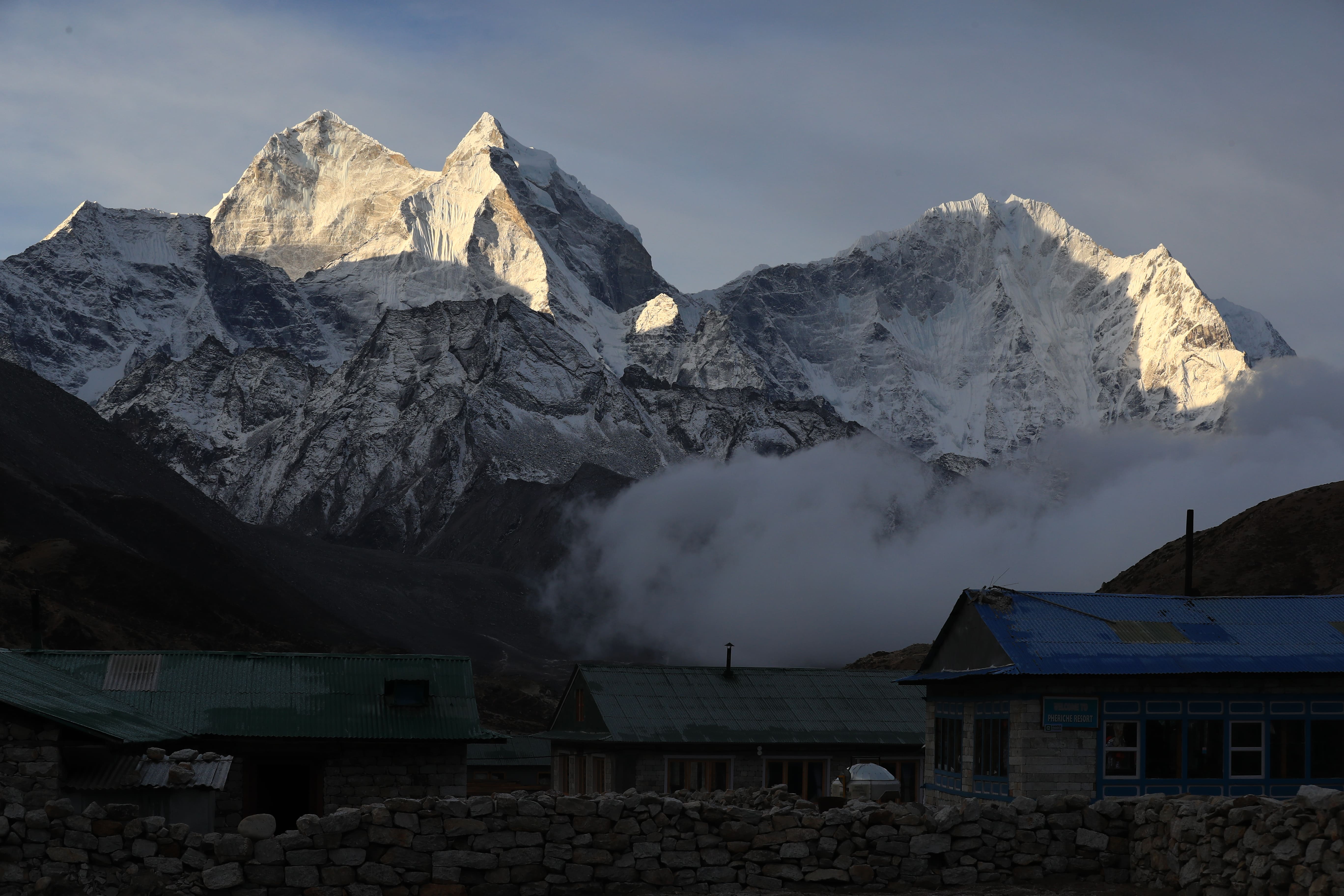
If you are planning your next trip in the Himalayan region and dreaming of standing in front of the world's highest mountain, Mount Everest, it is the ultimate goal for everyone. Every adventure lover who dreams of reaching near Mt. Everest, the Everest Base Camp Trek is here for you now. Mount Everest is located in the Khumbu Valley of Solukhumbu district. This trek includes hiking and exploring the Sherpa culture in the Himalayas. Everest is known as 'SAGARMATHA' in Nepali, 'CHOMOLUNGMA' in Tibetan, and in Sherpa. Mt. Everest is known as the 'Roof of the World.'
Starting the trek from the most beautiful village, Lukla, is known for its stunning landscape and small, high-altitude airport, which offers stunning views of mountains, hills, and valleys. Treks begin along the Dudh Kosi River, in small Sherpa, Rai, and Tamang villages. Everest Base Camp treks make us realize that nothing is impossible until we do or see it. On the way, you can explore ancient monasteries and their architecture, and experience their culture. From the Base Camp, you can enjoy the panoramic views of Mt. Everest, Lhotse, and Nuptse, etc. The Everest Base Camp trek is the most iconic trek in 2026. This guide will help you plan every step of your journey from preparation to reaching base camp.
Overview
Maximum Altitude: 5,644 m (Kalapatthar view)
Lowest altitude: 464 m Ramechhap Airport
Location: The Himalayan region of Solukhumbu District
Duration: 14 days
Difficulty: Intermediate
Best Season: Spring and Autumn are the popular seasons for trekking
Spring season (March-May)
During the spring season, the weather is more stable. Spring is a popular and safe season for trekking at high altitude. In this season, you can get flight access due to its stable and clear weather. It offers clear and dramatic views of the mountains, hills, and the river. In the spring season, you can enjoy the trek with Rhododendron flowers along the trail. Low risk of natural disasters. Warm and suitable weather for trekkers at high altitude. The spring season has a very low likelihood of cloud bursts, contributing to the panoramic views of the mountains, dry, safe terrains to navigate, and days last longer, giving you precious time to explore the Himalayas without worrying about darkness.
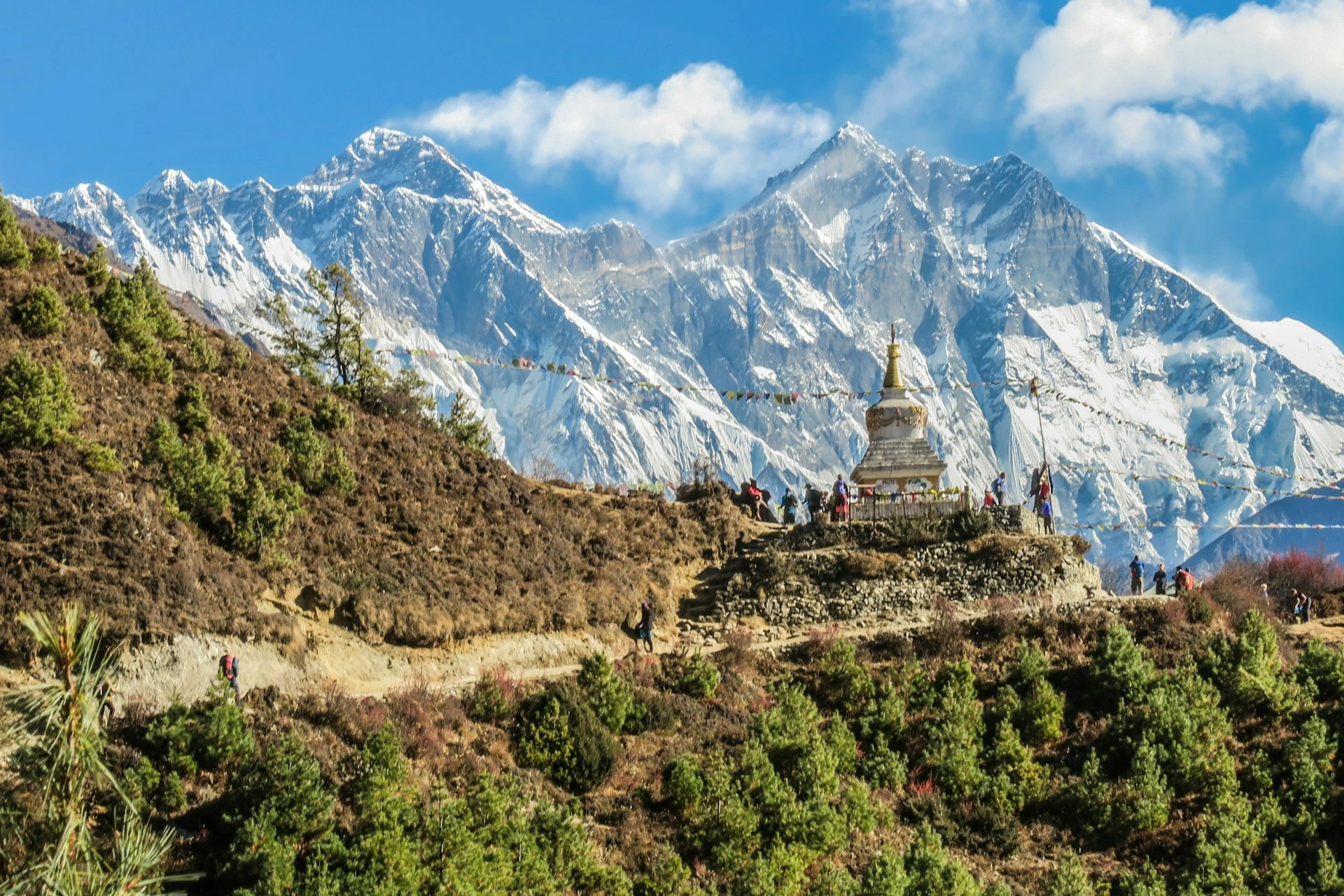
img: Scenic Everest trail during Spring
Autumn season (September-November)
Autumn is a popular season. The temperature remains warm. The skies are clear. During the Autumn Season, you can enjoy the greenery of the forest on the way and take a picture of the peaks. In the middle of Autumn, one of the biggest Hindu festivals falls in September or October, and you can also enjoy it. Choosing the EBC Trek in autumn is like having a surprise gift from nature.
Winter(December-February) and Summer (June-August) are not recommended.
During those seasons, the weather changes quickly. High possibility of heavy rainfall and snowfall, and there is a high chance of accidents. During those seasons, finding flight tickets is hard. Due to the weather, we don't recommend those trekking seasons to ensure your safety. In winter, the temperature is low, which can bring health issues at high altitudes. Doing trekking in this season is possible, but sometimes risky.

img: Everest trail with great visibility during Autumn
Highlights of the Everest Base Camp Trek
- The Everest Base Camp trek is named after the base camp of Mt. Everest
Sagarmatha National Park, which is listed as a UNESCO World Heritage Site - The Sherpa culture, known for its natural ability to climb high mountains, is rich in culture.
- Glaciers, lakes, and Rivers along the trail with blooming Rhododendrons.
- Old architecture and ancient monasteries
- You can explore traditional houses and their traditional attire.
- On the way to Everest Base Camp, you can try the traditional food of Sherpa, Rai, and Tamang during the festive season.
- At high altitude, you can see the national bird ( Daphne/ Lhophoporous), which is rare at lower altitudes.
- Everest Base Camp Trek offers a complete Himalayan experience with a different cultural experience.
- Unveiling the beauty of Himalayan giants like Mt.Everest, Nuptse, Lhotse, Kusum Khangaru, Kongde, and others etc.
Short Itinerary of Everest Basecamp Trek
Day-1: Arrival in Kathmandu
Day-2: Preperation Day/ gear checking
Day-3: Fly to Lukla and trek to Phakding
Day-4: Trek to Namche Bazaar from Phakding
Day-5: Acclimatization day at Namche Bazaar (Hike option)
Day-6: Trek to Tengboche from Namche Bazaar
Day-7: Trek to Dingboche from Tengboche
Day-8: Acclimatization Day (hike to Nangkartshang Peak)
Day-9: Trek to Lobuche from Dingboche
Day-10: Trek from Lobuche to Everest Base Camp and return to Gorakshep
Day-11: Early hiking to Kalapatthar for sunrise view and panoramic view of mountains, then Descent to Pheriche
Day-12: Descent to Namche Bazaar from Pheriche
Day-13: Trek to Lukla from Namche Bazaar
Day-14: Fly back to Kathmandu and farewell
Required Permits for Everest Base Camp Trek
Cultural and Natural Exposures/National Park
Sherpa people live in the Himalaya Region, part of Nepal, including Solukhumbu. Solukhumbu is known for its natural Himalayan giant including Mt. Everest, which is the highest peak in the world. It is rich in biodiversity and offers a breathtaking landscape. It has a diverse ecosystem range from lush forests of pine and hemlock to alpine. They had been preserving rare species like the snow leopard, the red panda, and the Himalayan tahr, as well as over 200 bird species. It is culturally renowned as the home of the Sherpa people, whose vibrant tradition and Buddhist heritage add to the religious allure. Monasteries, Prayer Flags, and handmade Stone mani walls dot the landscape, reflecting the spiritual connection between people and mountains.
Routes of the Everest Base Camp Trek
The journey to Everest Base Camp typically begins with a scenic flight from Kathmandu to Lukla airport, which offers scenic views of the terrain, mountains, and Nature. The trek begins from Lukla, and each trail, village, mountain, and the people, from the lively atmosphere of Namche Bazaar to the peaceful surroundings of Tengboche Gumba (Monastery), the trek offers a perfect balance of adventure and culture. After reaching the Base Camp, trekkers ususally hikes to Kalapatthar for the breathtaking panoramic views of Mt. Everest and other Himalayan giants. The return journey follows the same trail back to Lukla. Daily trekking involves 5-7 hours of walking/hiking on uneven terrain, with steep ascent and descent to Everest Base Camp.
Gear checklist for the Everest Base Camp trek
Proper gear makes you feel comfortable during the trek. Without proper gear, it creates problems during a trek or expedition, so before planning to head to high altitude, checking gear properly is necessary. Proper gear helps you stay safe and comfortable with confidence on a trek. Well-equipped trekking gear ensures you are prepared for varied terrain and weather. Here you can check essential gear for your upcoming trek. Planning and preparation before going anywhere is the most important thing.
Gear list needed for Everest Base Camp Trek:
➢Down Jacket
➢Loose, comfortable T-shirts or long-sleeved shirts for sun protection
➢Long trousers and pants
➢A warm jacket/ fleece pullover
➢A thermal layer (Shirt and pants)
➢Woolen or thermal gloves
➢Sun Hat and sunglasses
➢woolen or fleece hat
➢cool breathable cotton socks 4-5 pairs
➢Sandals and flip flops for the tea house
➢sun block, lip balm, personal toiletries, and a scarf
➢A comfortable day pack with shoulder straps
➢Water bottles, trekking poles, and a headlight
➢Waterproof dry bags
Preparation and Difficulty
Before trekking, we all need to do preparation for the trek. Without the preparation, we cannot complete our goal. For EBC Trek, you need to be fully prepared physically and mentally so that it doesn't bother you during the trek. Before the trek begins, we are physically and mentally prepared so that we can enjoy nature peacefully and confidently. We have to prepare our mentality with I can do it and I'll do it myself so that we can boost our confidence in every situation of trekking. Before hiking at high altitude, we have to prepare physically by doing some cardiovascular training, exercise, meditation/yoga, and running. During the trek, we don't have to face as much difficulty as on an expedition, but sometimes we face altitude sickness and other issues. To prevent altitude sickness, we need to prepare before we face the difficulty on the trek. We have prepared a well-structured itinerary with a proper acclimatization day over several days. The physical challenges test your strength, while the beauty of the Himalayas rewards your effort at every step. With good preparation, a steady pace, and proper guidance, most trekkers are able to complete the journey and reach Mount Everest Base Camp.
Why choose the Everest Base Camp Trek?
This trek leads you to the world's highest peak. Forehead of the sky Villages offer a calm, peaceful environment for everyone. When you are up there in Kalapatthar at sunrise and watch Everest, Nuptse, and Lhotse turn into golden, glowing mountains in the morning sun. EBC trek is like a miracle, with the natural beauty of the Himalayas, the foothills, and the rivers. As the altitude increases, more interesting things await you at high altitude. Everest Base Camp Trek is a beginner-friendly trek, and experienced trekkers also love to trek in the Everest Region due to its natural beauty. This trek is the best option for those who dream of witnessing the beauty of the world's highest peak and other Himalayan giants with fewer technical challenges. This trek is like preparation for a new expedition journey, and it offers a high-altitude experience to trekkers who dream to do expedition in the upcoming days.
Why do Everest Base Camp with Himalaya King?
When it comes to exploring the Himalayas, choosing the right and well-known company is important, as well as choosing the best trek. We are more than just a service provider; we are your trusted partner. Himalayan King Trekking and Expedition is a government-registered and locally trusted company. We, the Himalaya King team, are pleased to serve you with warm hospitality. We focus on success with safety. Our company's priority is customer safety. We focus on your satisfaction, not just the service.
We also follow the proper rules during the trek in the restricted and conservation area. Our team is made up of experienced local guides who know the mountains, culture, and the routes better. We provide comfort and safety to our customers. We provide experienced, certified guides with deep Himalayan knowledge to trekkers, so that they can complete their trip safely. Himalayan King combines experience, dedication, and local expertise to give you the best results and manages every situation, even in challenging conditions, smoothly. From your first inquiry to your final departure, we are always there for you. Our team ensures smooth communication, quick responses, and full support throughout your journey.
The journey to the Everest Base Camp trek is not only about standing close to Mount Everest (Sagarmatha), but it’s a life-changing adventure that combines true Himalayan experience, rich Sherpa culture, and personal accomplishment at high-altitude. Whether you choose the classic 14-day route via Lukla or an extended adventure including Gokyo Lakes and Cho La Pass, each option offers a unique perspective of Nepal’s Khumbu Region. Many trekkers choose the Everest Base Camp trek to experience high-altitude trekking with less challenge. Completing this trek brings a deep sense of achievement and a new perspective on nature and life. It is an experience that stays with you, not just as a memory but as a precious time and experience of life.
|
Planning a Trip? Get a free consultation from our travel experts with over a decade of experience. |

Himalaya King
Himalaya King
Adventure Awaits — Let’s Begin Your Journey


