
Beyond the Drained Sea: The Secret Realm of Manjushree Lake in Lapchi Valley
While the name of Manjushree usually refers to the ancient legend of Kathmandu who drained the water which filled the valley, is now named for a newly explored turquoise lake, Modern Himalayan travelers are now getting attracted towards the high-altitude sanctuary of Manjushree Lake Trek. It is known as 'Manjushree Kund' in its local name.
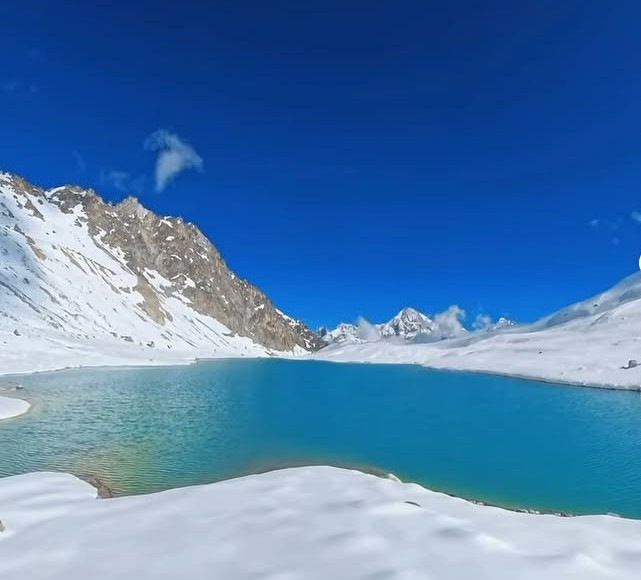
Nestled inside the deep, sacred Lapchi Kang mountain range in northern Dolakha, just beside and along the rugged Nepal-Tibet border. Sitting at such remote and tranquil nature, it lies in-between the astonishing altitude of 4,400m and 4,850m, surrounded by sheer granite walls, hanging glaciers including the towering peak Gaurishanker (7,134m) and Malugtse (7,182m). Amid such majestic natural beauty, Manjushree Lake Trek remains one of Nepal's very few frontiers of untouched spiritual wilderness.
For travel enthusiasts seeking to bypass the crowded commercialized trails and want to step inside the sacred footsteps of Tibetan yogis and ancient Bodhisattvas, the trek to the Manjushree Kund Trek is an ultimate off-the-beaten-path that offers an enormous Himalayan journey to explore.
The Sacred Geography: Where wisdom meets the Glaciers
In Tibetan Buddhism, the Lapchi Kang is celebrated as one of the three most sacred mountain retreats in the Himalayas, alongside Mount Kailash in Tibet and Mount Annapurna in Nepal; according to these beliefs, the entire valley is considered beyul, a hidden valley of refuge protected by the mountain deities.
Mostly, the valley is famous for pilgrims for the meditation caves of Tibetan saint Jetsun Milarepa. During the 11th century, the Manjushree Lake acted as the geographical and spiritual crown of the upper basin. It usually refers to,
The Mirror of Wisdom
Local Sherpa people and Lamas believe that the crystal-clear, ice-fed waters of Manjushree Lake embody the raw energy of Bodhisattva Manjushree, who is the embodiment of supreme wisdom among the gurus.
Reflection of the Giants
The lake still perfectly mirrors the towering summits of Melugete and Gaurisankhar over its surface, which also creates landscapes that feel suspended between earth and sky.
Why is Manjushree Lake now getting popular?
For decades, the Lapchi region was tightly restricted due to its proximity to the Tibet border and also due to the lack of motorable infrastructure. However, recent infrastructure development up to Lamabagar, led by rising demand for low-impact, high-altitude solitude, has brought Manjushree Lake into the spotlight among seasoned trekkers. It is also getting popular due to some features that are rarely seen in modern commercialized trekking trails.
Escape from commercial crowds.
Escaping the Commercial Crowds
Unlike the heavily crowded trails, the trail to Manjushree Lake sees very few trekkers each year, offering an empty trail for trekkers and a tranquil environment.
Deep Cultural Immersion
Trekkers get an opportunity to explore the organic himalayan lifestyle and share the trails with high-altitude yak herders, local lamas, and ethnic Sherpa families who are living there with similar traditional lifestyles.
The Milarepa Connection
The route allows trekkers to explore the legendary meditation sites such as Dudul Cave and Shephuk Cave before you climb to the high lake basin.
The Trekking Routes: Day-to-Day Itinerary
Day 1-2: Kathmandu to Kamabagar to Lamabagar (2,045m)
The adventure begins with a scenic, rugged drive from Kathmandu through Charikot and along the roaring Tama Koshi River. Passing through long hydro tunnels near the Upper Tamakoshi Project, you arrive at Lamabagar, the roadhead for the trek.
Day 3: Lamabagar to Lower Lumnang (2,800m)
Leaving the road behind, the trail crosses suspension bridges and climbs gradually into the deep, forested gorges of the Lapchi Valley. Dense bamboo groves, rhododendron forests, and cascading waterfalls flank the path as you gain altitude alongside local pack animals.
Day 4: Lumnang to Lepcha Village (3,045m)
Ascending higher into the valley, the alpine environment opens up to reveal traditional stone-walled Sherpa houses and ancient chortens. Lapche Village serves as the primary base for exploring the region's sacred caves and high-altitude lakes.
Day 5: Hike to Manjushree Lake (4,400m - 4,850m)
This is the highlight of the trekking. Leaving the village early in the morning, trekkers ascend steep alpine pastures, ridge lines, and boulder fields.
The Final Ascent: As you breach the high ridge, the turquoise waters of Manjushree Lake come into view, framed by raw glacier ice and vertical granite walls.
At the Lake: Trekkers spend time circumambulating (kora) the lake, hanging prayer flags, and absorbing the silence before descending back to Lapchi Village.
Highlights of Manjushree Lake Trek
The turquoise lake of Manjushree Kund itself is the attraction of this trekking journey, along with, several natural features, cultural immersion and scenic trail too makes it more rewarding.
Milarepa’s Meditation Caves
During the journey to the Manjushree Lake, trekkers get to visit several renowned caves, offering a spiritual journey.
Dudul Cave: The cave is also known as “Cave of Subduing Demons”, where Milarepa spent six winter months in solitary retreat, making it a spiritually significant cave to witness during the trek.
Rachen Gompa and Handprint Cave: The cave features sacred imprints on the rock surfaces, which are believed to be left by Milarepa himself.
Rare Wildlife and Flora
The Gaurishanker Conservation Area itself borders the remote Himalayan region of Nepal and Tibetan reserves at once, becoming the corridor for rare Himalayan wildlife. It makes trekkers frequently spot Himalayan Blue Sheep (Bharal), Musk Deer, and the exclusive, super-rare Himalayan Monal (Danphe and occasionally evidence of Snow Leopards.
Best Time for Manjushree Lake Trek
The best time for Manjushree Lake can be chosen as the time during the season of Spring and Autumn when the natural factors become favorable and best for travelling.
Spring
During the time of Spring, trekkers will pass through the blossoming trails. The weather gets stable, along with the refreshing nature due to the pre-monsoon rain. With the scenic views, the visibility also gets better, making the journey scenic as well as refreshing during the time of SPring for the Manjushree Lake Trek.
Autumn
Autumn is the best season for Manjushree Lake Trek as trekkers will get the most stable weather of the year. The trail gets colourful, making the journey mesmerizing. The visibility also gets its finest state than in any other season of the year.
Accommodation and Foods
Unlike classic tea-house routes, infrastructure in the Manjushree Lake Trek trail is simple. Trekkers get to stay in local Sherpa homestays or monastery quarters in Lapchi Village, enjoying simple, hearty meals like tsampa, dal bhat, butter tea, and fresh potato dishes. Full camping arrangements are recommended for groups planning extended stays near Manjushree Lake.
Conclusion
So, Manjushree Lake Trek is a newly discovered trekking trail that was nearly untouched until now, making it one of the best off-the-beaten-path trails in the Himalayas. The turquoise lake, as well as the scenic trail passing the traditional Sherpa villages, which hold a centuries-old lifestyle and spiritual environment, is what makes it the best for travel enthusiasts.
As the trail is recent, the accommodation is not as smooth as what you can find in the Everest Region or in the Annapurna Region, but plenty of Sherpa teahouses as well as homestay options are available across the trail and at different stops.
With such an opportunity to explore and see, the fresh trail is not just a chance to experience the tranquil trail but also to spend some time far from the bustling life.
|
Planning a Trip? Get a free consultation from our travel experts with over a decade of experience. |

Himalaya King
Himalaya King
Adventure Awaits — Let’s Begin Your Journey


