
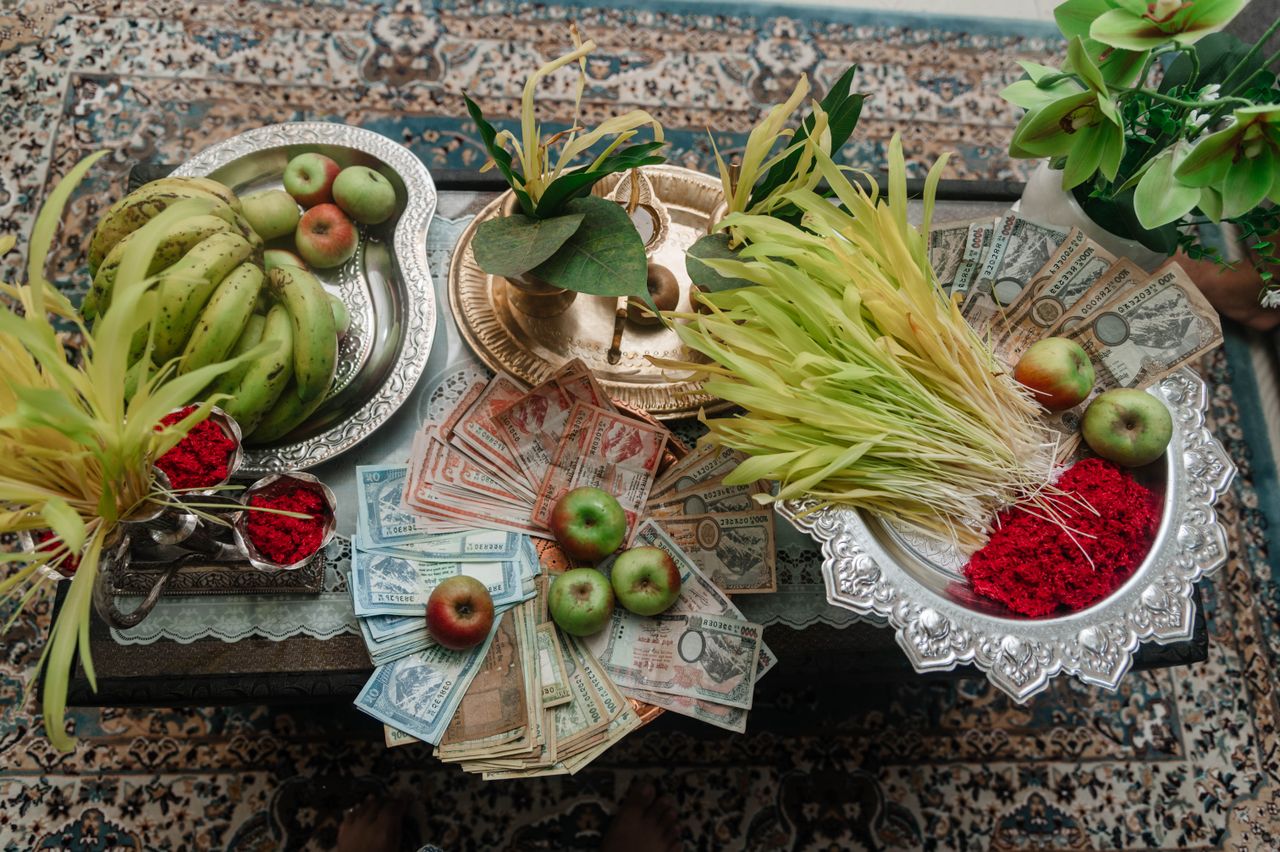
Dashain: The Festival of Reunion
Nepal is diverse and consists of many cultures and traditions. Being home to a diverse ethnic community and cultures, as well as beliefs surviving from centuries ago, makes Nepal filled with wide cultural practices and vibrant celebrations throughout the year on different occasions. The festivals mostly enhance gatherings, sharing, and celebration of various social events originating from long historical events as well as cultural beliefs. Festivals like Dashain, Tihar, Chhath, Maghe Sakranti, Shivaratri, Lhosar, Ubhauli, etc. keep shining in wide celebrations all across the country. Among them, Dashain is the biggest festival of Nepal, gathering long-distance loved ones, family members and relatives.
Dashain usually falls during October-November during Autumn, in Ashoj or Kartik in Nepali months. It is the middle of the Nepali Year. The festival of Dashain is kept as the gathering time for family, relatives, friends and organizes the reunion, even though it is associated spiritually and culturally. Such a combination makes it even more vibrant and celebrated by all Nepali people around Nepal.
Basically, culturally, Dashain is celebrated by covering the forehead with Tika (a mixture of rice, yoghurt, and vermillion) and jamanara, which signifies the blessings from the elders after 9 days of ritual celebrations with foods and traditions.
Here, we are exploring the aspects of Dashain with its cultural significance and importance in keeping relations united as well as sharing happiness.
Why is Dashain celebrated? Mythological Significances of Dashain
As we mentioned, Dashain is a very culturally significant festival for Hindu people, so its mythological significance is its root. There are several interpretations of the festival of Dashain and why it is celebrated.
Victory over the Bad of Goddess Durga
Even on the final day of celebration, Vijay Dashami means “the great victory”. And the victory comes from the goddess Durga. In mythological terms, there was a buffalo demon named Mahishasura, which composed from the mahisa, meaning buffalo and asura as power seeking beings. She caused trouble for the devas (divine beings), as asuras are basically their rivals. As war waged between them, Mahishasura gained a boon that no man could kill him, even after defeating the powerful group of devas led by Indra, a very powerful deity. Later, they assembled in the mountains and combined their divine energies into Goddess Durga. She later defeated the Mahishasura, riding a lion and killing him, depicting the victory over asuras. The day became a celebration which has been followed for centuries according to Hindu mythology, resulting in the biggest festival in Nepal and a major festival in India for Hindu followers.
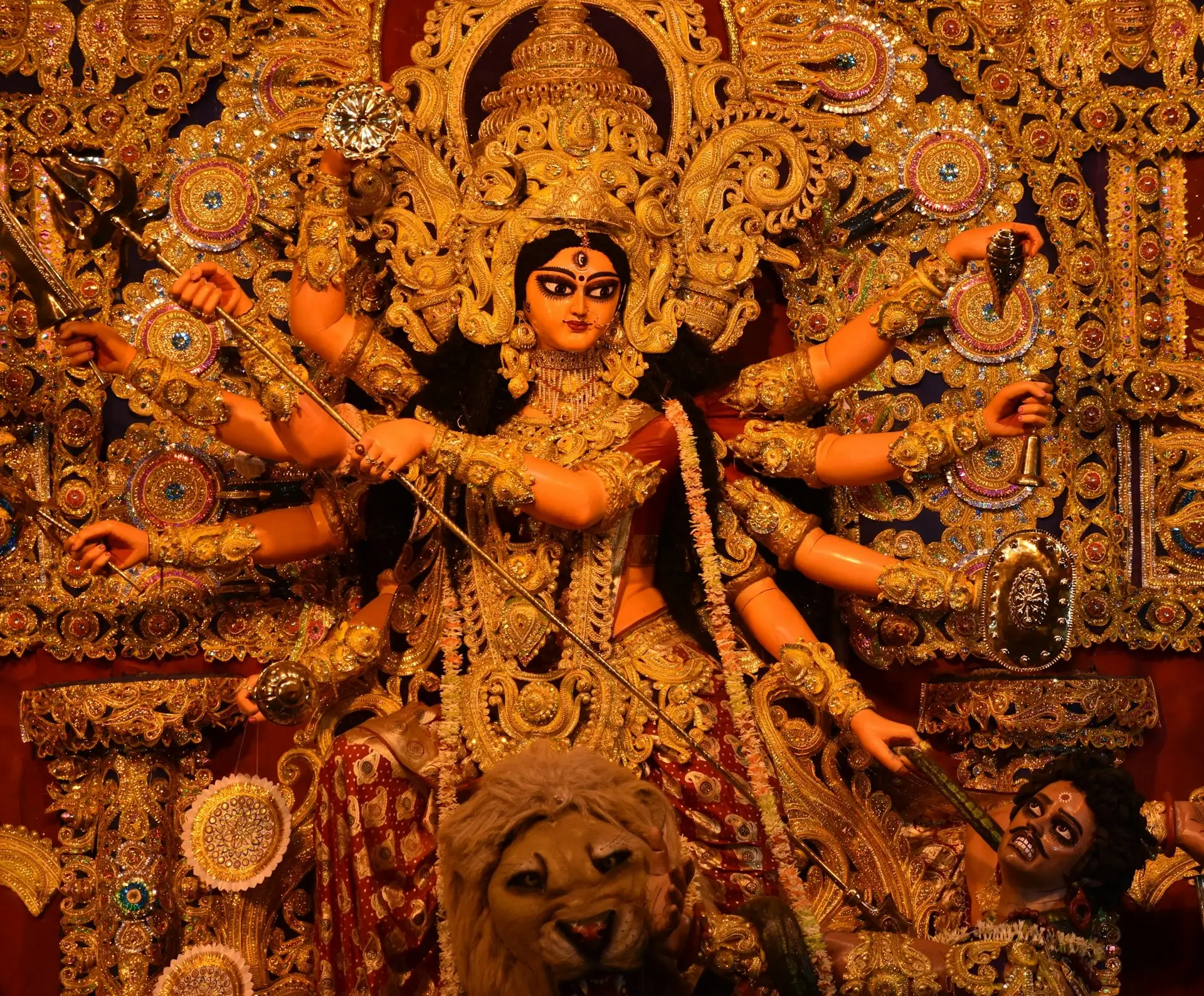
Goddess Durga
The Victory of Ram
The mythology also later connects with Lord Ram, who devoted Goddess Durga for strength before defeating Ravana on the same day, Vijaya Dashami, the day when Durga herself defeated Mahishasura. Later, Ram successfully defeated Ravana, adding another significance to the celebration.
There are some other interpretations about why Dashain is celebrated, but all connect with Goddess Durga. As time passes and centuries pass celebrating the festival, it evolves into different ways of celebrating, emerging with food varieties, music parties, programs, big gatherings, etc., yet similar principles and rituals are followed.
Celebration on Dashain: What is Celebrated During Dashain?
Dashain is a Hindu festival, specifically related to Shaktism. Dashain represents the victory of Durga, one of the most important and devoted deities in Hinduism, over Mahishasura, the deceitful demon who terrorised the devas and usurped their abode. The celebration of the festival is connected to Durga's victorious journey over the ten days of continuous celebration. Over the nine days, the symbolic days are dedicated to the battle between different manifestations of Durga and Mahisassura. On the tenth day, Durga is victorious on the day of Vijaya Dashami.
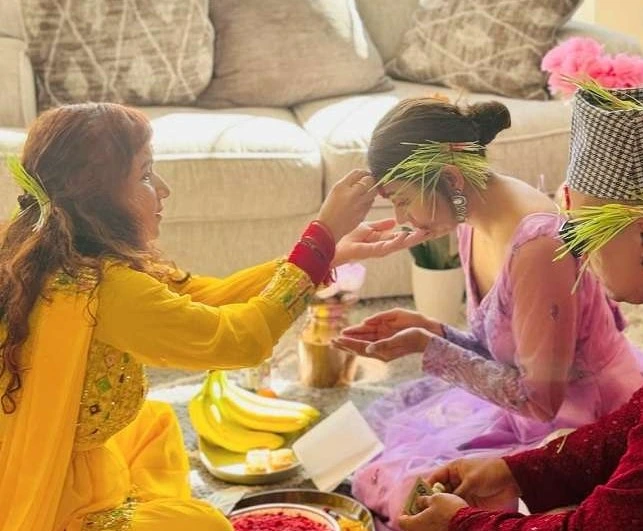
Family during Dashain, receiving and giving Tika, Jamara and Blessings
Dashain also represents the victory of Ram over Ravana for defeating the demon and saving Sita, who was kidnapped by Ravana on the Dashami (10th day).
Vibrant Cultural Practices During Dashain
During the time of Dashain, vibrant cultural practices are performed following the celebration, which have different spiritual and traditional meanings. People follow different rituals with the Tithi (cosmic days), performing traditional practices of devotion to the deities. The nine days from the day of Ghatasthapana, which marks the beginning of Dashain, follow traditions like planting jamara, offerings to Goddess Durga, sacred processions, sacrificing animals in honour of Durga, worship of Durga, and finally the union celebration of sharing joy and happiness with Tika and Jamara as blessings.
Linge Ping (Swing)
The ping is planted in a traditional way, making the long bamboo the pillars and the long rope the swing. After wearing Tika and Jamara, people gather around the swing and play along in turn, shouting several local phrases of joy. These Swings are usually planted in open spaces, mostly on the side of villages or in the middle.
It is usually only a few days before Ghatasthapana and is removed as the festival season of Dashain ends, usually during the days nearer to or after Kojagrat Purnima, which signifies the end of Dashain with the full moon.
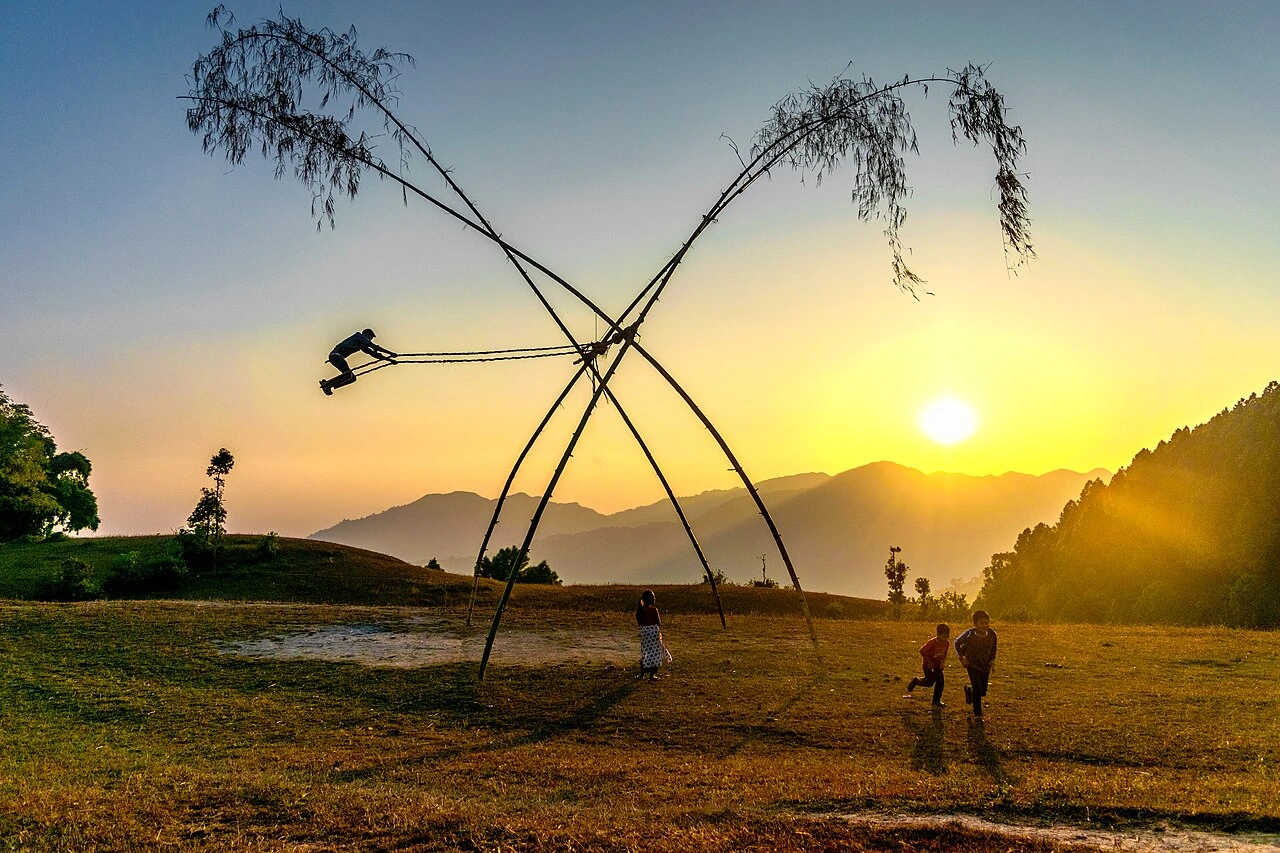
Linge Ping played by children during Dashain
Kites
Kites are mostly flown by young people during the time of Dashain. The homemade kites are flown over the sky, mostly from the terrace of the house or from the top, as well as from open spaces. During Dashain, mainly after Tika and Jamara, the sky can be seen colored with kites symbolising freedom and joy.
Some fun can also be seen, as flyers can compete for the highest flying heights or kites, as well as rob kites by cutting the strings while the kites fly.
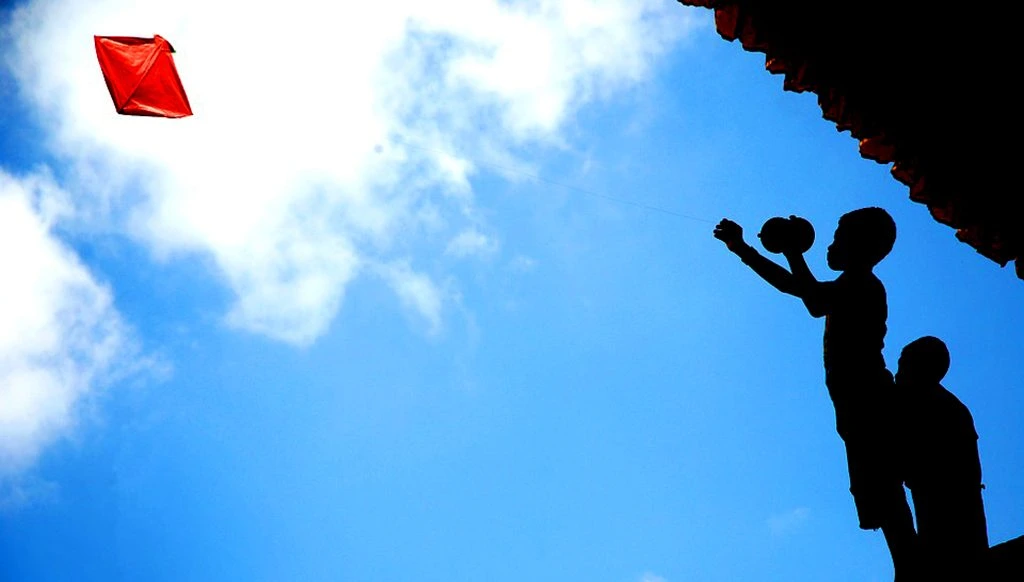
Children enjoying the kites during Dashain
Music and Parties
Some communities also conduct local gatherings of the community as well as family reunions with music and small parties. Usually, the music parties are a tradition of Tihar, but Dashain is also sometimes enhanced with such gathering parties.
Travelling
Nowadays, the younger generation also utilises the long holidays of Dashain for travelling, mostly across the trekking trails. Along with the long holidays, they also get to collect money as a blessing with Tika, which is now used for travelling.
Foods During Dashain: Festival of Foods
Dashain is more of a food festival side by side with the traditional celebrations, so food becomes very significant during Dashain. The local dishes include sel roti. Polau and varieties of pickles/achar, along with a wide range of meat cuisines, are widely served and enjoyed during the festival period.
Meat
Often, Dashain cannot be imagined without meat in a Nepalese household. It is the most used and served during Dashain. Even, there's a lot of fun phrases and jokes about eating meat during Dashain, traditionally. Also, different communities prefer different meat items.
Brahmin and Chettri - Goat (male)
Indigenous Communities (Rai, Limbu, Magar, Tamang, etc.) - Pork (pig meat)
Widely accepted - Buffalo meat (buff) mostely in Newar communities and Chicken (not usually included in Dashain cuisine).
Sel Roti
Sel roti is not just another dish; it is one of the most important and traditionally significant dishes of Nepal. It is mostly significant as the ‘Sagun ’, meaning good luck, making it not just important for Dashain, but also for most of the biggest festivals in Nepal, including Tihar. Also, it is prepared during family reunions, gatherings, before leaving the house for a long tenure, and for different spiritual rituals and pujas. From there, it can be guessed how significant Sel Roti is in a Nepali household.
During Dashain, varieties of sel roti are prepared by mixing different kinds of ingredients to make it tastier. Mostly, it is prepared with flour, water, and sugar, fired on oil or ghee. Sometimes tastes can be enhanced by adding kesar, badam, til, etc. The most popular combo of sel roti is with meat curry and pickles.
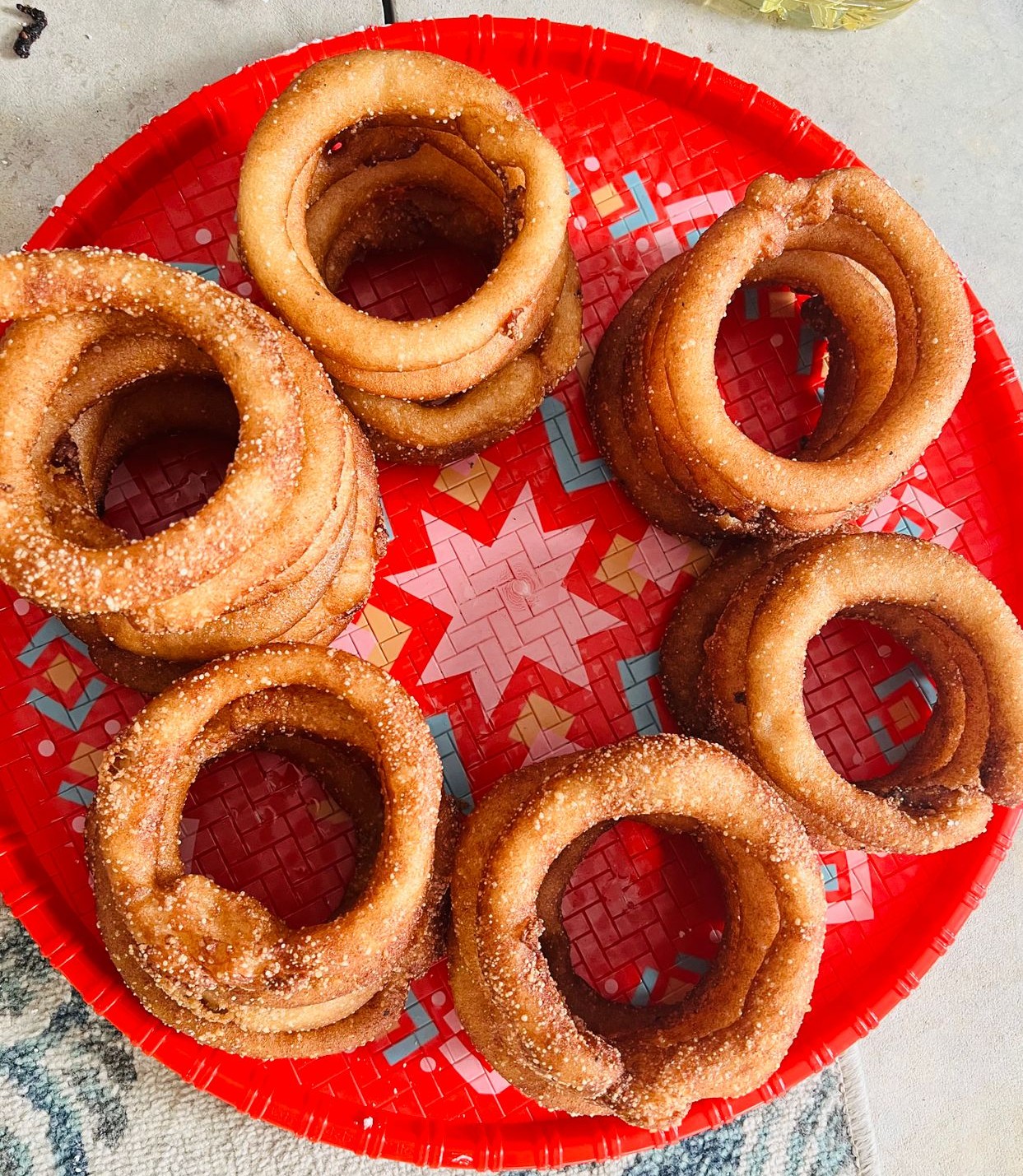
Sel Roti ready to serve
Pulau and Rice
Pulau is one of the most popular enhanced varieties of rice mixed with different vegetables and dry fruits, properly cooked for better taste. It is also a popular dish among Nepalese for different occasions such as weddings, birthday parties, gatherings, occasional parties, etc. So, during Dashain, it is also popular in any household.
Also, plain rice with meat curry and varieties of other pickles and vegetables is preferred, sometimes adding selroti as a part of the meal.
Cold Drinks and Beverages
Cold drinks have become another unmissable part of the Dahain meal. After the meat, they can be taken as the most used item during the festival. Cold drinks such as Coca-Cola, Sprite, Fanta, Dew, and Pepsi are widely used and are available in every household.
Also, alcoholic beverages such as beer, whiskey, rum and local rice wines are also served for those who prefer to have alcoholic beverages.
Other Dishes
During Dashain, a wide variety of dishes are served, so different households prefer to have their own preferences for mixing and adding other flavourful dishes during the Dashain meal, such as papad, fries, yoghurts, etc.
What is Tika and Jamara in Dashain?
Tika and Jamara are basically a tradition of receiving tika and jamara as a blessing from the elders for better wealth, happiness and health. It is received on the forehead, with a wide space covered, and jamara in the hands with money, later basically kept at the ear or on the hair band by women.
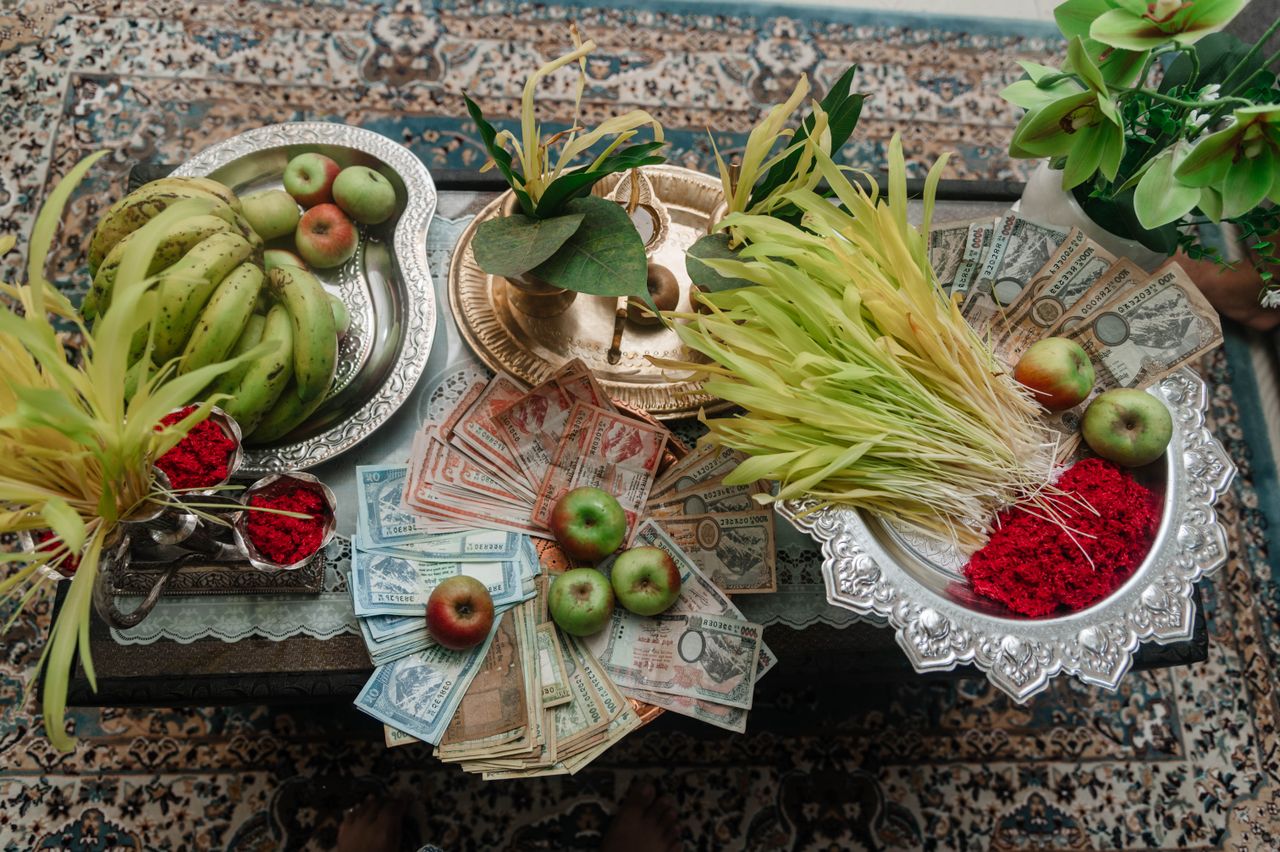
Typical combination of Tika and Jamara
Tika
Tika of Dahaian is a mixture of soaked white rice, plain yoghurt, sugar for stickiness and red vermilion powder (abir). Some indigenous people do not include red colour as part of their rituals and prefer to wear white.
After preparing the Tika, the elders dip their thumb and index finger, pressing them lightly over your forehead, reciting different blessings.
Jamara
Jamara is barley shoots which are kept inside the dark corner or part of the house to make it intentionally yellow with ritual. It is planted during the day of Ghatasthapana and left for 9 whole days. On the day of Dashami, it is provided after tika, with mostly a clean banknote. Later, the jamara is kept within the ear or hair by women.
So, Tika and Jamara are traditional practices of giving and receiving blessings from the elders during the day of Bijaya Dashami.
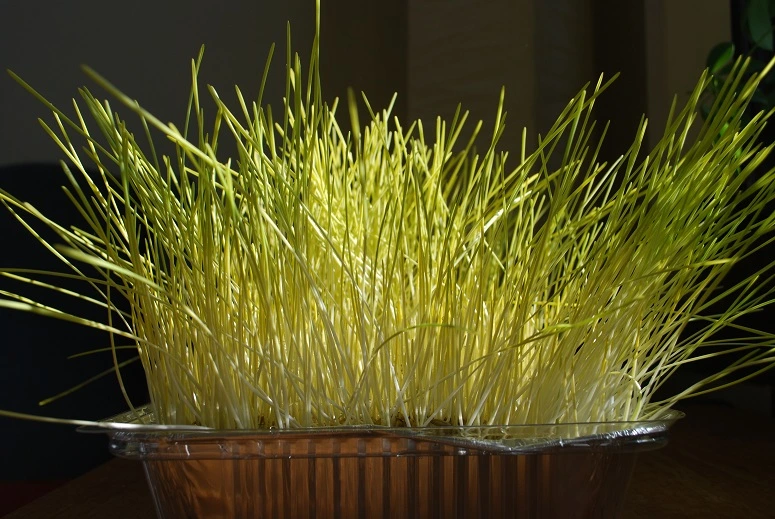
Jamara as it turns yellow after keeping it in dark for about week long duration
Timeline of Dashain across 15 Days
Ghatasthapana (Day-1): The jamara is planted by dipping the barley seeds in a kalash, invoking the Goddess Durga, representing the beginning of Dashain.
Fulpati (Day-7): One week after the Ghatasthapana, offerings of sacred flowers and plants are made to temples, symbolising prosperity, peace and strength. The fulpati is also accompanied by military parades and religious rituals in temples.
Maha Ashtami (Day-8): honour to the Goddess Durga with animal sacrifices.
Maha Navami(Day-9): worship of tools, machinery and vehicles to get blessings for safety and productivity.
Vijaya Dashami(Day-10): the final day of gatherings and sharing the blessings and joy with Tika and Jamara.
Kojagrat Purnima (Day-15): concludes the Dashain with the full moon.
Ritual Dates of Dashain 2083
| Ghatasthapana | October 11, Sunday | Ashwin 25, 2083 |
| Phulpati | October 17, Saturday | Ashwin 31, 2083 |
| Maha Ashtami | October 18, Sunday | Kartik 1, 2083 |
| Maha Navami | October 20, Tuesday | Kartik 3, 2083 |
| Vijaya Dashami/Tika | October 21, Wednesday | Kartik 4, 2083 |
| Kojagrat Purnima | October 25, Sunday | Kartik 8, 2083 |
The Dashain tika Sait is at 10: 26 AM, Nepali Time. Receiving and taking blessings or wearing tika also have specific times determined as Sait (good time).
Best Trekking During Dashain
As Dashain falls in October-November, during the time of the autumn season, which is also the peak season for trekking in Nepal. So, travelling during the festive season can also be a lifetime opportunity to get a chance to experience the authentic village festivals. Along with the seasonal beauty features from nature, the festival also adds more flavour to the journey.
Annapurna Circuit Trek
Annapurna Region is itself known for its spectacular beauty, and tradational lifestyle, and beautiful villages. and during the Dashain, the beauty peaks along with the natural features and the tradition of renovating as well as decorating the house for the festive season. It makes the Annapurna Circuit Trek an outstanding choice for the best trekking experience.
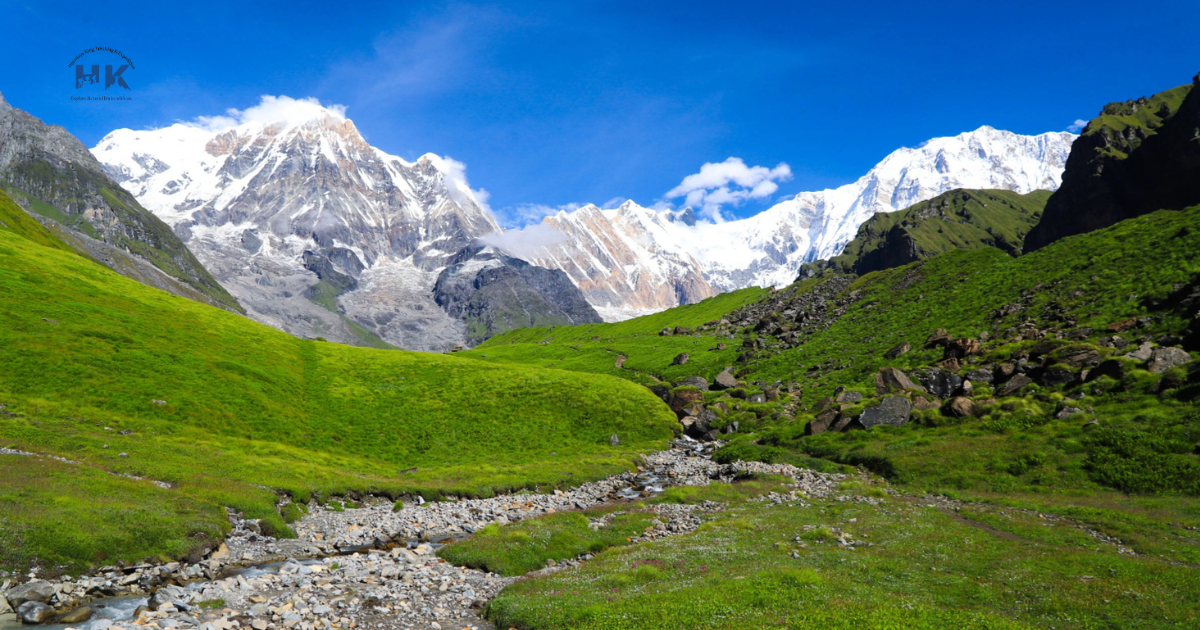
Scenic trail at Annapurna Circuit Trek
Manaslu Circuit Trek
The isolated area of the Manaslu Region is always a highlight among the most preserved raw nature in the Himalayas. Uninfluenced by outside culture, it provides an authentic glimpse of what a traditional cultural festival celebration looks like in remote villages. Along with that, the peak beauty will be a bonus.
Peaky Peak Trek
Inside the Everest Region, Peaky Peak Trek is overshadowed by the Everest Base Camp Trek, just beside each other. But during Dashain, which is the time of Autumn is the peak season for the EBC Trek, making the Everest trail crowded, so an alternative can be Peaky Peak to enhance a trekking journey for experiencing the beauty of the Everest Region.
Ghorepani Poon Hill Trek
A part of the Annapurna Trail, Ghorepani offers a short and sweet trekking expereince to have. Passing villages like Ghandruk, a very traditional Gurung village with preserved cultures, is what makes it best during Dashain. The beauty of the village alone can be the best thing about the Ghorepani Poon Hill Trek. Along with that, the sunrise hike up to the top of Poon hill adds highlight of the trek.
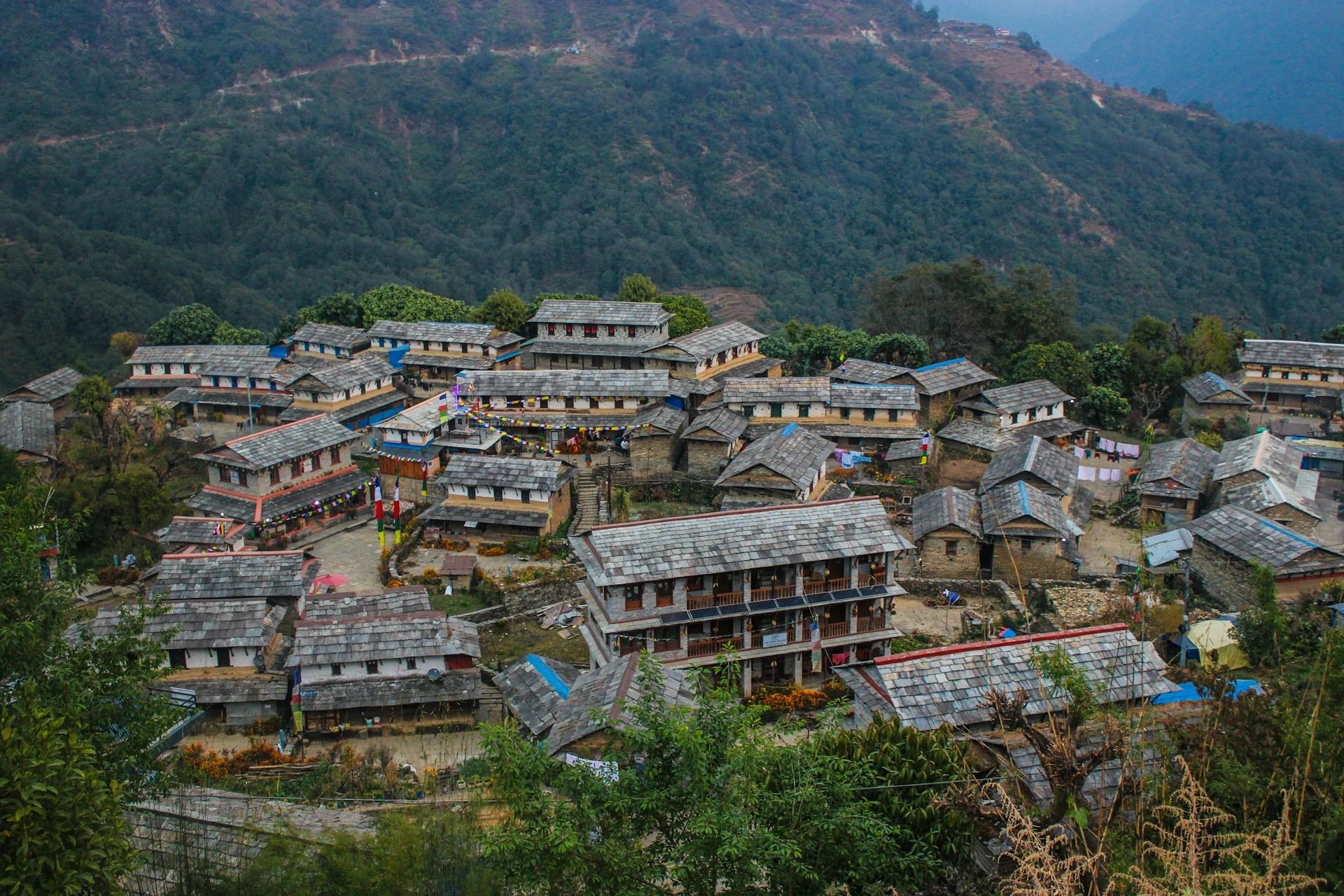
Tradational Ghandruk village
Api Himal Base Camp
Located in a remote part of the Himalayas, in the far west of Nepal, it offers an overland journey with majestic beauty. Its beauty at the Base Camp is always admired as a paradise. During Dashain, it offers more cultural and traditional practices of the far west.
Badimalika Trek
During Dashain, the Badimalika Trek can be a good option to enjoy the lush greenery. It consists of massive green alpine meadows where a spiritual pilgrimage route is drawn to the sacred temple of Goddess Bhagwati.

Himalaya King
Himalaya King
Adventure Awaits — Let’s Begin Your Journey


