
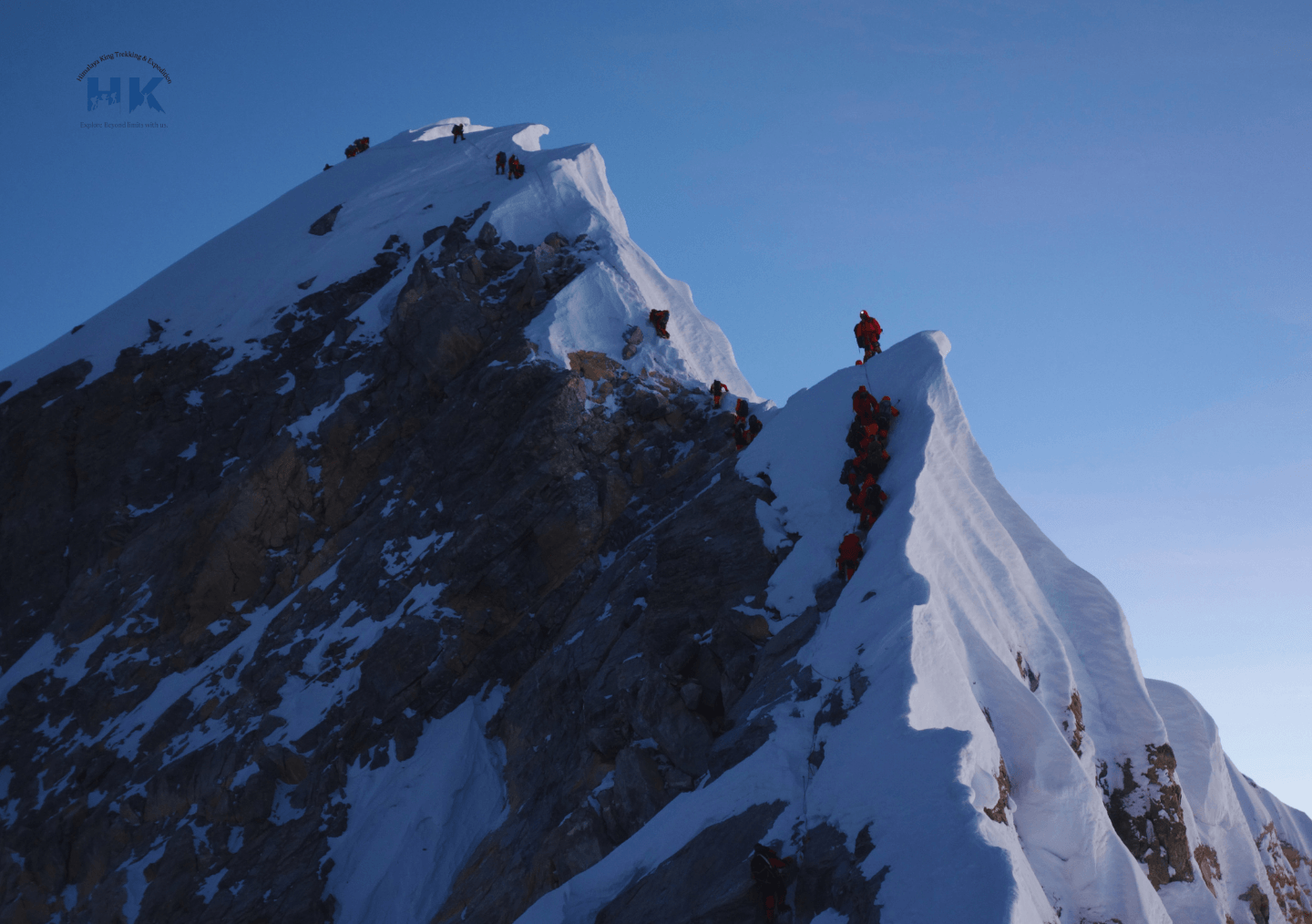
Death Zone: The Ultimate Altitude Challenge
Death Zone, which is considered to be above an altitude of 8000m/26,000ft, is mostly the summit area of 8000m peaks and is considered one of the most fatal high-altitude regions in the world. Triggered by different factors and the very low oxygen level above 8000 meters, which usually drops to 67% to 75% of sea-level levels, it is known for taking the lives of climbers, even sometimes experienced ones, challenging human endurance.
It is known for its ultimate challenging aspects, even pointing towards the situation of life and death becoming the major reason for fatalities, hence named ‘Death Zone’.
Mostly, the Death Zone is popular with names along Mount Everest, but it refers to all the mountain zones which have an altitude of 8000m from sea level. Basically, it is the imaginary boundary line above an altitude of 8,000m or above 26,000ft and following the aspect of such a zone, there are 14 peaks in the world consisting of the Death Zone.
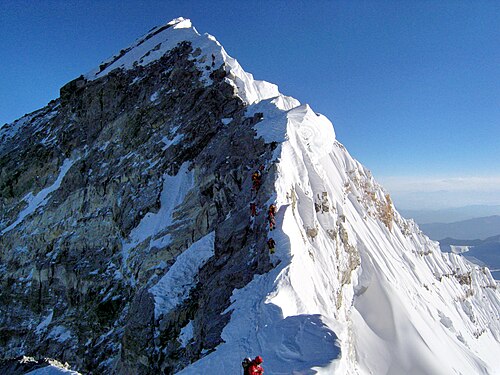
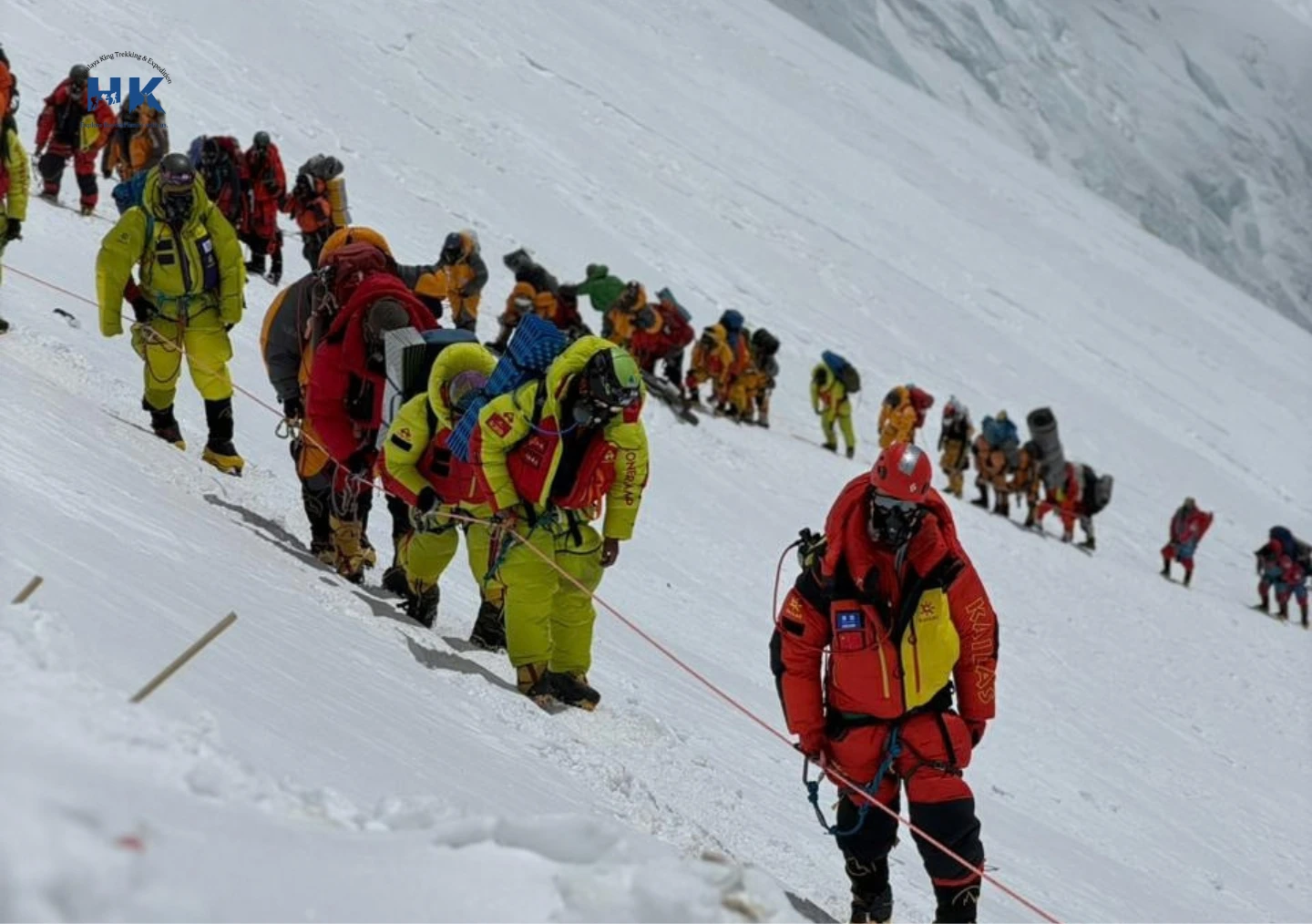
Hillary Steps which located at Death Zone (via: wiki)
What is the Death Zone of Everest?
Above the 8000m altitude from sea level on Everest is considered the Death Zone of Everest. It covers the summit ridge and the route that passes the famous Hillary Steps. Above the mark of the Death Zone altitude, the summit ridge is known for its ultimate challenge of human endurance.
Ultimately, Everest is admired as a hardcore high-altitude adventure. Being the highest peak in the world with an altitude of 8848.86m/29,031.7ft, it always keeps its shine as a milestone in a mountaineer's eye. Not only that, it is set to be the benchmark in their mountaineering career and a lifetime experience to stand at the top of the world.
Every Year, thousands of mountaineers attempt an Everest Expedition, for a successful Everest Summit, but very few of them are able to make it to the Summit, depending upon various factors. Factors such as weather, visibility, altitude risks, terrain, and slope falls, etc., which too can be fatal for life beside the unsuccessful summit.
And most of the fatalities during the climbing of Everest happen inside the zone above the 8000m entering the Summit area, making it and getting the name as Death Zone of Everest.
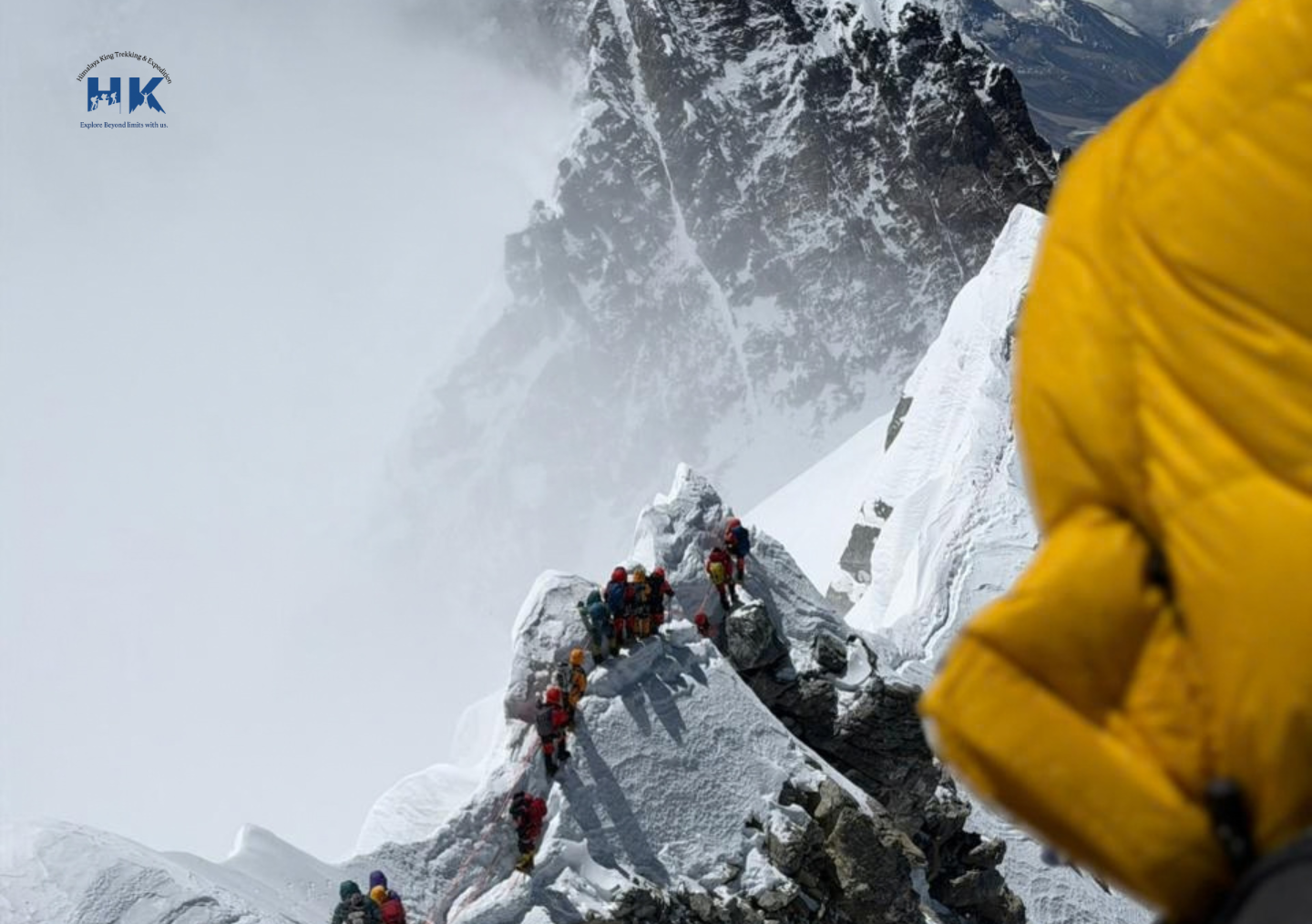
Climbers of Hillary steps
First Glimpses of Death Zone and Use of Supplemental Oxygen
During the 19th century (1878), a French physiologist, Paul Bert, came with a proven study about altitude sickness (hypoxia) was actually caused by the partial pressure of oxygen, which was believed to be caused by carbon dioxide buildup or low total pressure. He also demonstrated that breathing pure oxygen can restore human performance and reverse the effects at simulated extreme altitudes. The study also shows that above 8000m/26,000ft Oxygen level drops down to 75 percent than in sea level, where survival of the human body is extremely low and decreases with time spent. In 1953, a Swiss Doctor gave the concept of the Lethal Zone in his Native German as 'Todeszone', which also refers to the Death Zone, while he was serving as the leader of the Swiss Mount Everest Expedition.
Later, it was followed by tests on Expeditions. In 1907, A. L. Mumm conducted the first recorded field test with oxygen cartridges on the Trisul Expedition.
After the successful test, it led to another development of first particle open-circuit high -altitude oxygen system by chemist George Finch, setting the record of 8,300m/27,250ft with 33 pounds (15 kg) of supplement, along with Geoffrey Bruce, during the 1922 British Everest expedition. The test also followed the recorded first humans above 8000m altitude. ([i])
The development of lightweight open-circuit equipment for oxygen was massively transformed until the mid-1900s, tackling a variety of test in high-altitudes by different climbers.
In 1953, a British Expedition team led by John Hunt brought both open-circuit and closed-circuit systems to settle the wide test and debates over their use.
Following the Expedition, the Physiologist Griffin Pugh and Physicist Tom Bourdillon re-engineered a lightweight closed-circuit system at the Medical Research Centre, which was tested and used during the summit attempt of Everest, which was the first Everest summit attempt. The equipment and sets worked with excellent results, allowing them to sustain the speed too. But a malfunction in the valve, due to moisture freezing in Evans's system, made them turn back. ([ii])
Later, Edmund Hillary and Tenzing Norgay attempted it with open-circuit. Even though the system was heavier and slower, it was mechanically simpler and reliable in extreme cold too, and it worked well. They later successfully reached the summit, becoming the first humans to reach the top of the world.
In modern days, for peaks above 8000 m, lightweight summit oxygen masks, top-out, and mechanical systems are used, mostly refined and advanced open–circuit systems.
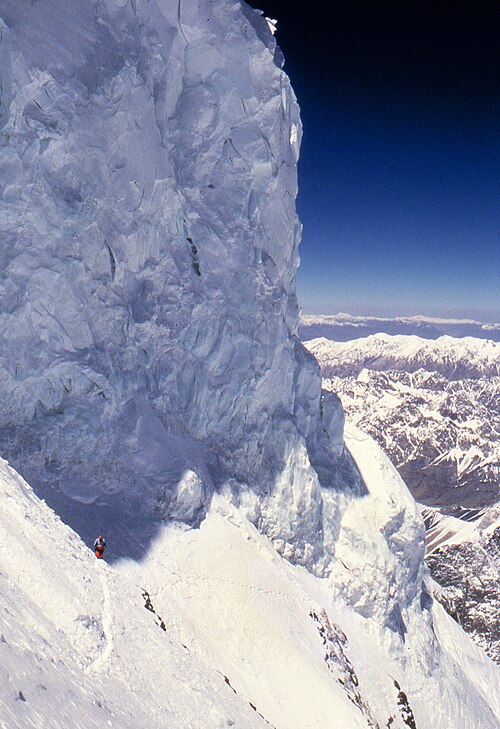
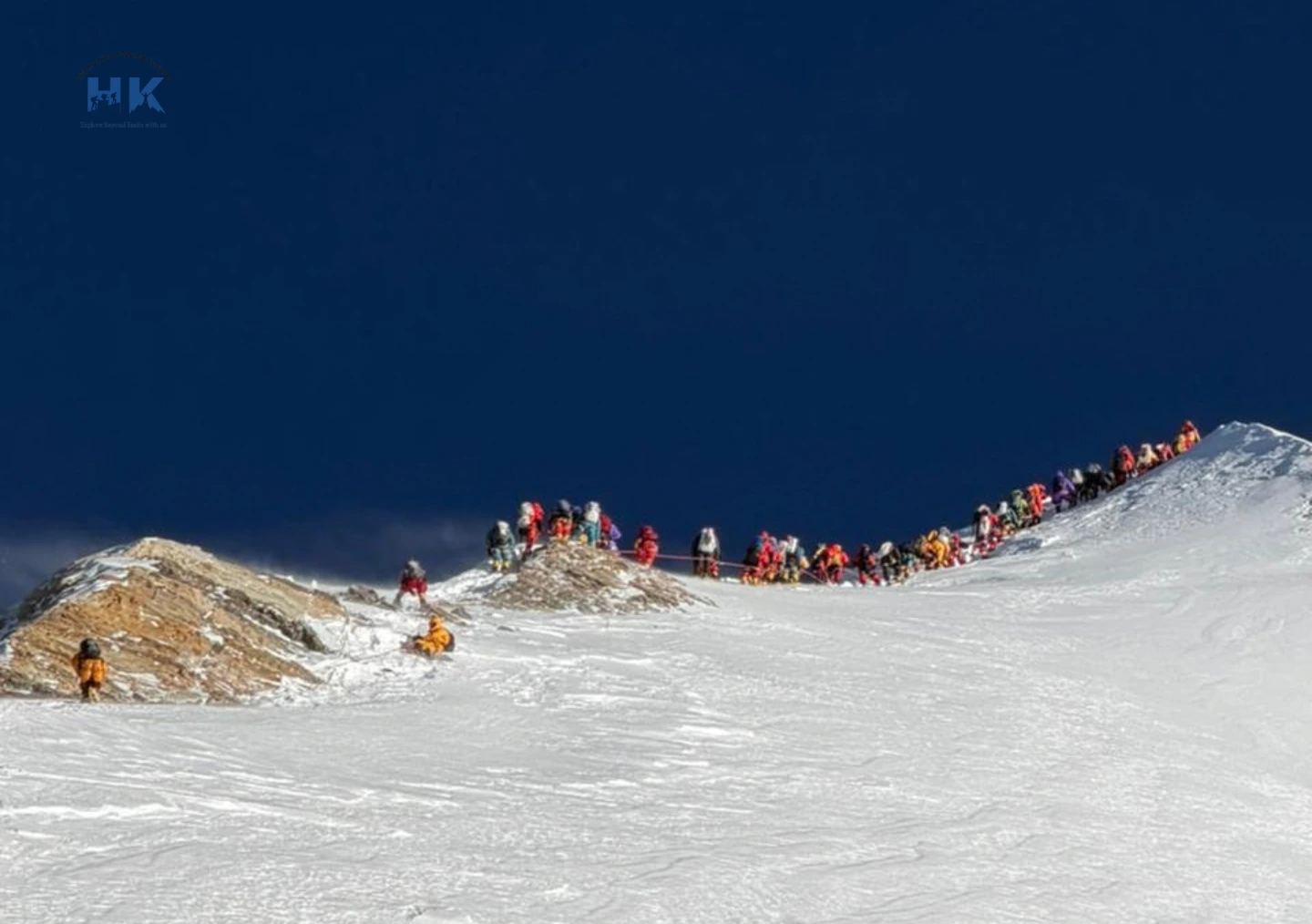
Bottleneck, Death Zone on K2 (via: wiki)
What Happens to the Body in the Death Zone on Everest
During the death zone, the human body reacts a bit differently than normal due to the low level of oxygen compared to what the human body needs or relies on. The drop in oxygen is about 75 percent lower than at sea level. In such low-oxygen conditions, the human body cannot adapt or acclimate within conditional criteria; instead, it enters a state of rapid physical decline.
Extreme Hypoxia and Brain Function
Without supplementary oxygen in the Death Zone, extreme oxygen deprivation, also known as hypoxia, sets in quickly, resulting in the rapid death of cells across the body and severely impairing cognitive function. In such conditions, the climbers experience confusion, impaired judgment, memory loss, and slurred speech, which is very dangerous in such high-altitude environments and terrains. It frequently leads to High-Altitude Cerebral Edema (HACE), where fluid leaks into the brain, causing swelling of the brain, hallucinations, loss of motor control, and can untimely lead to coma or death if immediate precautions are not taken or descend immediately.
Lungs and Circulation
During a lack of oxygen, the body tends to maximize the capacity of the cardiovascular system. It makes the heart rate spike and blood thicken like syrup, exponentially increasing the risk of frostbite, stroke, heart attack, and blood clots. Fluid can also accumulate in the air sacs of the lungs. It causes High Altitude Pulmonary Edema (HAPE), along with symptoms including persistent coughing, pink frothing at the mouth, severe shortness of breath, and rapid suffocation, which can result in the death of a climber.
Rapid Muscle Wasting and Exhaustion
In the Death Zone, triggered by the extreme conditions, digestion virtually shuts down as the body redirects energy exclusively to the vital organs. As a result, the body starts to burn through stored fat, leading to the rapid breakdown of muscle tissue for energy. Combined with extreme dehydration caused by exhaling moisture in the cold and dry air, climbers suffer from muscle weakness and total physical exhaustion, unable to perform essential movements.
How Long Can You Survive in the Everest Death Zone?
Survival Limits above 8000 Meters
What Limits the Survival Time on Death Zone Everest?
Severe Hypoxia
High-Altitude Edema
Extreme Cold and Dehydration
Another Unnatural Problem arising in the Everest Death Zone
References

Bishal Limbu
Content Writer
Adventure Awaits — Let’s Begin Your Journey


