
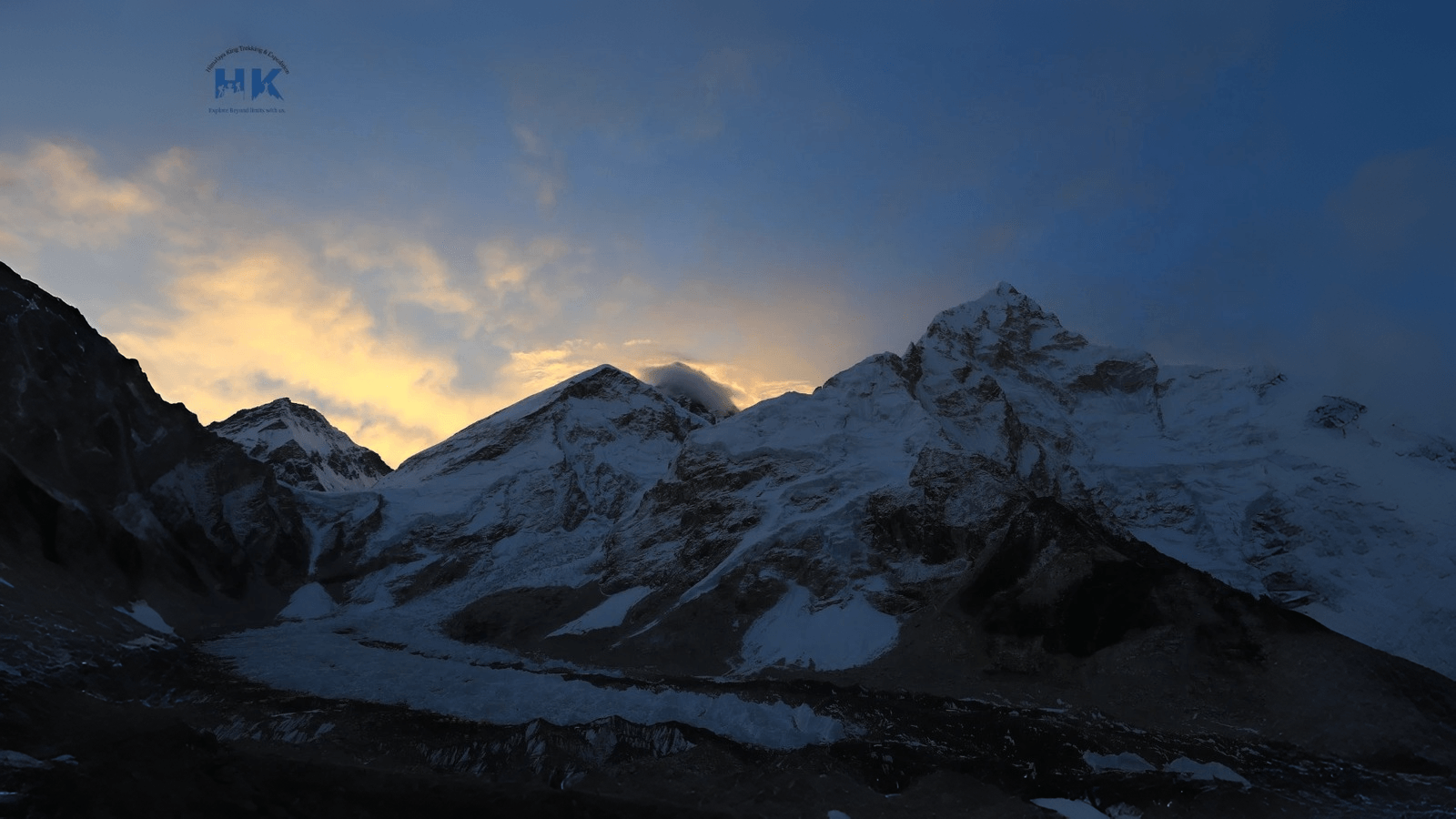
Every individual or mountain admirier has an ambition to stand at the top of the world. Everest is one of the highest mountains as well as the highest point in height in the world; standing at 8,848 m is not an achievement; it is an emotion that describes how hard you work to get there and makes you dream of success. Mount Everest is located in the Solukhumbu district bordering Nepal and Tibet. The South ridge of Mount Everest lies in Nepal, and the North ridge of Everest lies in Tibet.
It was recognized as Peak XV in 1856 AD as the world's highest peak. Since then, it has been named in different languages: Nepal calls it Sagarmatha, meaning 'Forehead in the sky'; the Sherpas and Tibetans call it Chomolungma, meaning 'goddess mother of the world'; and English calls it Everest after George Everest surveyed it.
For mountaineers, Everest is far more than a mountain because it reflects their ambition, courage, and desire to push beyond their limits. For mountaineers or climbers, summiting Mount Everest is a lifelong dream. Every step towards the top of the mountain requires a year of planning, hard work, encouragement, and training, during which they learn patience, discipline, and determination. Where Everest represents a personal journey of resilience and self-discovery. Reaching its summit can become a symbol of achieving something once thought impossible, while the experience itself often leaves mountaineers with memories and lessons that last a lifetime.
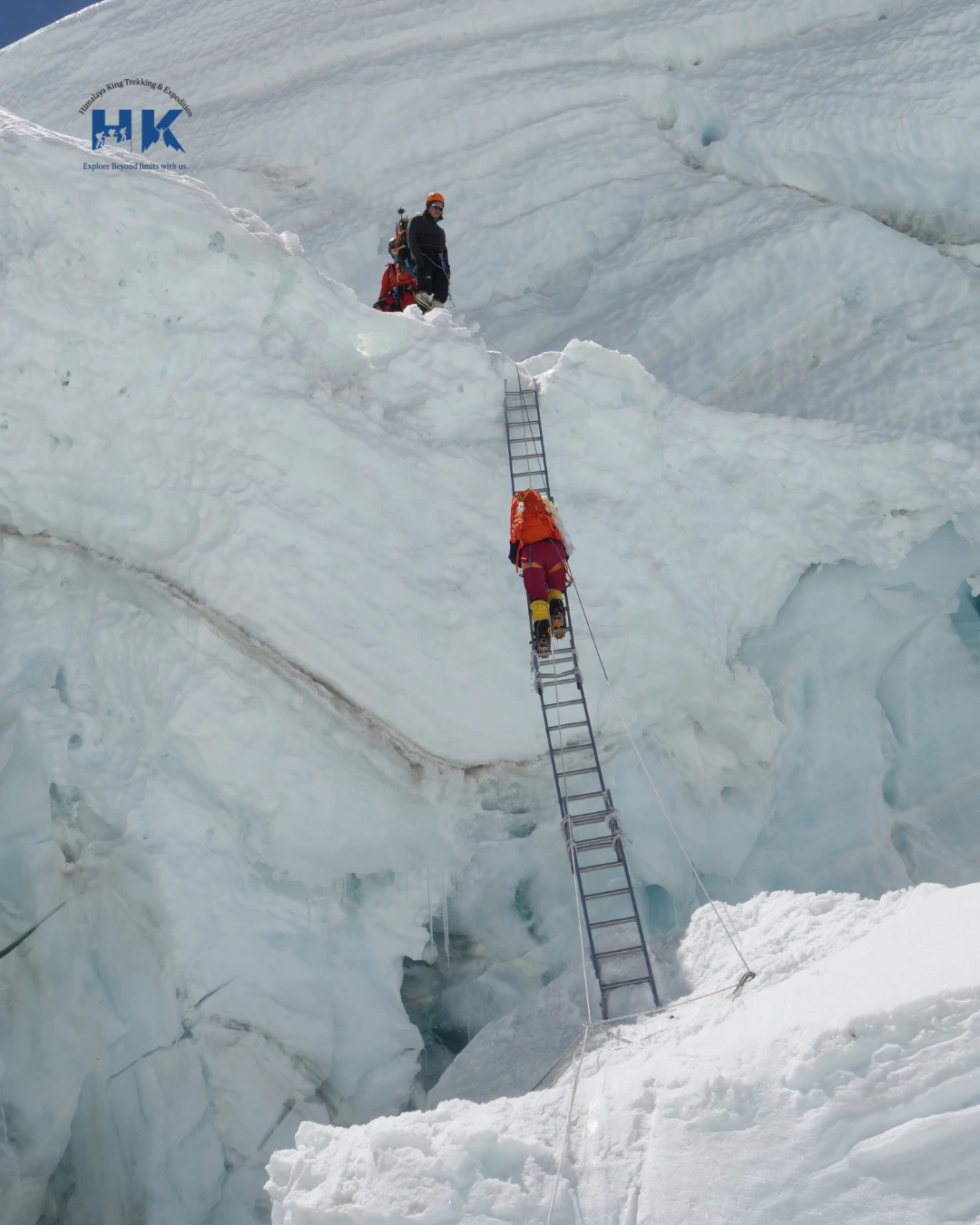
Brief History of Conquering the Everest Summit
In the 19th century, the first official measurements of Mount Everest were conducted as part of the Great Trigonometrical Survey of India, which began in 1830. At that time, Mount Everest was known as Peak XV. Survey of India was led by Andrew Scott Waugh. Sir George Everest contributed to this Survey as the Surveyor General of India. In 1856 AD, in honor of Sir George Everest. Peak XV was renamed Mount Everest. At that time, the height of Everest was recorded as 29,002 feet (8,840 meters) above sea level. Nowadays, the official height of Mount Everest is 8,848.86 meters (29,031.69 feet), including the snow and ice cap above sea level, measured by advanced measurement technology.
First attempts
Attempting the successful summit of Mount Everest wasn't easy for everyone; despite being difficult, Sir Edmund Percival Hillary and Tenzing Norgay Sherpa successfully summited Mt Everest in 1953 AD, after attempting for 2 times, they successfully summited Mount Everest the third time. It represents the dedication, preparation, and patience of every mountaineer before the Summit.
Successful summit by Tenzing Norgay and Edmund Hillary
Climbing Mount Everest was almost impossible for everyone before Sir Edmund and Sir Tenzing Hillary successfully attempted Mount Everest on May 29, 1953 AD.
Commercialization to today, enhancing the dream bucket-list
A journey from the rise of commercialization to the present day, exploring how changing times, technology, culture, and new opportunities have transformed the way we dream, explore, and experience our lives. Enhancing the dream bucket list" celebrates meaningful goals, unforgettable adventures, personal growth, and the courage to turn aspiration into real-world experiences, and creates a vision for living our lives more fully today.
Why Climbers Obsess Over Sagarmatha
Most of the climbers see mountains as a dream of standing at the top of the world. This section explains why Mount Everest attracts climbers from around the world. Standing on the world’s highest mountain is a major goal for many mountaineers. Reaching the summit can represent years of preparation and dedication.
Adventure and Achievement: Everest represents one of the greatest adventure challenges in mountaineering. Climbers want to test their skills, courage, endurance, and determination in an extreme environment. The entire expedition, including the difficult climb, changing weather, high altitude, and teamwork, becomes an unforgettable achievement.
Journey and Experience: The journey toward Mount Everest is not easy, although it offers amazing views of the Himalayan giant and core memories for climbers. The experience is not only about reaching the top. During this expedition journey, climbers learn mountaineering skills, teamwork, and get a chance to explore the culture. This expedition offers you more confidence and encourage to do more new things.
Self-discovery: Difficult situations in the mountains can help mountaineers understand their own strengths, weaknesses, patience, and ability to cope with pressure. Where mountaineers can discover themselves in the mountains.

img: the iconic south face of Everest as seen from Nepal
The Self-Challenge: Encountering Yourself
At high altitude, climbers face physical difficulties, unpredictable weather, fatigue, and demanding terrain. These conditions force them to push themselves beyond their normal comfort zone. Moreover, doing something challenging builds confidence and experience. Although mountaineers face many challenges during the Everest expedition, they still push themselves toward the top of the summit.
Challenging Physical Endurance
Climbing at extreme altitude requires considerable stamina. Long walking hours, steep trails, cold temperatures, and reduced oxygen can make even simple movements exhausting. Altitude sickness is a significant challenge seen in individuals as they climb to higher altitudes directly from lower altitudes; however, it can be overcome by following proper acclimatization.
Challenging Mental Resilience
Mental strength is just as important as physical fitness. Mountaineers need patience, confidence, discipline, and the ability to remain calm when conditions become difficult. To overcome stress, fear, and anxiety during the climb, mountaineers must practice habits such as yoga, meditation, and mental exercise to stay focused, confident, and motivated during the expedition period.
Pushing Beyond Limits
An Everest expedition encourages mountaineers to discover how far they can endure. Overcoming difficult moments can build confidence and create a strong sense of personal accomplishment. This builds confidence and resilience that can help you overcome some of the world's most dangerous climbing challenges in your life.
According to Nims Dai's motto, he said that 'Nothing is Impossible'. Following this motto, he inspires everyone by pushing yourself beyond limit will lead you to completion or success, and he believed that limits exist only in the mind.
Standing at 8,848.86m: The 20-Minute Window from the Top of the World
The summit provides a completely different perspective from everyday life. After months or years of planning and preparation, mountaineers may finally reach 8,848.86 metres, the official elevation commonly used for Everest. May is usually known as a Golden window for Mount Everest. The short period that mountaineers spend at the summit can feel extremely meaningful because being surrounded by enormous Himalayan peaks and have accomplished something physically and mentally demanding. Mountaineers sit there to witness the beauty of nature and himalayan giant from the top for a few minutes, where they take pictures for memories and celebrate their achievement with joy that is worth their hard work. Mountaineers can see an extraordinary Himalayan landscape from the highest point. From the top of Everest, mountaineers can see the breathtaking views of Mt. Cho-Oyu, Mt.Ama Dablam, Mt. Makalu, Mt. Lhotse, Mt.Nuptse, Mt.Pumori, including other mountain ranges of Nepal and Tibet side.
Reaching the summit can create a powerful feeling of accomplishment after overcoming numerous difficulties. The experience can teach climbers about their determination, courage, and ability to overcome challenges. The journey is not only about reaching the destination. It is also about discovering yourself and overcoming your own fears, weaknesses, and limitations. The experience of going from base camp all the way to the summit challenges you physically and mentally. It teaches you patience, courage, confidence, and determination. Trekking from the valley to the top of the summit is more than just an adventure. It is a journey of discovering your inner strength and overcoming personal challenges. Every step from base camp to the top tests your patience, courage, and determination, making the achievement even more meaningful.
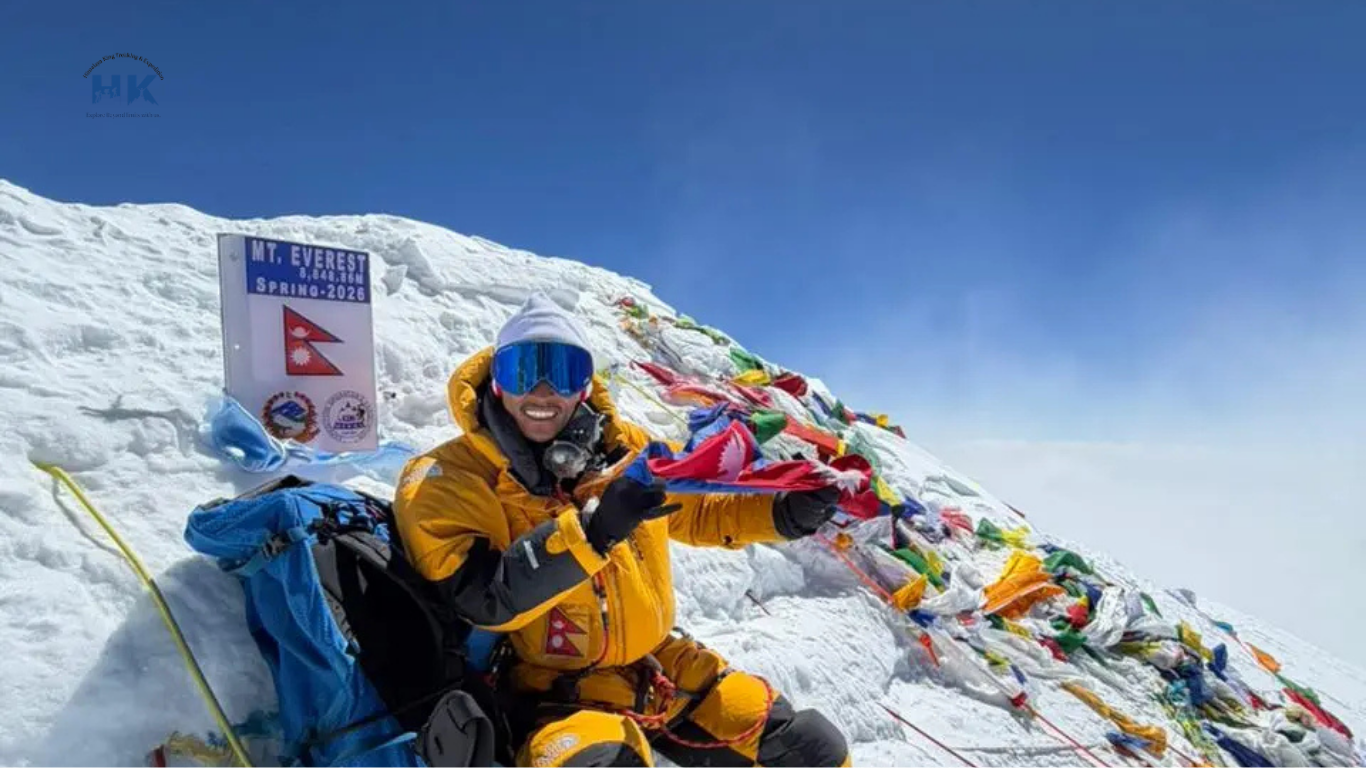
img: Sherpa Guide of Himalaya King at the top of the world
The Descending Ridge of Summit
Reaching the summit is often seen as the ultimate goal, but the descent can bring an entirely different experience. As mountaineers leave the highest point and begin moving downward, the intensity of the summit push gradually gives way to reflection. The journey back allows them to process everything they have experienced, from exhaustion and fear to determination and accomplishment.
For mountaineers, the experience of standing on Everest is difficult to describe in ordinary words. The extreme altitude, harsh environment, long preparation, and emotional pressure make the expedition deeply personal. Once they begin their descent, many mountaineers reflect on the difficult moments they overcame and the people who supported them throughout the journey. The Everest experience can leave mountaineers with a feeling of inner transformation. The struggles they face may help them let go of certain fears and doubts while developing a stronger sense of confidence. After accomplishing something that once seemed almost impossible, they may return with a clearer understanding of their priorities and personal strength. The mountains can create moments of deep reflection. Away from the noise and routine of everyday life, mountaineers have time to think about who they are, what they value, and what truly matters to them. The experience of Everest may therefore become more than a physical expedition. It can become a journey of self-discovery.
The Dream in Mountaineers’ Sleep: Everest Summit
For many mountaineers, reaching the summit of Everest is a dream that requires years of preparation, patience, and commitment. The journey involves much more than climbing toward a particular altitude. It is a gradual process of facing uncertainty, overcoming physical and mental challenges, and continuing forward despite difficult conditions. The summit eventually becomes a symbol of everything the climber has worked toward. Standing at the top can bring a powerful sense of accomplishment, while the journey itself can provide lessons that remain meaningful long after returning home.
Everest is not simply a mountain to climb. For many mountaineers, it is a test of physical strength, mental resilience, courage, and personal determination. Reaching the summit can become a life-changing experience that helps people discover their own limits and capabilities. The Everest journey connects adventure, self-challenge, achievement, and self-discovery. From the first steps toward Base Camp to the demanding summit push and the return journey, every stage can test a climber in different ways. Ultimately, Everest is not only about reaching the highest point, but also about discovering one’s determination, confronting personal limits, and returning with a deeper sense of self-realization.
|
Planning a Trip? Get a free consultation from our travel experts with over a decade of experience. |

Chhiring Phuti
Operation
Adventure Awaits — Let’s Begin Your Journey


