
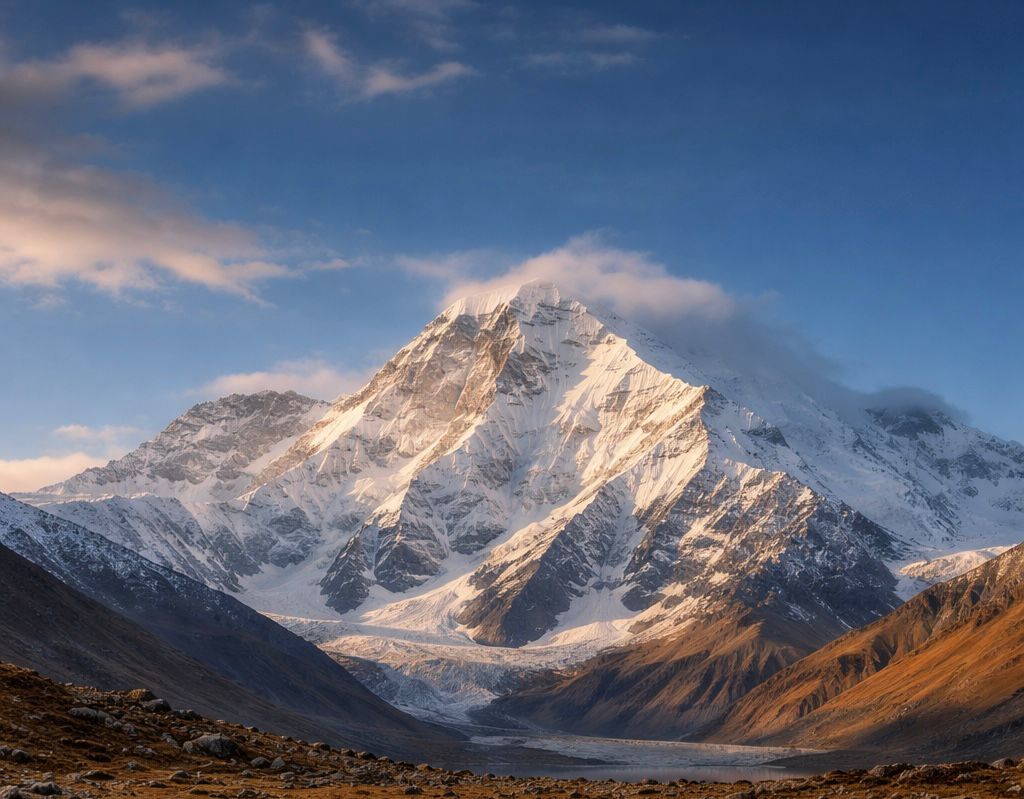
Shishapangma, standing at 8,027 meters (26,335 ft), is the 14th highest mountain in the world and the only 8,000-meter peak located entirely within Tibet, China. Known for its relatively less crowded routes and breathtaking high-altitude scenery, Shishapangma offers climbers a unique blend of adventure, challenge, and cultural exploration in the heart of the Himalaya. Shishapangma is named after a Tibetan word. According to geologist Tony Hegan, the meaning of ‘Shisha is ’ Range ’, and Pangma is ‘Above the Glassy Plain ’. So, Shishapangma is known as “Range Above the Glassy Plain”. Despite being one of the smaller 8,000-meter peaks, Shishapangma is not an easy climb. Its snow-covered ridges, glaciers, and high-altitude conditions demand strong physical fitness, careful acclimatization, and technical mountaineering skills. Expeditions are usually conducted from Base Camp at around 5,000 meters, progressing through multiple high camps before attempting the summit.
Shishapangma is the place of god. Shishapangma is often chosen by climbers who are preparing for higher Himalayan giants like Mt. Cho Oyu, Mt. K2, or Mt. Everest, offering a good balance of technical challenge and altitude experience. Its serene landscapes, quiet trails, and cultural encounters with Tibetan design houses, monasteries, and local villages make it a truly unforgettable Himalayan adventure. Whether you are a seasoned mountaineer seeking a new 8,000-meter challenge or a high-altitude adventurer ready to test your limits, a Shishapangma expedition promises thrills, achievement, and the unmatched beauty of the Himalayas.
Overview:
Location: It is located near the Nepal border in southern Tibet, China. Shishapangma Mountain is the only completely 8,000 meter stretch of the Tibet. It is totally in Tibet.
Height: Shishapangma is located at an altitude of 8,027 meter/ 26,335 feet
Trip Duration: This expedition takes 39-40 days with an acclimatization day
Difficulty: challenging
Adventure type: Expedition and climbing
Best season: Spring and Autumn season
Spring season (April-May):
Spring is considered the best season for climbing Shishapangma.
· Conditions: no monsoon; winter winds begin to subside.
· Snow Stability
· The most favorable weather for summit attempts usually occurs in mid- May.
· While it starts cold, it gradually warms up throughout the season, which helps to reduce the risk of frostbite.
Autumn season (September-October):
o Autumn season is considered for its exceptional visibility.
o After the monsoon, the air is washed clean, resulting in crisp, crystal-clear skies and superb mountain views.
o The best time to summit is generally late September to early October.
o High objective of avalanche danger in early autumn.
Seasons to avoid
· Summer (June-August): due to heavy rainfall at lower altitude and high snowfall at high altitude that increases avalanche risk.
· Winter (December- February): extreme cold, high winds, and frequent snows making summit more difficult with more risk, and it is dangerous.
Highlights of Shishapangma
1. The Only Peak Entirely in Tibet: Unlike other 8,000-meter peaks, Shishapangma is fully in Tibet, offering unique Tibetan culture and monasteries along the trekking route.
2. Less Crowded Trails: Compared to Everest or Cho-Oyo, Shishapangma sees fewer climbers, giving a more peaceful and authentic Himalayan experience.
3. Scenic Beauty: Glacial landscapes, high-altitude plateaus, and panoramic views of neighboring peaks make every step visually rewarding.
4. Ideal Training for Higher Peaks: Its moderate technical difficulty and altitude make it a good preparatory climb for Everest or K2.
5. Summit Ridge Experience: The final summit ridge offers thrilling views and a true high-altitude mountaineering experience.
Itinerary for Shishapangma Expedition
Day 01: Arrival in Kathmandu (1,400 meters)
Day 02–04: Preparation, briefing, permits, and equipment check/ guided sightseeing in Kathmandu
Day 05: Drive from Kathmandu to Kyirong (Tibet) (1400 meters to 2700 meters)
Day 06: Rest and acclimatization at Kyirong (2700 meters/ 8858 feet)
Day 07: Drive Kyirong to Shishapangma Base Camp (5,500m)
Day 08–10: Rest, acclimatization, and training at Base Camp
Day 11: Trek to Advanced Base Camp (ABC) ( 6400 meters )
Day 12–25: Acclimatization rotations
Climb to Camp I: It begins from Advanced Base Camp (ABC), which is located at 5400 to 5600 meters. The trek takes between 5 and 6 hours for most climbers. Its height is 6200 meters.
Camp II: The route follows a snow ridge that leads to a steeper section often featuring a 30-50 meter icefall. The treks between 3 and 5 hours for climbers with average stamina. Its height is 6700 meters.
Camp III: The route crosses a long, relatively flat snow plateau before reaching a steep headwall under the northwest. The trek takes between 3 and 5 hours. Its altitude is 7,500 meters.
(Multiple rotations based on conditions and weather)
Day 26–31: Summit Window
Day 32–33: Rest and packing at Base Camp
Day 34: Drive Base Camp to Kyirong
Day 35: Drive Kyirong to Kathmandu
Day 36–38: Rest days, debrief, and celebration
Day 39: Final departure
Permits Required for Shishapangma Expedition
· Tibet travel permit
· Climbing/Mountaineering permit: issued by China-Tibet Mountaineering Association
· Alien’s Travel Permit/ Alien’s Entry Permit
· Liaison Officer
· Insurance (Highly recommended)
Challenges during Shishapangma Expedition
· Extreme Altitude : At 8,027 meters, oxygen is scarce, increasing the risk of altitude sickness.
· Technical Terrain : Snow and ice slopes, crevasses, and occasional rock sections require mountaineering skills and careful navigation.
· Unpredictable Weather : High winds, sudden storms, and low temperatures can make climbing dangerous.
· Remote Location : Limited rescue and medical facilities demand thorough planning and preparedness.
Risks during Shishapangma Expedition
· Altitude Sickness: Acute Mountain Sickness (AMS), High Altitude Pulmonary Edema (HAPE), and High Altitude Cerebral Edema HACE) can occur if acclimatization is not properly managed.
· Falls and Slips : Steep icy slopes and exposed ridges require careful use of ropes and crampons.
· Avalanches and Icefall : Certain glacier areas are prone to natural hazards.
· Health Issues : Cold injuries like frostbite, hypothermia, and dehydration are common at high altitudes.
Safety Measures for Shishapangma Expedition
· Experienced Guides and Sherpa Support : Trained high-altitude guides ensure proper route selection and emergency readiness.
· Gradual Acclimatization : Structured rotation climbs and rest days reduce the risk of altitude sickness.
· Safety Equipment : Fixed ropes, harnesses, ice axes, crampons, oxygen systems, and communication devices are essential.
· Weather Monitoring : Daily checks and flexible summit plans prevent exposure to storms or extreme winds.
· Medical Preparedness : First-aid kits, portable oxygen, and evacuation plans are mandatory.
· Environmental Responsibility : Following “Leave No Trace” practices ensures safety for both climbers and the fragile mountain environment.
Why climb Shishapangma before Mt.K2 or Mt. Everest?
Shishapangma is often climbed before attempting 8,000-meter-high mountains like Mt. K2, Mt. Everest, and so on. Shishapangma is the best choice for those who want to summit Everest, K2, Cho-Oyu, and other 8,000-meter mountains. Climbing Shishapangma before Mt. K2 or Mt. Everest is crucial for better performance or comfort. It provides an ideal progression into extreme high-altitude mountaineering. As one of the technical less demanding 8,000 meter mountain, Shishapangma allows climbers to gain experience above the death zone while facing comparatively lower objective risks. Climbing Mt. Shishapangma helps climbers to realize how their body reacts to extreme altitude, prolonged exposure, and expedition- style logistics without the intense technical challenges found on K2 or the heavy crowds of Everest. It is an excellent environment to practice oxygen management, acclimatization strategy, fixed rope travel.
Shishapangma expeditions involve long summit pushes, cold temperatures, and high camps—conditions very similar to Everest and K2—making it a valuable training peak. Many elite climbers use Shishapangma to test their physical endurance, mental resilience, and teamwork before committing to more dangerous and technically complex mountains.
Climb Shishapangma with Himalaya King Trekking and Expedition?
Climb Shishapangma (8,027 m) with Himalayan King and take your first confident step into the world of 8,000-meter mountaineering. As one of the most accessible 8,000-meter peaks, Shishapangma offers the perfect balance of high-altitude challenge and safety, making it an ideal choice for climbers preparing for Everest, K2, or other major Himalayan giants.
With Himalayan King, climbers benefit from expert Sherpa support, carefully planned acclimatization, high-quality logistics, and a strong focus on safety. Our experienced team ensures proper rotation schedules, fixed-rope management, and professional guidance throughout the expedition, allowing you to focus fully on performance and summit success.
Choosing Himalayan King means climbing with a team that understands the Himalayas deeply and combines local expertise, responsible guiding, and personalized service to help you achieve your 8,000-meter ambition with confidence. Choosing the right company is as important as choosing the mountains before the expedition. Safety comes first, while reputation is secondary, when picking the right Company/Team.
Climbing Shishapangma (8,027 m) is a powerful milestone for mountaineers aiming to progress toward the world’s most demanding peaks, including Everest and K2. As one of the most accessible 8,000-meter mountains, it offers invaluable high-altitude experience while allowing climbers to build confidence, endurance, and technical readiness in the death zone.
With Himalayan King, climbers are supported by seasoned Sherpa guides, carefully designed acclimatization plans, and a strong commitment to safety and professionalism. We offer an experienced, highly skilled guide for climbers. Every aspect of the expedition is managed with precision, ensuring a rewarding and responsible climb in one of the Himalayas’ most iconic regions. You cannot do a Shishapangma expedition independently; all permits must be arranged through a liaison expedition company. The company usually handles all permits, liaison officers, and government fees. Join us and create memories that will last a lifetime on this Shishapangma Expedition.
|
Planning a Trip? Get a free consultation from our travel experts with over a decade of experience. |

Himalaya King
Himalaya King
Adventure Awaits — Let’s Begin Your Journey


