
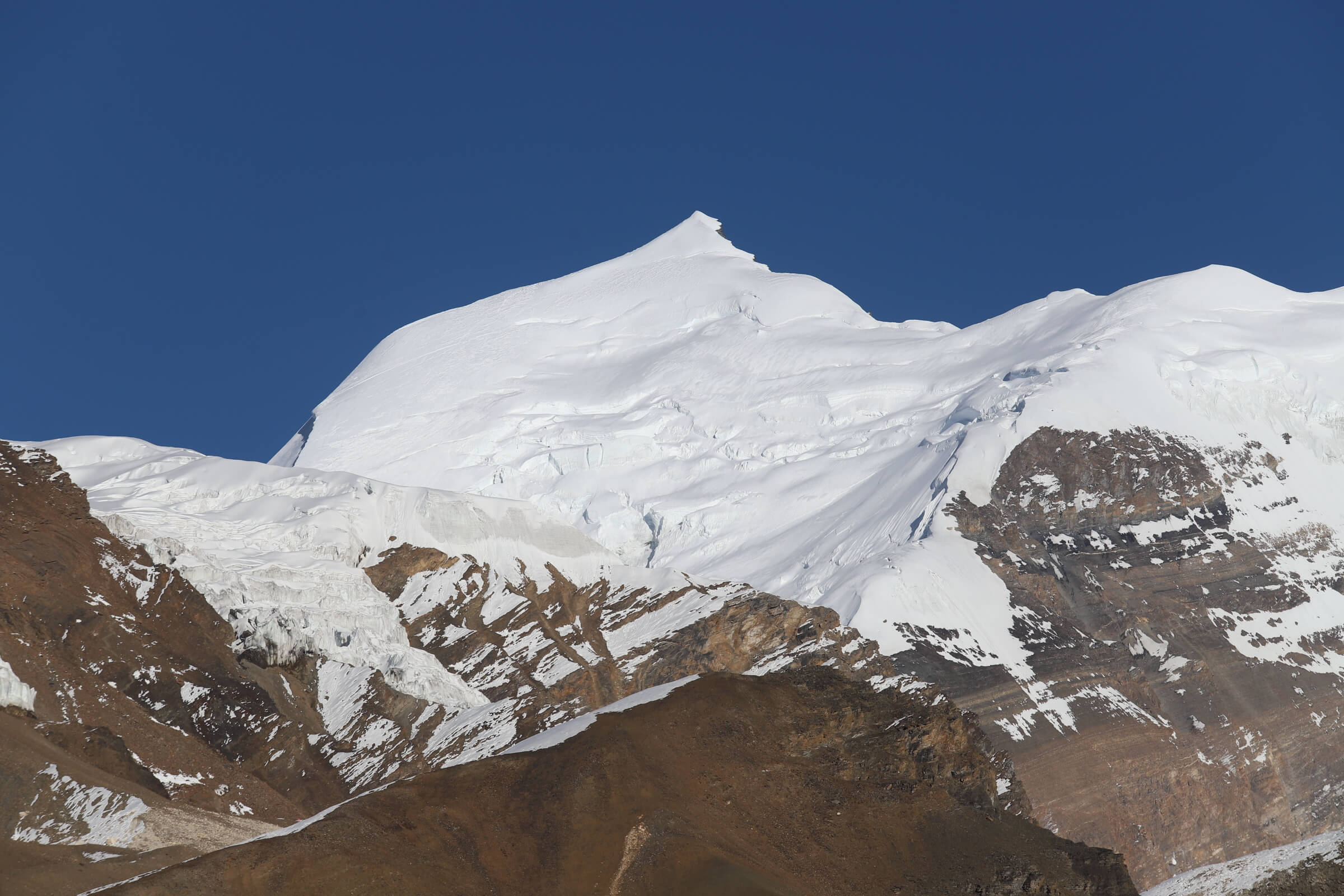
What Does It Feel Like to Stand at 7,126 Meters?
At some point during the night, the excitement disappears.
It is dark. The temperature is far below freezing. Your sleeping bag feels like the only safe place in the world, but you know you have to leave it. Outside the tent, the wind moves across the mountain, and somewhere above you are the summit of Himlung Himal.
Your headlamp cuts through the darkness. One step. Then another.
At this altitude, you do not walk fast. You do not think about the summit too much either. You focus on the next few meters.
Breathe. Step. Breathe again. And keep moving.
This is Himlung Himal.
At 7,126 meters, Himlung Himal is not just another mountain in Nepal. It is a journey that takes you through one of the country's most remote Himalayan valleys, introduces you to ancient Tibetan-influenced culture, pushes your body into the world of extreme altitude, and finally asks one simple question:
How eagerly do you want to keep going?
For climbers looking to move beyond trekking and experience a real Himalayan expedition, the Himlung Himal Expedition offers something special. It is serious enough to challenge experienced mountaineers, yet approachable enough for well-prepared climbers who already have experience at high altitude.
But the real story of Himlung does not begin at the summit. It begins far below it.
Himlung Himal: Nepal's Quiet Himalayan Giant
Himlung Himal rises to 7,126 meters (23,379 feet) in the remote Nar Phu region of Manang District in Nepal.
While Everest and Manaslu attract global attention and large expedition teams, Himlung Himal remains comparatively quiet. Reaching the mountain itself is an adventure. There are no direct roads to Base Camp.
No quick flights. No shortcut to the summit. Instead, the expedition gradually takes you away from Kathmandu and deep into the Himalayas.
The journey passes through Besisahar and Koto before entering the remote Nar Phu Valley. From there, the trail moves through dramatic gorges, high-altitude landscapes, traditional settlements, and the ancient village of Phu before finally reaching Himlung Himal Base Camp.
This slow approach is one of the greatest strengths of the expedition.
You do not simply arrive at the mountain. You grow into it.
Every day takes you higher. The landscape becomes drier and more dramatic. The villages become smaller. The air becomes thinner. By the time you reach Base Camp, the mountain no longer feels like a photograph or a destination on a website.
It is right there. Massive. Silent. And waiting.
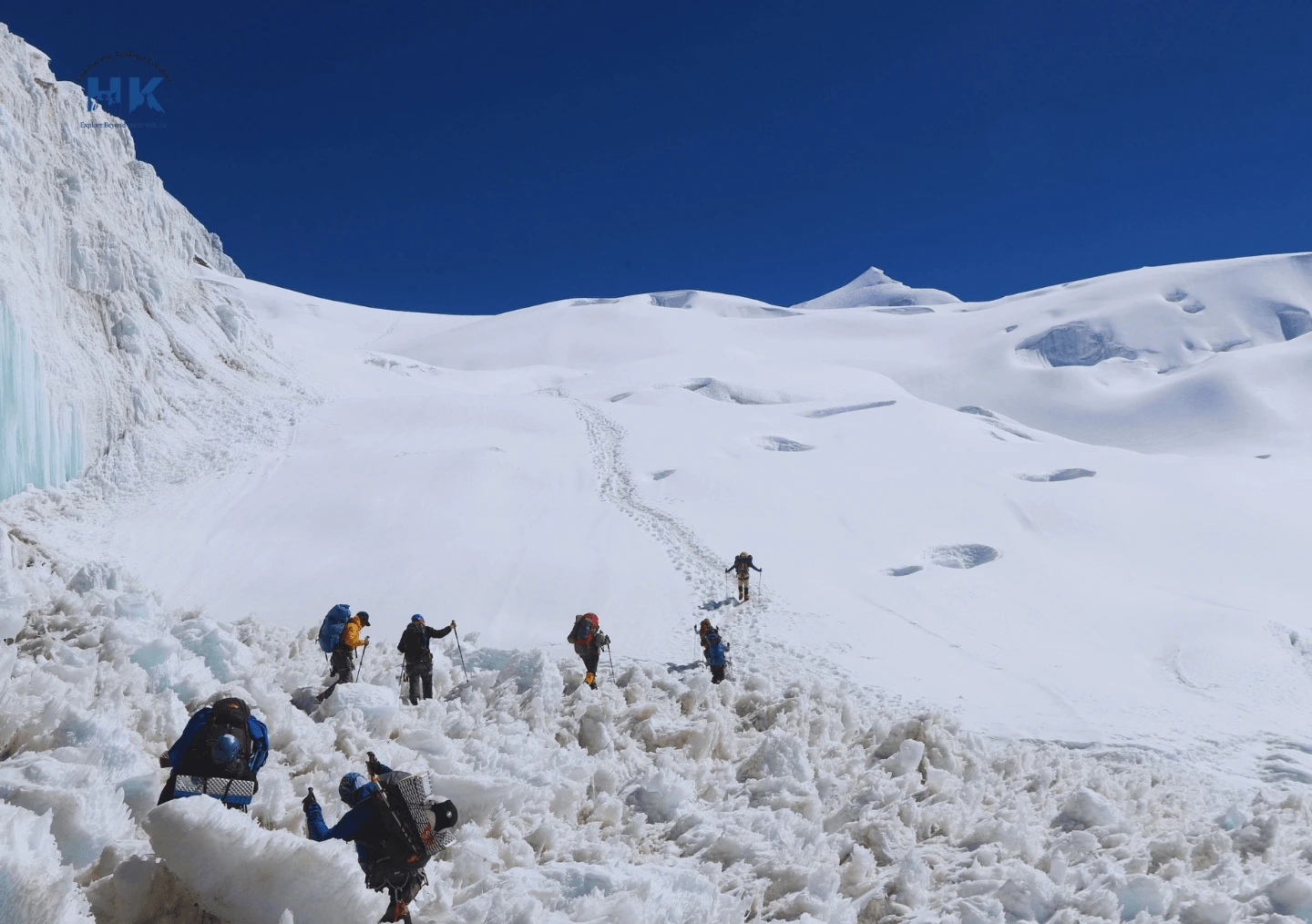
Climbers ascending through the snow slope dueing Himlung Himal Expedition
The Journey Begins in Kathmandu
Every major Himalayan expedition begins with preparation.
Before entering the mountains, there are permits to arrange, equipment to inspect, climbing gear to organize, and team members to prepare. This part of the expedition may not look as dramatic as the summit push, but it is important. A high-altitude expedition is built on preparation.
Crampons must fit correctly. Boots need to be comfortable. Harnesses, helmets, ascenders, ropes, sleeping bags, and clothing all need to be checked.
Once you enter the Nar Phu Valley, replacing forgotten equipment is not easy.
The mountains are not forgiving of poor preparation.
From Kathmandu, the expedition travels toward Besisahar, one of the main gateways to the Annapurna and Manang regions. From there, the road journey continues deeper into the mountains toward Koto. And that is where the real Himalayan journey begins.
Entering the Remote Nar Phu Valley
From Koto, the road ends and the walking begin. This is where the Himlung Himal Expedition becomes more than a climbing trip. The route enters the Nar Phu Valley, one of the most remote and culturally fascinating areas of the Nepalese Himalayas.
The trail moves through deep valleys and narrow gorges before gradually opening into an isolated high-altitude landscape.
The change is noticeable. The forests begin to thin. The mountains become more exposed. The air becomes cooler. And the world starts to feel quieter.
For many climbers, this approach is one of the most memorable parts of the entire expedition. You are not rushing toward the summit. You are slowly entering another environment.
The villages, monasteries, prayer flags, stone houses, mani walls, and Tibetan Buddhist traditions give the journey a completely different character from many of Nepal's more crowded trekking routes.
The Nar Phu Valley is not simply a route to Base Camp. It is part of the expedition itself and that is what makes Himlung Himal so memorable.
The summit may be the highest point of the journey, but the valley gives the journey its soul.
Phu Village: The Last Major Stop Before the Mountain
Phu Valley is home to the Nar-Phu people, a distinct Himalayan community with deep historical and cultural connections to Tibet. Local traditions suggest that their ancestors migrated across the Himalayan region centuries ago and gradually established settlements in the remote valleys of present-day Manang. Some oral histories associate parts of their ancestry with Tibetan groups, including communities from the wider Tibetan highlands.
Over generations, the people of Phu developed their own identity, language, traditions, and way of life, shaped by the harsh Himalayan environment. Their culture is strongly influenced by Tibetan Buddhism, reflected in ancient monasteries, chortens, prayer flags, mani walls, and religious ceremonies. Traditionally, the community depended on livestock herding, yak raising, high-altitude agriculture, and trans-Himalayan trade.
Today, Phu remains one of the most culturally distinctive settlements in the Nepalese Himalayas, where Tibetan heritage, Buddhist traditions, and the unique identity of the Nar-Phu people continue to shape everyday life.
The sound of the modern world feels very far away. This is also an important stage for acclimatization.
At around 4,000 meters, the body begins to feel the effects of altitude more clearly. Sleeping may become more difficult. Your appetite can change. Even walking uphill feels different. The answer is not to move faster. It is to slow down.
A proper acclimatization day gives climbers time to adjust before moving higher toward Base Camp. This patience becomes extremely important later.
In the Himalayas, fitness can take you far but acclimatization decides how well your body can survive and perform when the air becomes thin.
Arrival at Himlung Himal Base Camp
The trek from Phu toward Himlung Himal Base Camp is the moment when everything starts to feel serious. The trail moves across increasingly rugged terrain toward the mountain. And then Himlung appears. Standing beneath a 7,126-meter mountain changes your perspective.
The summit looks closely. But it is not.
The scale of the Himalayas can be deceptive. What appears to be a short distance may take hours. What looks like a gentle slope from below can become a steep wall of snow and ice once you are standing on it.
Base Camp sits at approximately 4,850 to 4,900 meters. This becomes home for the next few weeks of the expedition.
Tents are arranged. The kitchen is established. Climbing equipment is organized. Weather conditions are monitored every day from Kathmandu and provide the detail forecast. Meals are prepared. And the team begins discussing the climbing plan. The trekking journey is over. The expedition has entered its next chapter.
Life at Himlung Himal Base Camp
Life at Base Camp is surprisingly simple.
Wake up. Eat. Check the weather. Organize equipment. Climb. Return. Rest. Eat again. Sleep. Then repeat.
But behind this simple routine is an enormous amount of preparation.
Every day at Base Camp is important. The body needs recovery than the team needs to monitor health and acclimatization. Equipment needs to be prepared for the higher camps. Weather forecasts can determine when a summit attempt is possible. Food also becomes an essential part of the expedition.
At high altitude, your body burns an enormous amount of energy. Meals need to provide carbohydrates, protein, and enough calories to support recovery and climbing performance.
Rice, potatoes, pasta, noodles, bread, lentils, eggs, vegetables, soups, and hot drinks become part of daily life.
The higher you climb however, the more difficult eating can become. Altitude has a strange way of changing everything. You know your body needs food but sometimes you simply do not feel hungry. You know you need to drink but the cold can make you forget. These small details become important at above 6,000m or above 7,000m.
The Climbing Route: From Base Camp to the High Camps
The standard Himlung Himal Expedition involves a gradual progression through several high camps.
The climbing route generally includes:
· Base Camp: Approximately 4,850–4,900 meters
· Camp I: Around 5,400–5,450 meters
· Camp II: Around 6,000 meters
Each stage brings a new challenge.
The route includes glacier travel, snow slopes, crevasse areas, and sections where climbers use fixed ropes. This is not a trekking route. Once the expedition moves beyond Base Camp, climbers need to be comfortable using essential mountaineering equipment.
· ➢ Crampons.
· ➢ Ice axe.
· ➢Harness.
· ➢Jumar or ascender.
· ➢ Carabiners.
· ➢ Fixed ropes.
The higher camps are also where altitude begins to take control. At 6,000 meters, your body is already operating under significant physiological stress.
· Simple tasks become slower.
· Putting on boots takes longer.
· Packing a bag requires concentration.
· Walking uphill can feel like running with no air.
And after camp II, the summit is close enough to imagine. But you still have to earn it.
Why Acclimatization Can Decide the Entire Expedition
One of the biggest mistakes in high-altitude climbing is believing that being physically fit is enough but it is not. You can run marathons and still suffer from altitude sickness. You can be incredibly strong and still struggle above 6,000 meters.
The body needs time. That is why the Himlung Himal Expedition follows a gradual acclimatization process. We as a Climbers typically move higher, spend time at altitude, and then descend for recovery before the final summit push. This process allows the body to gradually adapt to the decreasing availability of oxygen. It can feel frustrating. Sometimes you climb to a higher camp only to return to Base Camp. But that is part of the strategy. In the Himalayas, moving down can sometimes be the most important step toward eventually moving up.
The mountain will still be there tomorrow. The goal is to make sure your body is ready when the weather window finally arrives.
How Difficult Is Himlung Himal?
This is probably the question every climber asks. And the honest answer is simple:
Himlung Himal is challenging, but the challenge is not only technical.
The mountain is often considered one of the more achievable 7,000-meter expeditions for experienced and properly prepared climbers. However, calling it "easy" would be a serious mistake. At 7,126 meters, altitude itself becomes one of the biggest challenges. You are dealing with:
· ➢Extremely low oxygen levels
· ➢ Freezing temperatures
· ➢ Long climbing days
· ➢Glacier travel
· ➢Steep snow slopes
· ➢Fixed rope sections
· ➢Crevasses
· ➢ Strong winds
· ➢Physical exhaustion
· ➢Limited recovery at high altitude
The technical climbing skills required are important, but Himlung is not only about technical ability. Our Endurance matters, Mental strength matters, Patience matters, and Experience matters.
Sometimes, the ability to turn around matters more than the ability to continue.
For climbers who already have experience on 5,000 or 6,000-meters peaks and are comfortable with basic mountaineering equipment, Himlung can be a natural progression into serious Himalayan expedition climbing.
Who Should Climb Himlung Himal?
Himlung Himal is best suited for climbers who have already spent time at altitude and understand how their bodies respond to the mountains. Previous experience on peaks such as Island Peak, Mera Peak, Lobuche East, or similar high-altitude mountains can provide useful preparation.
Before attempting Himlung, a climber should ideally be comfortable with:
· Walking with crampons
· Using an ice axe
· Climbing fixed ropes
· Using an ascender or Jumar
· Descending safely
· Moving on snow and ice
· Carrying a backpack for long periods
· Spending multiple days at high altitude
Physical preparation should begin months before the expedition. Long hikes are particularly useful because they simulate the rhythm of mountaineering. You do not need to sprint. You need to keep moving. Training should focus on endurance, leg strength, cardiovascular fitness, balance, and muscular stamina. Mental preparation is equally important. There will be uncomfortable days which may be long periods inside tents. The weather may delay the summit attempt where you may feel tired, cold, hungry, or frustrated.
The climbers who perform well are often not the strongest people in the group. They are the ones who can remain patient when the mountain refuses to follow their schedule.
Summit Day: When the Mountain Finally Lets You Try
Summit day usually begins in darkness. The alarm will ring around 8 to 9 PM evening. Nobody really wants to leave the warmth of their sleeping bag. But this is the moment the entire expedition has been preparing for. Climbers put on their equipment.
· Headlamps.
· Crampons.
· Harnesses.
· Gloves.
· Down suits.
The temperature can be brutally cold. And then, one by one, the climbers leave Camp II. The summit push is long. From this point, there is no comfortable place to rest. Every step requires effort route becomes steeper. The altitude becomes more demanding and breathing becomes a conscious activity.
You are constantly balancing effort with energy conservation. Move too quickly, and you burn energy. Move too slowly, and the cold begins to take over. So, you find a rhythm.
· Step.
· Breath.
· Step.
· Breath.
And gradually, the darkness begins to disappear. The first light touches the Himalayas. The mountains around you begin to appear and suddenly, you realize how high you are.
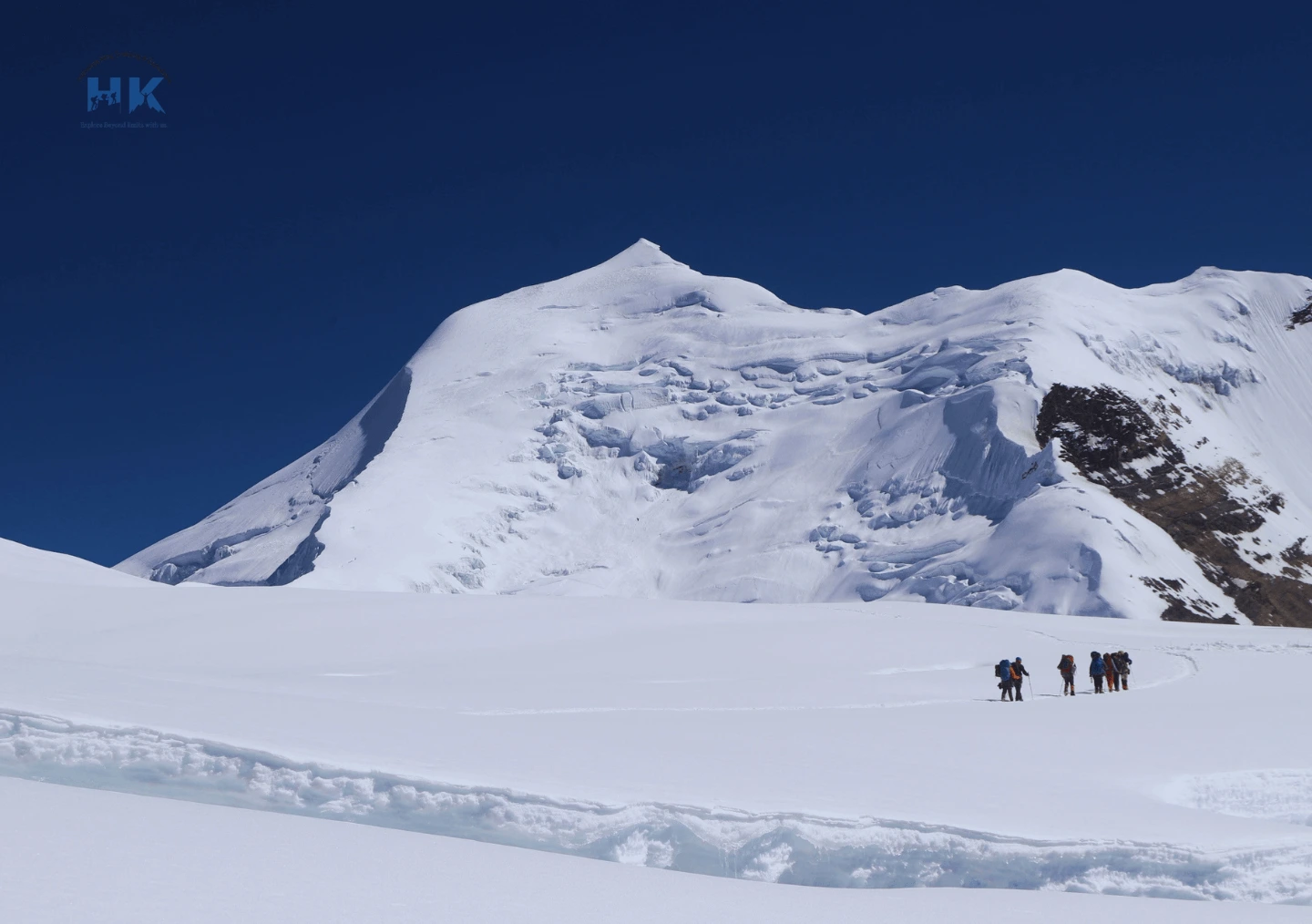
Climbers just bewlow the summit at snow ridge
Standing on the Summit of Himlung Himal
After weeks of preparation and days of climbing, the summit finally arrives. At 7,126 meters, the Himalayas stretch in every direction. From the top, the world below feels distant. The valleys disappear into clouds. Snow-covered peaks rise across the horizon. The Annapurna region, Manaslu region, Gangapurna, Tilicho and the wider Himalayan landscape create a view that is difficult to describe properly.
But the summit is not a place to stay for long. In mountaineering, the most important rule is simple:
Reaching the summit is only half the journey. You still have to descend. And descending when your body is exhausted requires concentration.
Many climbers say that the summit gives them a feeling of achievement. But the first moment of real relief often comes later.
When you return safely to Base Camp, the climbing boots come off, sit inside the dining tent with a warm drink, and look back at the mountain and realize: We actually did it.
The Nar Phu Valley: More Than Just the Way to the Mountain
It would be easy to describe the Himlung Himal Expedition only as a climbing experience, but that would miss half the story. The Nar Phu Valley gives this expedition something that many mountain climbs do not have.
· Culture.
· Silence.
· History.
· A sense of isolation.
The journey through Nar Phu is not simply about gaining altitude. It is about slowly leaving behind the familiar world.
The villages of Nar and Phu, the Buddhist monasteries, the prayer flags, stone houses, yak pastures, and dry Himalayan landscapes become part of the experience. For some climbers, the summit is the most unforgettable moment. For others, it is a quiet afternoon in Phu.
A morning walk through the valley makes memorable conversation with local people. Or the moment when the trail turns a corner and reveals another wall of mountains. That is the beauty of Himlung Himal. You are not just climbing a peak also spending weeks inside a landscape.
Best Time for the Himlung Himal Expedition
The most popular seasons for climbing Himlung Himal are generally:
· Spring: March to May
Spring offers a major climbing window in the Himalayas. Conditions can provide good snow coverage, gradually warmer temperatures, and opportunities for summit attempts before the monsoon season.
· Autumn: September to November
Autumn is another excellent season and is often considered one of the most favorable periods for Himlung Himal climbing.
After the monsoon, the skies are often clearer, visibility can be excellent, and the Himalayan landscapes appear fresh and dramatic.
October is particularly popular for high-altitude expeditions in Nepal. The exact climbing conditions, however, always depend on weather and snow conditions. The mountain does not guarantee a summit in any season and no itinerary can control the weather. That uncertainty is part of Himalayan climbing.
How Long Does the Himlung Himal Expedition Take?
A typical Himlung Himal Expedition itinerary takes around 25 to 30 days. The journey includes:
· Arrival and preparation in Kathmandu
· Travel to Besisahar
· Drive to Koto
· Trek through the Nar Phu Valley
· Acclimatization in Phu
· Trek to Himlung Himal Base Camp
· Acclimatization and climbing rotations
· Summit attempt
· Descent back through Phu, Meta, and Koto
· Return to Kathmandu
The length of the expedition is not accidental. High-altitude climbing cannot be rushed safely. The itinerary needs flexibility with weather delays are possible. Acclimatization may take longer for some climbers. A summit window may appear earlier or later than expected.
The best expeditions are not those that follow the itinerary perfectly. They are the ones that adapt safely when the mountain changes the plan.
The Major Attractions Along the Himlung Himal Route
The journey toward Himlung Himal is filled with natural, cultural and adventure attractions, including:
· Syange Waterfall: A beautiful waterfall marking the beginning of the mountain journey.
· Bung/Chamche Waterfall: A powerful waterfall attraction in the Chamche region.
· Octopus Waterfall: A unique multi-stream waterfall known for its octopus-like shape.
· Marsyangdi River Valley: A dramatic river valley that guides travelers deeper into the Himalayas.
· Koto Village: The gateway to the remote and restricted Nar Phu Valley.
· Nar Phu Khola Gorge: A spectacular section of narrow valleys, cliffs, rivers and rugged trails.
· Singenge Dharamshala Waterfall: A major waterfall attraction along the Koto to Meta trekking section.
· Suspension Bridges and River Crossings: Adding adventure and dramatic views along the trail.
· Changing Himalayan Landscapes: From lush forests and waterfalls to dry, high-altitude terrain.
· Meta: A remote high-altitude settlement surrounded by dramatic Himalayan scenery.
· Kyang and High Pastures: Offering a glimpse into traditional livestock-based mountain life.
· Phu Village: An ancient Himalayan settlement known for stone houses, Buddhist culture and remote beauty.
· Tibetan Buddhist Heritage: Prayer flags, monasteries, chortens and mani walls throughout the region.
· Local Himalayan Culture: A unique identity shaped by Tibetan connections and generations of mountain life.
· Mountain Hospitality: Simple but unforgettable warmth, food and welcome from local communities.
· Yak Grazing Landscapes: Traditional high-altitude pastoral life surrounded by massive peaks.
· Pangri Glacier and High-Altitude Terrain: The transition from cultural trekking to a true mountaineering environment.
· Himlung Himal Base Camp: The final gateway before entering the world of high-altitude climbing.
The Mountain Is Only Part of the Story
There are mountains that you climb and then there are mountains that change the way you look at climbing.
Himlung Himal belongs to the second category. The expedition begins with excitement. A new mountain with new equipment. Carrying the summit goal. But somewhere along the route, the experience changes.
You stop thinking only about the summit. You begin to appreciate the journey itself. The slow walk through Nar Phu Valley. The first sight of Himlung. Spending multiple nights at Base Camp. The sound of the wind outside your tent. The exhaustion after climbing to a higher camp. The conversations with teammates. The long wait for good weather. The fear before summit day. And finally, the realization that the summit is only one moment in a much bigger story.
Himlung Himal demands effort, patience, preparation, but in return it offers something increasingly difficult to find in the modern world:
A real sense of adventure.
No matter whether your journey ends on the summit or somewhere lower on the mountain, the experience of entering this remote corner of the Himalayas leaves its mark. Because after weeks in the mountains, breathing thin air and living one day at a time, you return to Kathmandu with something different. Not just photographs, a summit certificate. But a clearer understanding of what you can endure, how much patience you have, and how far one small step can take you.
At 7,126 meters, Himlung Himal may be the destination. But the real story begins the moment you take that first step toward it.
|
Planning a Trip? Get a free consultation from our travel experts with over a decade of experience. |

Himalaya King
Himalaya King
Adventure Awaits — Let’s Begin Your Journey


